
 Fans
Fans
 Switches & Accessories
 Led Lighting
 Wires & Cables
 Switchgear
LED Tube Light Price in India 2026 – Complete Buying Guide
LED Tube Light Price in India (2026)
As of January 2026, the average LED tubelight price in India ranges between ₹120 and ₹700 per unit. Smaller sizes cost less, while premium or smart models cost more.
Here is how the market broadly looks:
-
Small models (5W–10W): ₹170 – ₹339
-
Standard home models (18W–22W): ₹127 – ₹350
-
Premium high-output models (24W–25W): ₹210 – ₹649
-
Smart or 3-in-1 models: ₹279 – ₹768
This wide range explains why LED tubelight cost comparisons only make sense when you look at specifications, not appearance alone.
Sizes Available and Where They Are Used
LED tubelights are sold mainly in four lengths, each designed for a specific type of space.
|
Length |
Typical Wattage |
Common Use |
|
1 foot |
5W–8W |
Wardrobes, cabinets, storage |
|
2 feet |
10W–12W |
Bathrooms, desks, hallways |
|
4 feet |
18W–36W |
Living rooms, kitchens, and offices |
|
8 feet |
40W+ |
Warehouses, gyms, factories |
The 4-foot size is the most common for homes and offices. This is also where buyers most often compare LED tube light 20w price or 20 watt LED tube light price, since this wattage balances brightness and power use well.
How Wattage Affects Brightness and Power Usage
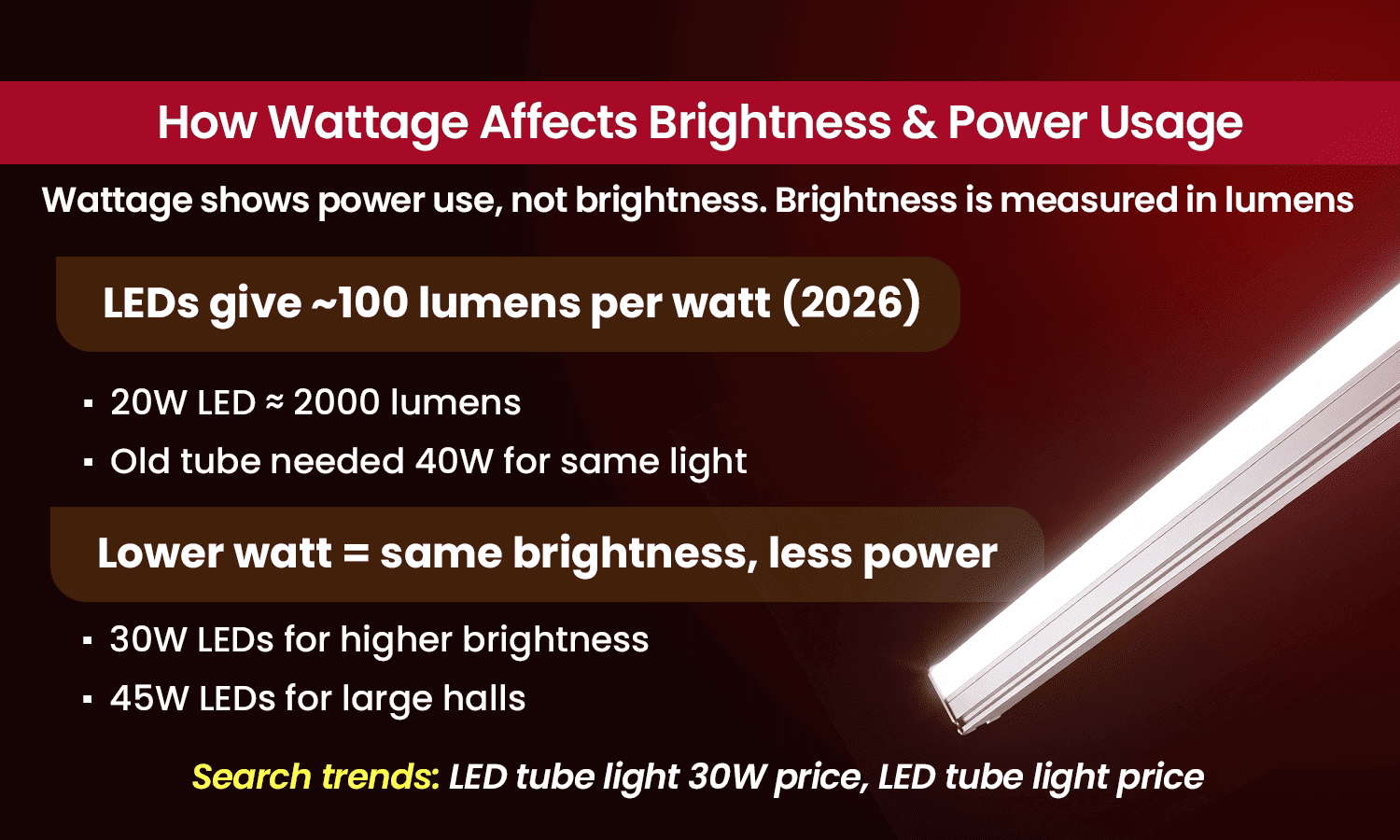
Wattage tells you how much electricity a light consumes, not how bright it is. Brightness is measured in lumens.
In 2026, most LED tubelights deliver at least 100 lumens per watt.
-
A 20W LED gives around 2000 lumens
-
An old fluorescent tube needed 40W for similar light
This is why people searching for LED tube light 40 watt prices are often better served by a 20W LED instead.
Higher wattage still matters for large spaces. For example:
-
30W models are used where extra brightness is needed
-
Large halls may need 45W lights rather than multiple fixtures
This is where terms like led tube light 30 watt price or price led tube light become relevant for commercial buyers.
How Much Electricity Can You Save with LED Lighting?
Switching to LED lighting is one of the biggest money savers in a home.
In 2026:
-
LEDs use 70–90% less power than incandescent bulbs
-
LEDs use 30–50% less power than fluorescent tubes
Lighting makes up about 15–20% of an average Indian electricity bill.
Example:
Replacing ten 60W bulbs with 9W LEDs in a 2BHK home can save around ₹10,400 per year.
Even a single LED tube light can save ₹200–₹450 per year compared to a fluorescent tube. Over time, the LED light tube price pays for itself quickly.
Installation and Maintenance in 2026
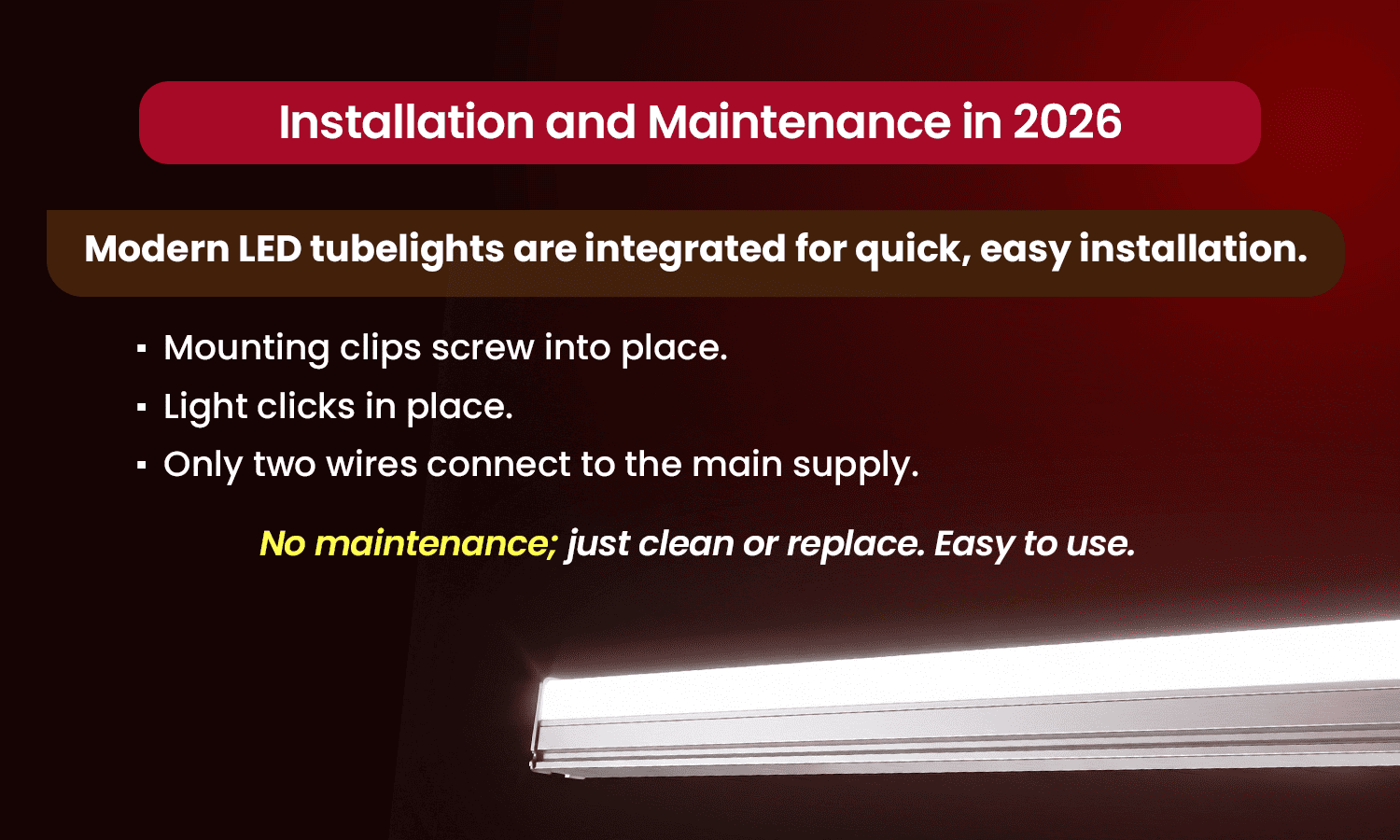
Modern LED tubelights are built as integrated battens. This makes installation simple and fast.
-
Mounting clips are fixed with screws
-
The light clicks into place
-
Only two wires are connected directly to the main supply
There are no starters or ballasts to maintain. Cleaning the surface once every few months is usually enough. If a unit fails, it is replaced as a whole rather than repaired.
This ease of use is one reason people now prefer to buy LED tube light products over older technologies.
Choosing the Right LED Tube Light for Home or Office
Choosing the right light depends on brightness needs, room type, and efficiency.
Brightness guidance:
-
Living rooms and bedrooms: 10–20 lumens per sq ft
-
Kitchens and workspaces: 30–50 lumens per sq ft
-
Bathrooms: up to 70 lumens per sq ft
Color temperature also matters:
-
Warm White (2700K–3000K): bedrooms, living rooms
-
Neutral White (4000K–4500K): kitchens, bathrooms
-
Cool White (5000K–6500K): offices, garages
For most homes, integrated battens are more practical than retrofit tubes. This is why they are often listed among the best tube lights for home today.
Conclusion
LED tube light pricing in 2026 is shaped by size, wattage, efficiency, and long-term savings rather than just brand names. A higher upfront cost often means lower electricity bills and fewer replacements over the years.
Brands like Fybros focus on durable LED batten designs that suit Indian power conditions, offering options from compact units to high-output models. When chosen correctly, an LED tubelight becomes a practical investment that delivers steady light, lower costs, and long-term reliability.
FAQs
1. Which Is Better: LED Light or Tube Light?
LED lighting is better than traditional fluorescent tubes. It uses less electricity, lasts longer, produces less heat, and avoids flickering or buzzing.
2. What Is the Life of an LED Tubelight?
A quality LED tubelight lasts between 30,000 and 50,000 hours. With regular home use, this means 10 to 17 years before replacement.
3. Which LED Tube Light Is Good for Eyes?
Flicker-free LED lights with a CRI of 80 or higher are better for the eyes. Warm white tones are generally more comfortable in living areas.
4. Which Light Is Best for the Home?
Integrated LED battens are the best choice for homes today. They are efficient, safe, and suitable for most rooms when matched with the right color temperature.