
 Fans
Fans
 Switches & Accessories
 Led Lighting
 Wires & Cables
 Switchgear
How to Match a Modular Switch Socket to Every Appliance
Overview
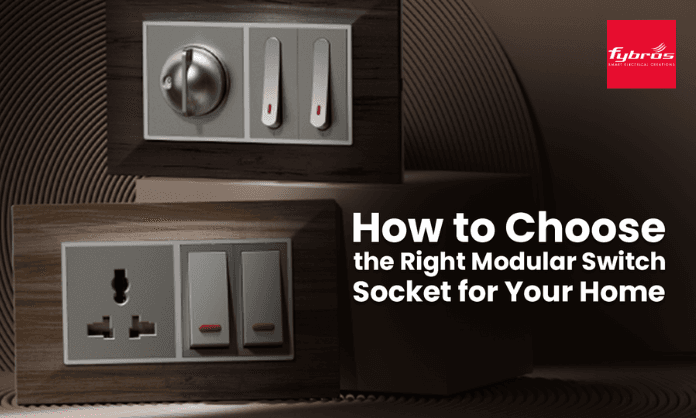
A modular switch socket pairs a power outlet with its own control switch, so you can isolate an appliance at the wall and match the point to its load. Getting the rating and the switch right keeps heavy appliances safe and your power points reliable. This overview explains how to pair and spec them.
Most buyers choose a point by looking at the socket and forget the small switch beside it, yet that switch is doing the quiet, important work. It lets you cut power to an appliance at the wall, it isolates a heavy load safely, and it saves the plug and point from the wear of being pulled out every day. A well chosen modular switch socket is really a matched pair, an outlet sized to a load and a switch sized to control it. This resource shows how to pair and spec them, using the sockets Fybros actually makes.
Why the Switch Beside the Socket Earns Its Place
The switch is what turns a bare outlet into a safe, controllable point. With a control switch you cut power before you unplug, so there is no small spark at the pins and no tug on the wiring. For a heavy appliance this isolation matters even more, since switching off at the wall before you touch a geyser or an iron is a basic safety habit. This is why a switch and socket belong together on one module rather than as a lone outlet, and it is the heart of a good modular switch and socket pairing on any board.
There is a practical payoff too. Every time a live plug is pulled the contacts arc a little and wear faster, while switching off first spares them. On a modular board this is effortless, because a switch socket modular layout places the control right beside the outlet it serves. Group these by the appliances they feed and any point can be isolated in a second, which is exactly what makes a modular type switch and socket safer to live with than a plain outlet.
Match the Rating to the Load First
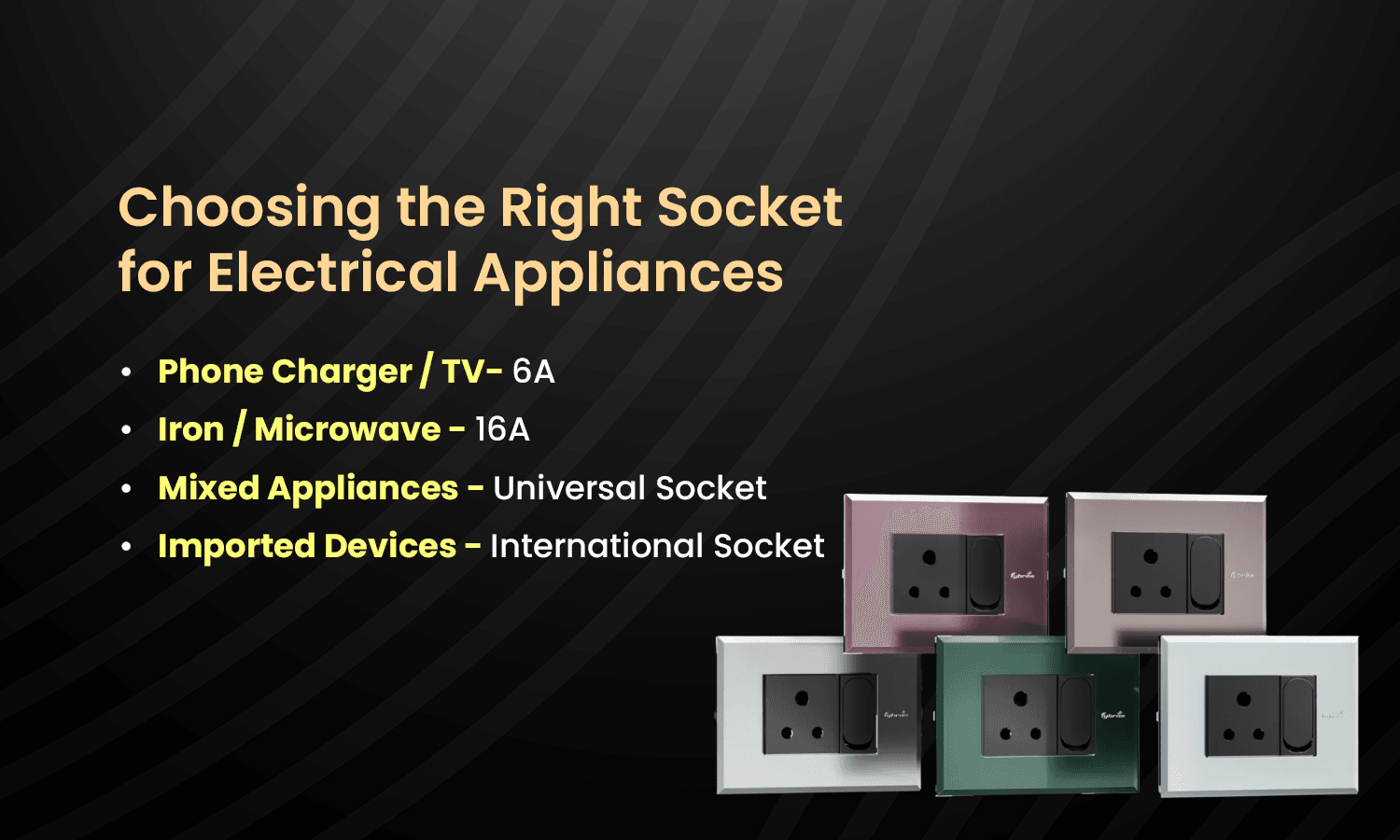
Speccing a point starts with the load, not the socket on the shelf. A light device is happy on a 6A point, but an iron, a microwave or an air conditioner needs a 16A socket and, just as importantly, a switch rated to control that current. Undersizing the switch is a common and hidden mistake, since the outlet may fit the plug while the switch quietly runs hot. The table pairs common needs with a sensible outlet and control.
| Appliance Need | Sensible Pairing |
|---|---|
| Chargers, lamps and television | A 6A 2-pin or 3-pin socket with a light control switch. |
| Mixed small and large plugs | A 6A & 16A universal socket with a matched 16A switch. |
| Heavy loads like an iron or air conditioner | A 6A & 25A universal socket with a switch rated for the load. |
| A dedicated geyser or air conditioner line | A heavy-duty double-pole switch beside the point for full isolation. |
For everyday rooms a 3 pin modular socket with switch is the most useful pairing of all, giving an earthed outlet and its own control in one clean unit. Match every point this way and a whole modular switch socket stays safe under real appliance loads rather than only on paper.
Points That Need a Heavy Duty Switch
Some points deserve more than a standard key. A geyser, a large air conditioner or an oven draws a heavy current that a small switch should not carry, so these get a dedicated double pole switch, available in 20A, 25A and 32A. A double pole switch breaks both the live and the neutral, which fully isolates the appliance for safe maintenance. Planning these heavy points early, rather than forcing a big load onto a light circuit, is one of the clearest signs of a well thought modular switch socket board. It is also why a considered switch and socket plan looks at the heaviest appliance in a room before anything else.
Common Pairing Mistakes to Avoid
A few slips turn a good idea into a weak point, and they are easy to avoid once seen.
-
Fitting a socket that suits the plug while leaving the switch underrated for the load.
-
Running several sockets from one switch, so nothing can be isolated on its own.
-
Skipping a dedicated isolator on a geyser or air conditioner that really needs one.
-
Choosing an unshuttered outlet in a home with young children.
Avoiding these keeps every point dependable. A sound modular type switch and socket plan gives each meaningful appliance its own control and the right rating, which is what a modular switch and socket pairing is for in the first place.
Planning Power Points by Load
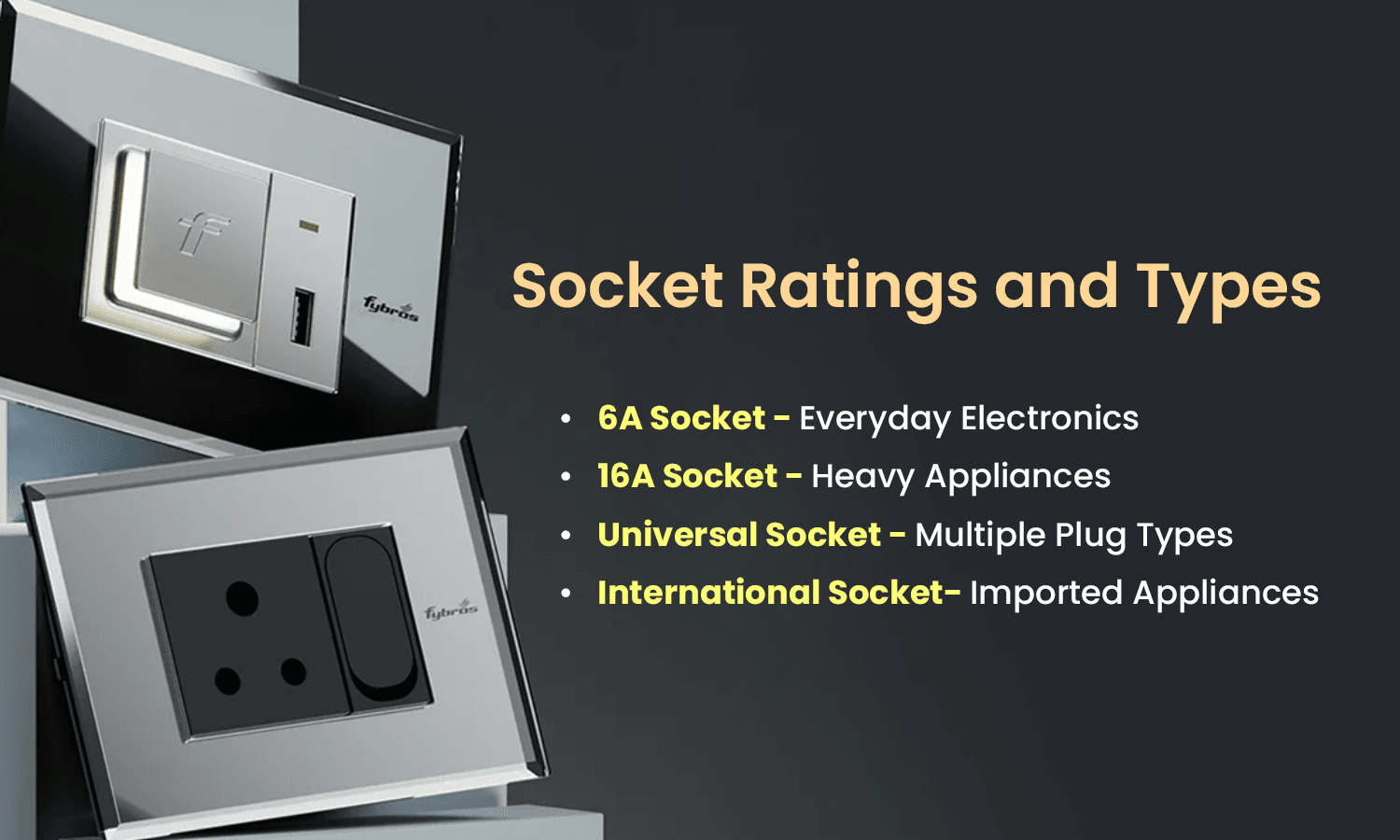
Plan a room by listing what will plug in at each point and how hard each device works, then size the pairing to match. Put a control switch on anything you turn off regularly, give heavy appliances their own isolated point, and leave a little spare capacity, since power needs only grow. A switch socket modular layout makes this easy to arrange and to read later. In most rooms a 3 pin modular socket with switch covers the everyday need, with heavier points added only where an appliance truly calls for one.
Judging Value Across Ranges
Once the layout is set, value is simple to judge. The modular switch and socket price moves with the rating, the finish and the plate a point sits in, so a shuttered universal outlet costs a little more than a basic 6A point, and a heavy isolator more again. Read the modular switch socket price list across the range and you can see where each rupee goes to real safety rather than to show. Spend on the points that carry real loads, keep the light points simple, and the whole board stays sensible.
Key Takeaways
-
A modular switch socket is a matched pair, an outlet sized to the load and a switch sized to control it.
-
Match the rating to the appliance and never leave the switch underrated for the load.
-
Give a geyser or air conditioner a heavy duty double pole switch on a modular switch socket board.
-
Compare the modular switch and socket price and the modular switch socket price list before you finalise a point.
-
A 3 pin modular socket with switch covers most everyday points cleanly and safely.
FAQs
1. Does every socket really need its own switch?
For any point that feeds an appliance you switch off regularly, yes. A control switch lets you cut power at the wall without pulling the plug, which is safer and saves wear on the contacts. On a modular board it is easy to give each outlet its own key, and a 3 pin modular socket with switch is the convenient choice for daily use.
2. How do I know if the switch is rated for my appliance?
Match the switch to the load, not just the plug. A light device is fine on a 6A point, an iron or air conditioner needs a 16A pairing, and a geyser deserves a heavy duty double pole switch of 20A or more. Sizing the switch and socket together, rather than the outlet alone, is what keeps a point cool and safe under real use.
3. What makes a modular switch socket safer than a plain outlet?
Two things, isolation and shutters. A modular switch socket lets you switch a point off at the wall for safe unplugging or maintenance, and a shuttered outlet blocks the live holes until a proper plug arrives. Together they make a point that is both controllable and child safe, which a bare outlet cannot offer.
4. How should I compare prices across ranges?
Set the layout first, then read the modular switch socket price list so you compare like for like. The modular switch and socket price rises with rating, finish and plate, so put the spend where real loads and safety need it and keep light points simple. That way value follows function rather than appearance.