
 Fans
Fans
 Switches & Accessories
 Led Lighting
 Wires & Cables
 Switchgear
Modular vs Normal Switch and How to Decide Between Them
Overview
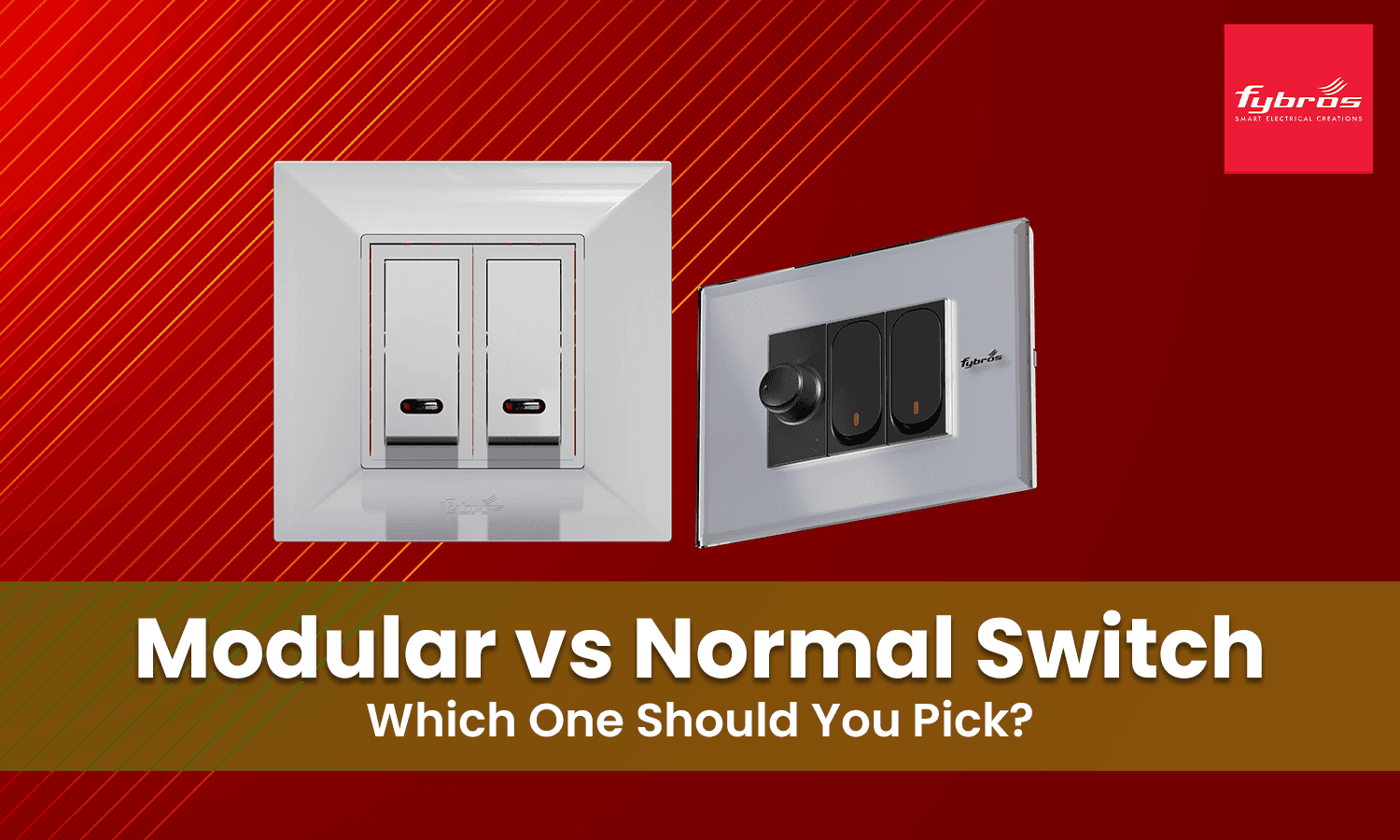
The modular vs normal switch choice comes down to flexibility, looks and upgrades. A normal switch is fixed and simple, while a modular switch is independent and easy to reconfigure. This overview compares design, installation, cost and maintenance so you can decide which suits your home and budget.
Introduction
Before you fit or replace switches, it helps to understand the two main options. The modular vs normal switch question is really about flexibility and looks against simplicity and low cost. Both still fill Indian homes, so the choice matters when you plan a new board or an upgrade. This resource compares them fairly on design, installation, cost and maintenance, using the real Fybros modular range where useful.
The Two Types Explained
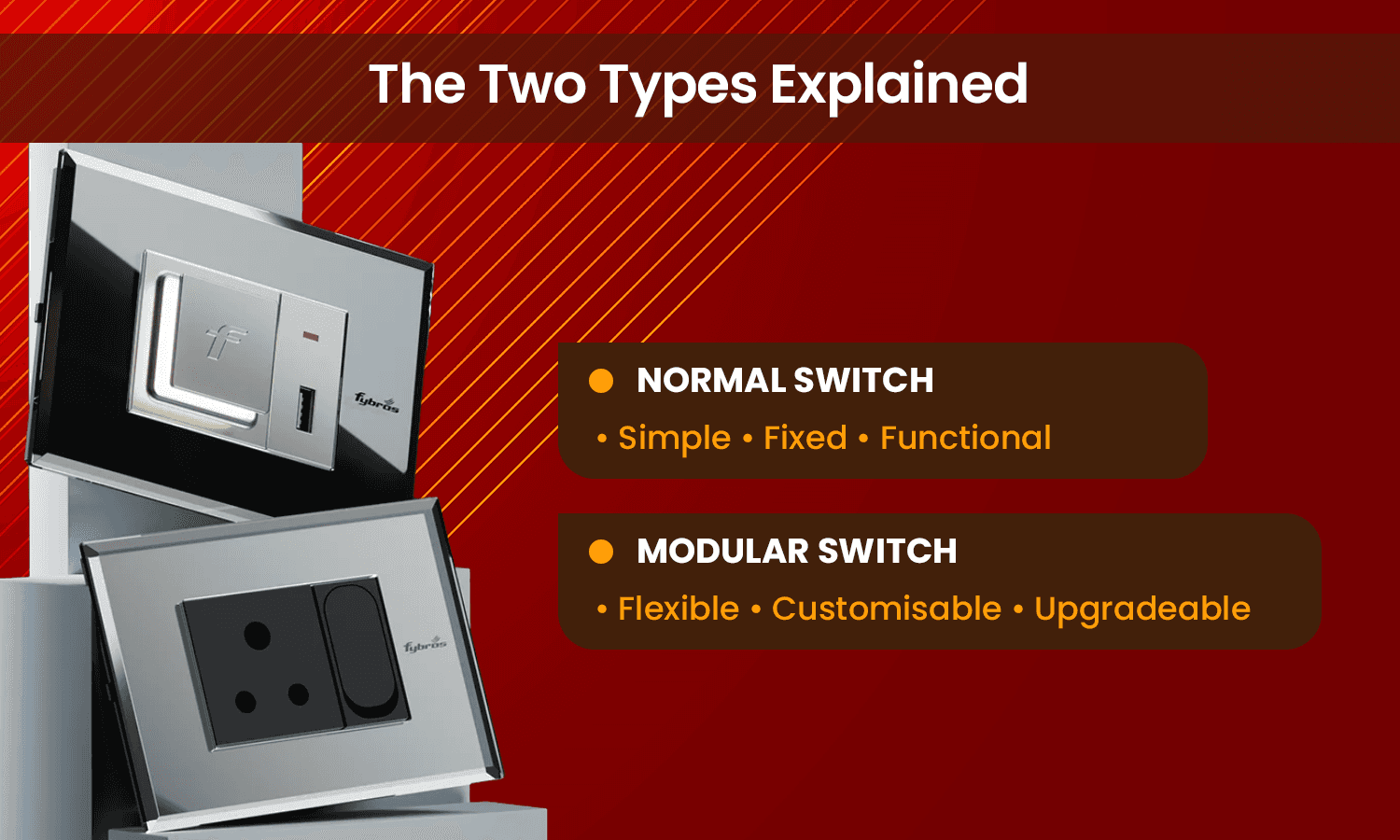
A normal switch, sometimes called a conventional switch, is fixed into a single plate and cannot be reconfigured. A modular switch is an independent module that clips onto a frame and can be mixed with sockets and other controls. This is the core difference between the two. A normal switch board carries a set layout, while a modular board can be arranged and later changed to suit the room.
Comparing Design and Installation
The two differ most in flexibility. A modular board lets you combine a 1-way switch, a socket and a dimmer on one plate, while a normal switch board offers a fixed arrangement. Installation also differs slightly, as a modular system uses a frame and plate over the box, whereas a normal switch connects wires directly into a simpler fitting. For most new work, the modular approach gives a cleaner, more adaptable result.
| Factor | Modular switch | Normal switch |
|---|---|---|
| Flexibility | Mix and rearrange modules freely | Fixed layout on a single plate |
| Finishes | Wide choice of colours and materials | Limited, mostly white |
| Upgrades | Swap a single module anytime | Usually replace the whole unit |
| Look | Clean and coordinated | Simple and functional |
Comparing Cost and Maintenance
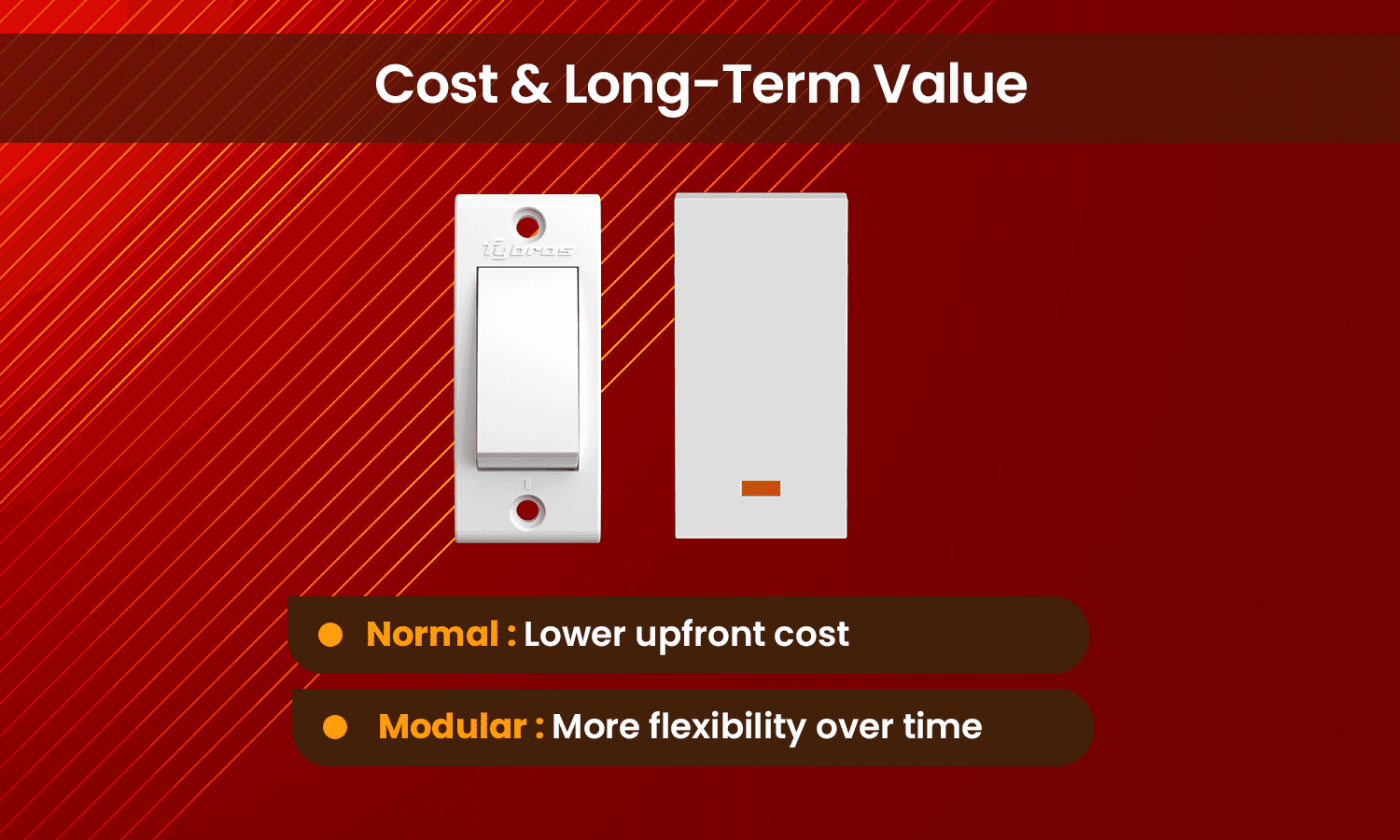
On price, a normal switch is usually cheaper at first, and the normal switch price appeals to tight budgets and simple utility points. Modular switches cost a little more but add finish choice and easy upgrades. On maintenance, a modular module can be replaced on its own, while a fixed switch often means changing the whole unit. Comparing the modular switch price against the normal switch price over the life of a board usually narrows the gap.
Value also depends on the room. For a temporary or low use point, a normal switch may be enough. For rooms people see and use daily, modular switches for home bring looks and flexibility that repay the small extra cost.
Upgrading From Normal to Modular
Many homes move from old fixed switches to modular during a refresh. Going from a normal switch to smart switch control is far easier on a modular board, since touch and sensor modules fit the same frame. This is why the modular switch board vs normal switch comparison usually favours modular for anyone planning to add smart features later. The modular switch vs normal switch decision, then, is partly about how much you want the board to grow.
A Closer Look at Cost and Wiring
It helps to look a little closer at both cost and wiring. On budget, the modular switch board price covers the frame, plate and modules together, which is why it sits a little above a basic fixed unit, though it buys finish choice and easy upgrades. A simple normal switch connects wires straight into a single fitting, while a modular board adds a frame and plate step that gives a neater, more adaptable result.
Seen this way, the choice is about more than the first cost. A modular board keeps the modular switch board price working for you over time, since single modules can be swapped or upgraded without redoing the wall. For a point you will use daily for years, that flexibility usually outweighs the small saving of a basic normal switch connection.
Key Takeaways
-
The modular vs normal switch choice is flexibility and looks against simplicity and low first cost.
-
A normal switch board has a fixed layout, while a modular board can be arranged and changed freely.
-
A normal switch price is lower at first, but modular switches add finish choice and easy upgrades.
-
Going from a normal switch to smart switch control is far easier on a modular board.
-
For rooms used daily, modular switches for home usually repay their small extra cost.
FAQs
1. What is the difference in the modular vs normal switch debate?
The modular vs normal switch difference is that a normal switch is fixed into one plate and cannot be reconfigured, while a modular switch is an independent module that mixes with sockets and other controls. A normal switch board has a set layout, whereas a modular board can be arranged and later changed to suit the room.
2. Is a modular switch more expensive than a normal one?
A normal switch price is usually lower at first, which suits tight budgets and simple points. The modular switch price is a little higher but adds finish choice, easy upgrades and better safety. Over the life of a board the gap narrows, since a modular module can be replaced on its own rather than changing a whole unit.
3. Can I upgrade from a normal switch to a smart one?
Yes, and it is easier on a modular board. Moving from a normal switch to smart switch control simply means fitting a touch or sensor module to the same frame. This is why the modular switch board vs normal switch comparison favours modular for anyone who may add smart features later. In short, the modular switch vs normal switch verdict leans modular whenever future upgrades matter.
Choose Confidently With Fybros
Both switch types have their place, but for most modern homes the flexibility of modular wins out. Fybros makes the choice easy with a full modular range that upgrades simply and looks great in any room. When you weigh the modular vs normal switch decision for spaces you use every day, a Fybros modular board is the choice that keeps rewarding you for years.
Deciding how to fit your switches? Browse the Fybros modular range and see why the choice usually favours modular for daily use. Visit fybros.com or your nearest Fybros dealer to compare.