
 Fans
Fans
 Switches & Accessories
 Led Lighting
 Wires & Cables
 Switchgear
Normal vs LED Tube Light: Which Is Better?
LED Tube Light vs Normal Tube Light: Which is Better?
When it comes to illuminating your home, the choice between an LED tube light and a traditional fluorescent light is no longer just about brightness; it is about smart technology, energy savings, and durability. As we transition into a world of sustainable living, understanding why the LED tube light has become the gold standard for modern households is essential.
In this guide, we will compare the two based on technical performance, cost, and aesthetics to help you decide which is better for your space.
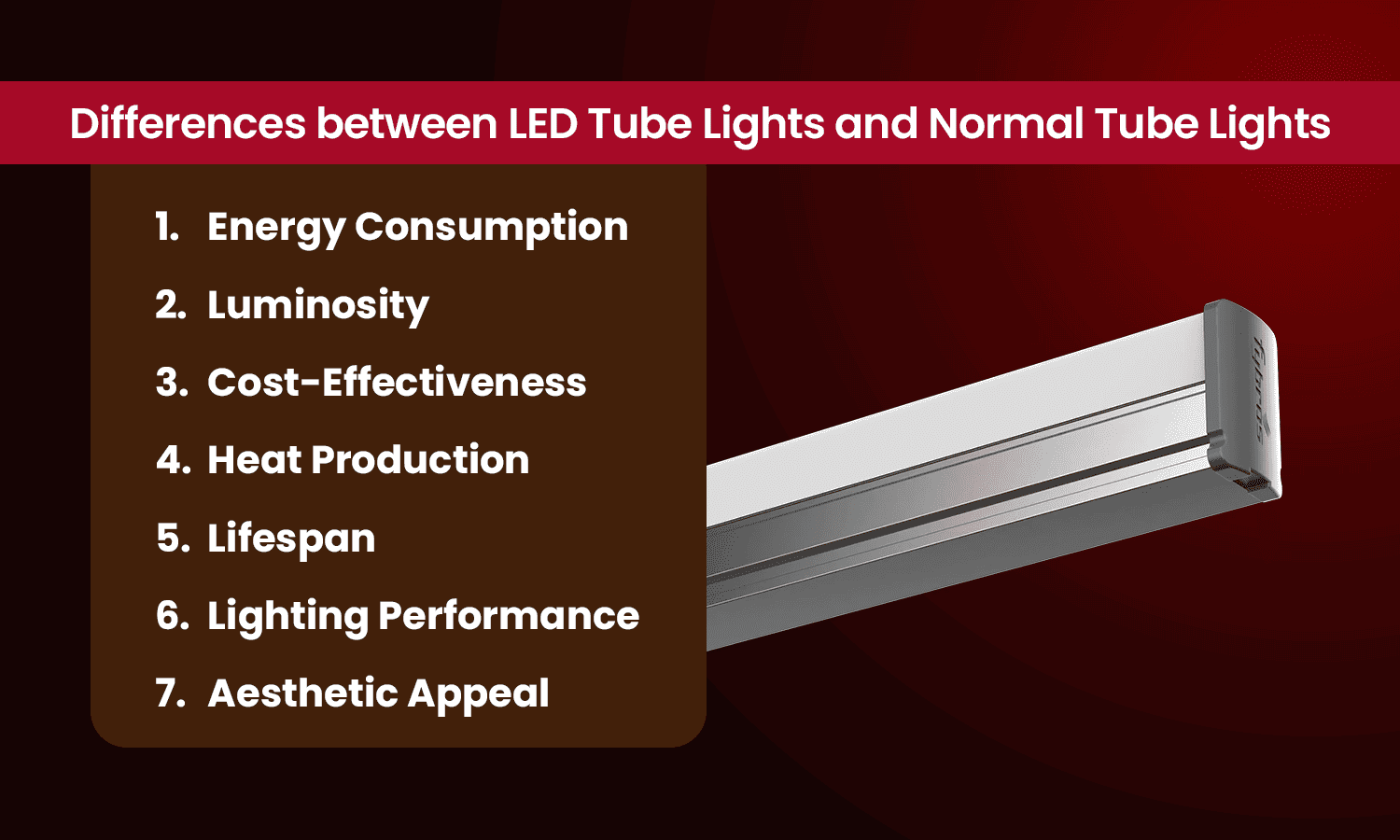
Differences between LED Tube Lights and Normal Tube Lights
1. Energy Consumption
The most significant advantage of an LED tube light is its efficiency. While a normal tube light (FTL) uses around 36W to 40W to produce light, a Fybros LED tube light can deliver the same, if not better, luminosity at just 18W to 22W. This means you consume nearly 50% less electricity, directly reflecting in lower monthly bills.
2. Luminosity
Luminosity is measured in lumens per watt. Fybros LED products, such as the Casa LED Batten series, offer a high luminous efficacy (often $100\text{ lm/W}$ or more). Unlike traditional tubes that flicker or dim over time, the LED tube light provides a steady, flicker-free glow that enhances visibility in every corner.
3. Cost-Effectiveness
While the initial LED tube light price might be slightly higher than a traditional glass tube, the "Total Cost of Ownership" is much lower. Since it consumes less power and requires zero maintenance (no more changing starters or chokes), an LED tube light typically pays for itself within the first year of use.
4. Heat Production
Traditional tube lights convert a large portion of energy into heat, often making the room feel warmer. In contrast, the LED tube light is designed with advanced heat sinks and high-grade polycarbonate materials that ensure minimal heat emission, making it safer and more comfortable for enclosed spaces like a bathroom tube light or a small LED tube light in a closet.
5. Lifespan
A normal tube light lasts roughly 5,000 to 8,000 hours. A high-quality best LED tube light from Fybros is rated for up to 30,000 hours. This incredible longevity means you won’t have to worry about replacements for nearly a decade under standard usage.
6. Lighting Performance
Normal tube lights often produce a "buzzing" sound and take time to reach full brightness. An LED tube light offers instant-on technology. Whether it is a tube light for the living room or tube lights for the bedroom, you get 100% brightness the moment you flip the switch.
7. Aesthetic Appeal
Gone are the days of bulky, industrial-looking fixtures. The modern LED tube light is sleek, slim, and integrated. Fybros offers various designs, including the small tube light for compact areas and an LED small tube light for under-cabinet lighting, adding a touch of elegance to your interiors.
Why Choose Fybros for LED Lights?
Fybros has redefined the lighting industry with its commitment to "Smart Living." Our range of LED tube light solutions, including the LINC and Casa series, is engineered with:
-
Surge Protection: Up to 3.5kV to handle Indian voltage fluctuations.
-
High CRI (>80): Ensuring that colors in your room look natural and vibrant.
-
Eco-Friendly Design: Zero mercury and 100% recyclable components.
Whether you need outdoor tube lights for your patio or the best LED tube light for your office, Fybros ensures durability meets design.
FAQs
Are LED Tube Lights Expensive?
The initial LED tube light price is higher, but because they last 5 times longer and save 50% on electricity, they are much cheaper in the long run.
Do LED Tube Lights Get Hot?
No, an LED tube light produces very little heat compared to traditional tubes, as they are much more efficient at converting electricity into light rather than thermal waste.
Can I install LED tube Lights Myself?
Yes, Fybros LED battens come with a "Plug-and-Play" design. They are lightweight and easy to wall-mount, often requiring just two clips.
How Long Do LED Tube Lights Last?
A Fybros LED tube light is built to last up to 30,000 hours, offering years of maintenance-free service.
Do LED Tube Lights Save Energy?
Absolutely. Switching to an LED tube light can reduce your lighting energy consumption by up to 60-80% compared to incandescent or older fluorescent models.