
 Fans
Fans
 Switches & Accessories
 Led Lighting
 Wires & Cables
 Switchgear
What is a single-pole Switch?
Introduction
A single-pole switch is the most common type of switch found in Indian homes. It controls a light or appliance from one location, making it simple and easy to use. Whether you’re turning on a bedroom light or controlling a kitchen lamp, you’re likely using this switch without even realizing it. Understanding how it works can help you make better decisions when upgrading your switchboard or planning your home wiring.
Poles and Throws
To understand a single-pole switch, it helps to know what “poles” and “throws” mean.
A pole refers to the number of circuits a switch controls.
A throw refers to the number of paths the current can take.
A standard single-pole switch controls one circuit and allows electricity to flow in one path. Many people compare it with other layouts, such as a single-pole double-throw switch, which can direct current to two different paths. There is also a simple single-pole single-throw switch, which is the most basic form.
A single-pole switch is used when you only need to turn something on and off from one control point. For everyday lighting, this is more than enough.
What Is a single-pole Switch Used For?
A single-pole switch is used to control lights, fans, or electrical points from one location. When you flip the switch, it opens or closes the circuit. This stops or allows electricity to flow to the appliance.
You’ll commonly find this switch controlling your living room tube light or functioning as a single light switch in bedrooms and kitchens. Most homes use dozens of such switches because they are simple, practical, and easy to operate.
Some setups also include features like a single-pole timer switch, which can turn lights off after a set time. These are useful for bathrooms, corridors, or outdoor areas.
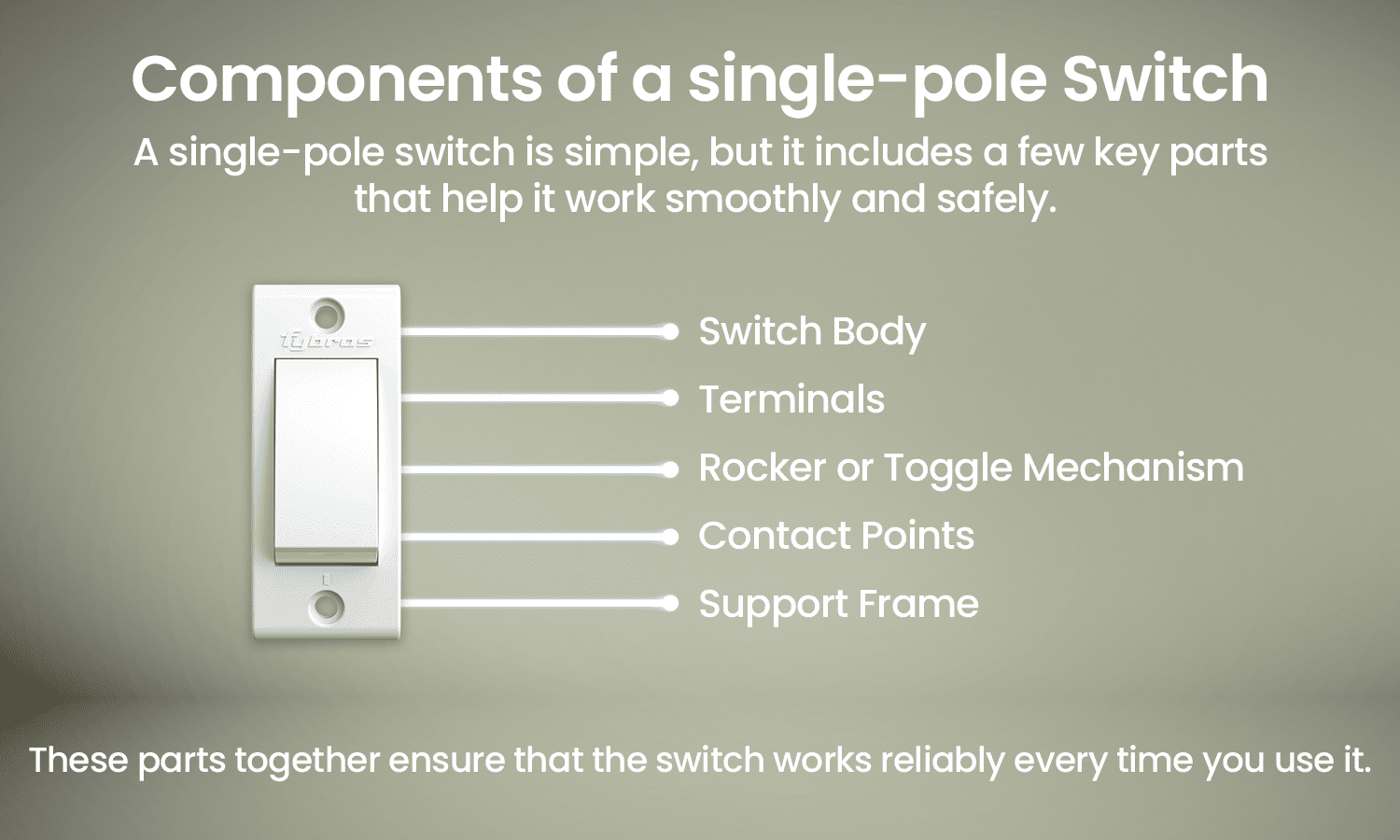
Components of a single-pole Switch
A single-pole switch is simple, but it includes a few key parts that help it work smoothly and safely.
1. Switch Body
The main outer structure holds all the parts together.
2. Terminals
A single-pole switch usually has two terminals—one for incoming current and one for outgoing current. This makes wiring simple compared to advanced switches like a single-pole 3-way switch, which has more terminals for additional pathways.
3. Rocker or Toggle Mechanism
Most modern boards use a rocker mechanism. In modular designs, this is called a single-pole rocker switch, known for smooth movement and long life.
4. Contact Points
Inside the switch, two metal points meet or separate when you operate the switch. This contact is what controls the flow of electricity.
5. Support Frame
Helps mount the switch safely inside the switchboard.
These parts together ensure that the switch works reliably every time you use it.
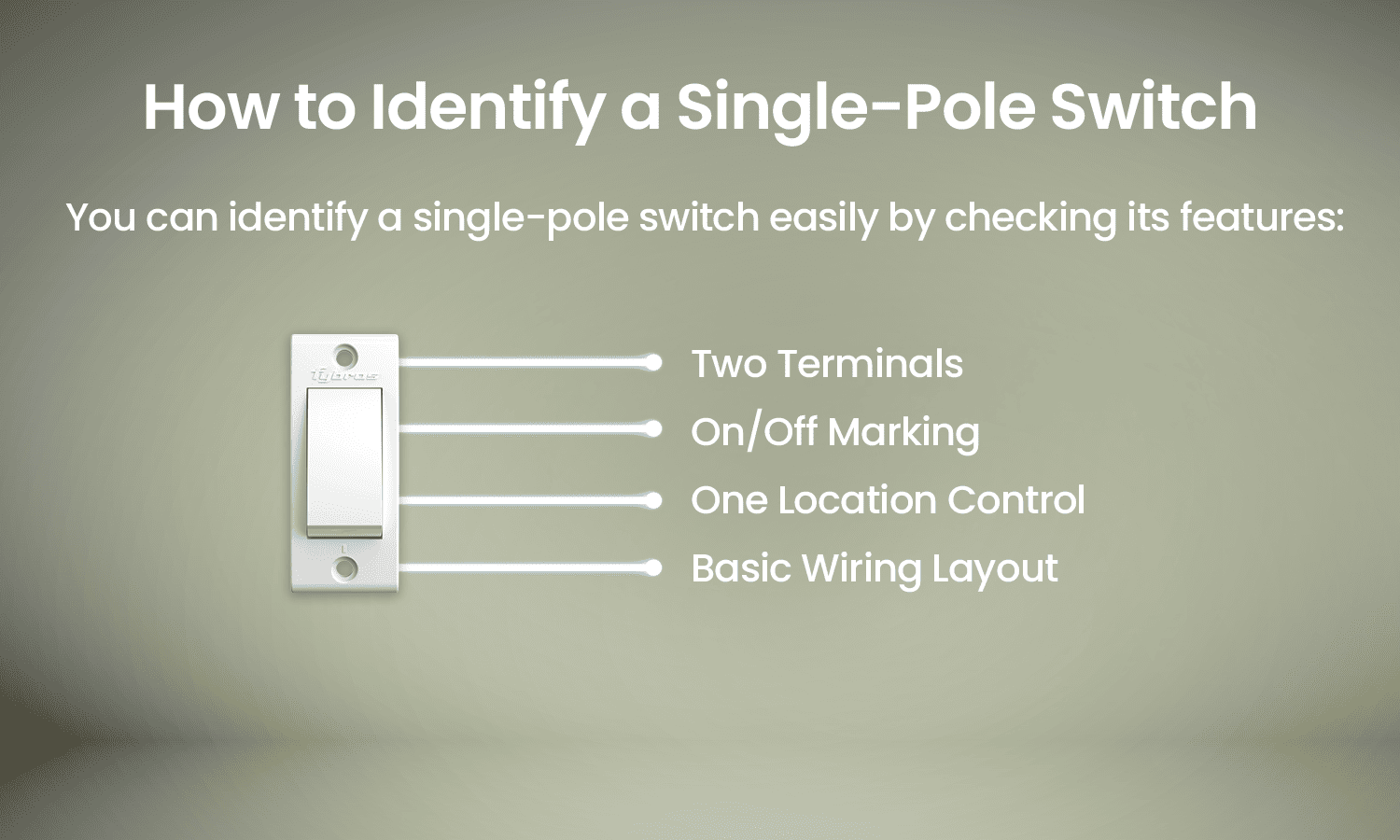
How to Identify a Single-Pole Switch
You can identify a single-pole switch easily by checking its features:
1. Two Terminals
This is the simplest and most reliable way. A single-pole switch normally has just two screw terminals.
2. On/Off Marking
In many switchboards, you can spot the clear ON/OFF marking on the body.
3. One Location Control
If the light can only be turned on or off from one place, it’s almost certainly a single-pole one-way switch.
4. Basic Wiring Layout
Most electricians can quickly identify the pattern because single-pole switch wiring is one of the simplest forms of wiring used in homes.
If more than one switch controls the same light, then it is not a single-pole setup.
Single-Pole Switches From Fybros
Fybros offers high-quality single-pole switches as part of its modular ranges. These switches come with strong contact points, smooth operation, and clean finishes that fit modern interiors. While people often compare different options like a single-pole double-throw switch for special uses, most households need only standard single-pole switches.
Fybros designs its switches to match modern plates, boards, and layouts. They work with residential wiring systems and provide long-lasting performance. Whether you want simple on/off control or advanced features, Fybros offers reliable options for everyday use.
Conclusion
A single-pole switch is the simplest and most commonly used switch in homes. It controls one light or appliance from a single point, making daily use easy and predictable. Its wiring is simple, its operation is clear, and it fits perfectly into basic switchboards. For most rooms in the house, this switch is the best choice.
Fybros provides durable single-pole switches that combine neat design with dependable performance, making them suitable for modern Indian homes.
Key Takeaways
-
A single-pole switch controls one light or appliance from one point.
-
It has two terminals and simple wiring.
-
Most homes use this switch for everyday lighting needs.
-
It is easy to identify and easy to install.
-
Fybros offers high-quality single-pole switches for long-term use.
FAQs
1. How Does a Single-Pole Switch Differ From a 3-Way Switch?
A single-pole switch controls a circuit from one point, while a 3-way switch setup allows control from two or more points. A single-pole switch is simpler and is used in most homes.
2. What Are the Typical Uses for a Single-Pole Switch?
It is used for basic lights, fans, and small appliances. This includes everyday uses like a bedroom lamp or a kitchen light controlled by a single light switch layout.
3. Can You Explain the Wiring Process for a single-pole Switch?
Single-pole wiring is simple. One wire carries power into the switch, and another wire sends power to the light. This is why single-pole switch wiring is easy to install and maintain.
4. What Should I Consider When Choosing Between a Single-Pole and a Double-Pole Switch?
Choose a single-pole switch for basic lighting circuits. For heavier loads or appliances that need complete isolation, you may require stronger options like a double pole setup.
5. What are the Capabilities of a double-pole switch compared to a Single switch?
A double pole switch can isolate both live and neutral lines. It offers higher safety than a single-pole switch when dealing with large appliances.
6. Is There a Distinct Advantage to Using a Single-Pole Switch in Any Setups?
Yes. A single-pole switch is easy to install, cost-friendly, and reliable for everyday use. It works well for most home lighting circuits and simple electrical setups.