
 Fans
Fans
 Switches & Accessories
 Led Lighting
 Wires & Cables
 Switchgear
Small Portable Fan Buying Guide – Best Picks & Must-Have Features
Introduction
A small portable fan can feel like a lifesaver in Indian summers. You might need quick airflow while cooking, a personal breeze while working at your desk, or a light fan to carry on trips. Big fans cool whole rooms, but they’re not always practical in tight spaces or for one-person comfort. That’s why more people are choosing compact fans that are easy to move, easy to store, and ready to use in minutes.
In this guide, we’ll talk about what makes a small portable fan worth buying in 2026, how long it lasts in real use, what to look for before you spend money, and which Fybros models honestly fit this category.
What Is the Best Small Portable Fan in 2026?
The “best” option depends on how and where you will use it. Some people want a small portable fan for kitchen use that can sit on a counter and push heat away while they cook. Others want a fan that fits into a bag for short trips, or a compact one that stays on a study desk without taking space.
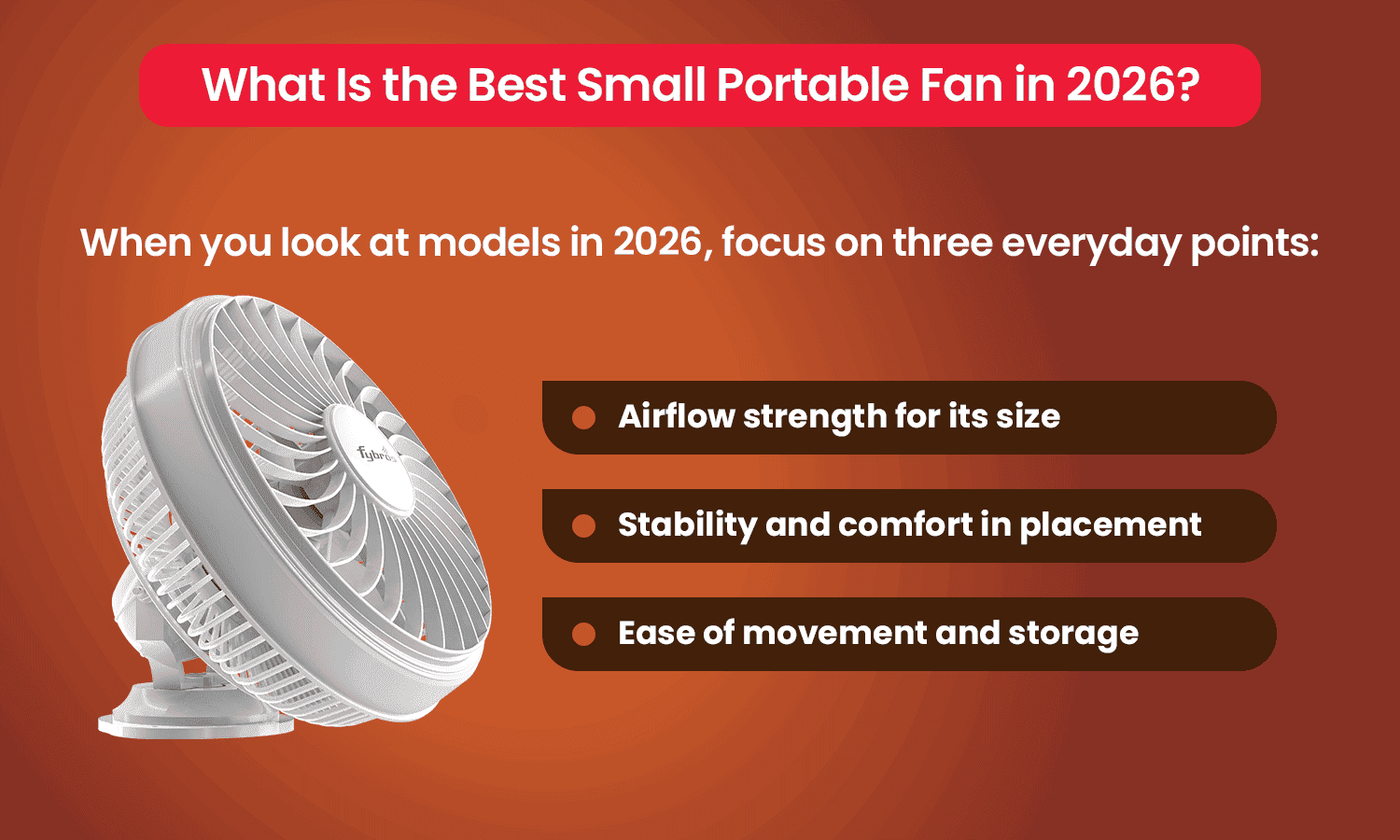
When you look at models in 2026, focus on three everyday points:
-
Airflow strength for its size
-
Stability and comfort in placement
-
Ease of movement and storage
A small portable table fan usually works best for home use because it stays stable on any surface and gives wider airflow than handheld models. If you want just personal cooling close to your face or hands, a portable mini fan can do that job.
Which Small Portable Fan Is Best for Travel and Office Use?
For travel and office spaces, size and carry weight matter a lot. A small portable fan for travel should fit easily in your bag and not feel bulky. People generally prefer compact desk fans or lightweight personal fans for this reason.
Office use is similar. You need airflow for one person without noise disturbance. A compact desk model helps, and that’s why many people keep a portable table fan near workstations instead of depending only on ceiling fans.
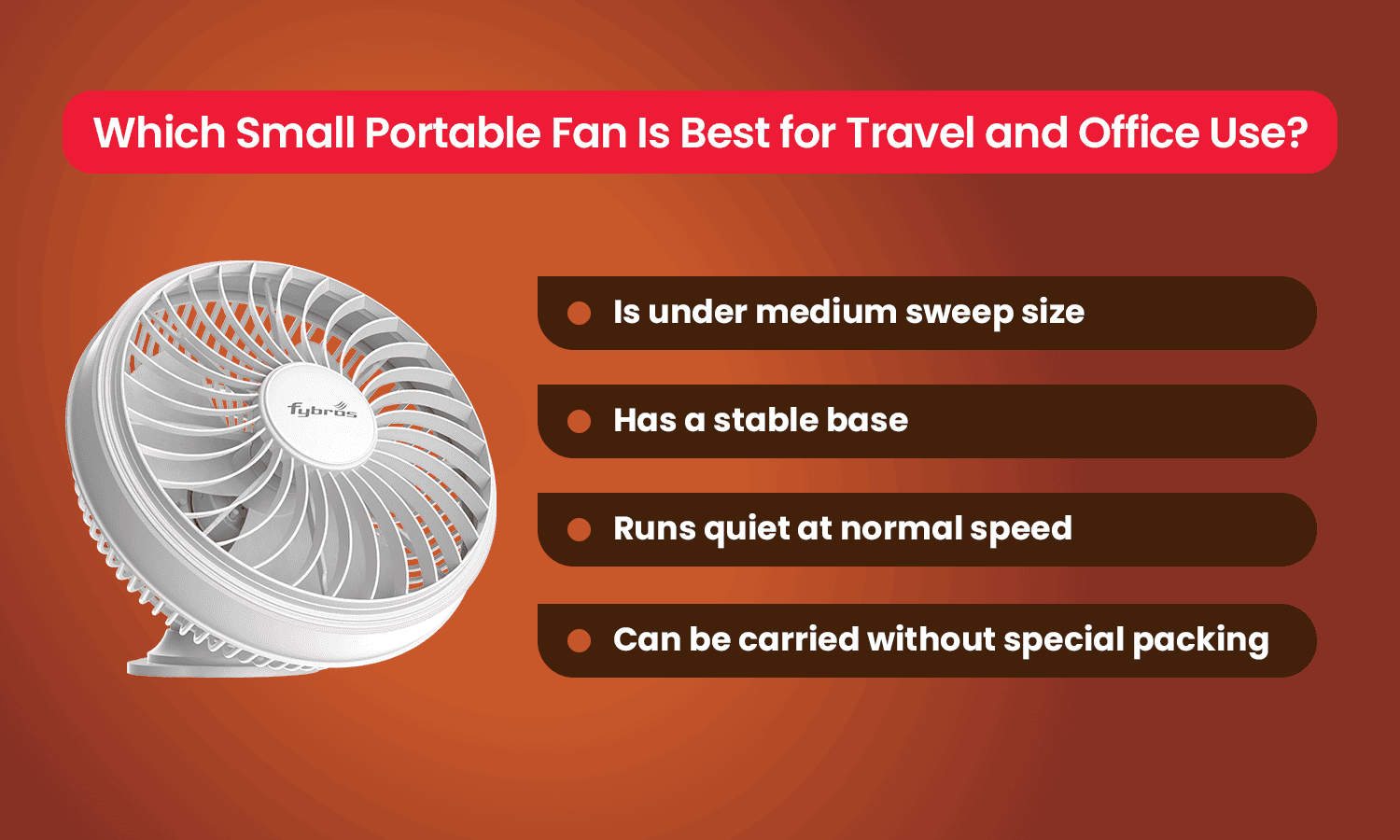
If you’re buying for both travel and office, choose something that:
-
is under medium sweep size
-
has a stable base
-
runs quiet at normal speed
-
can be carried without special packing
What Features Should You Look for in a Small Portable Fan?
A good small portable fan should not just be small. It should also feel useful day after day. Here are the features that matter most:
1. Air delivery and RPM
Higher RPM means faster airflow. A small fan needs decent RPM to feel effective.
2. Tilt and direction control
This lets you focus air exactly where you’re sitting or working.
3. Strong motor quality
Copper motors and safe induction setups last longer in Indian heat.
4. Stable base
A fan that shakes or tips easily becomes annoying quickly.
5. Noise level
If the fan is for study or sleep, quiet operation matters.
Before buying, always check the portable small fan price against these basics. A slightly higher-priced model becomes worth it if it lasts longer and performs better.
Is a Small Portable Fan Powerful Enough for Outdoor Use?
For open outdoor spaces, small fans won’t cool like big pedestal units because air disperses quickly outside. But they’re still useful for close-range comfort, like sitting on a balcony, working near a shop counter, or inside a tent.
If you want outdoor use, pick fans marketed as personal blowers, and look for high RPM and tight airflow direction. Compact fans are meant for focused comfort, not full-area cooling.
Are Small Portable Fans Noisy or Quiet?
This depends on motor build and speed type. Some compact fans are high-speed and can sound sharper. Others are made for calm airflow and quiet comfort. That’s why you should match the fan to your setting.
For workplaces or bedrooms, a lower-speed, quieter type is better. For kitchens, even a slightly louder fan is fine because you’re already in a busy environment with stove sounds.
How Do You Clean and Maintain a Small Portable Fan?
Small fans often sit in kitchens or near desks, so dust and grease can collect quickly. Simple care keeps performance steady.
-
Wipe the outer body weekly
-
Clean blades gently every few weeks
-
Keep the fan away from direct oil splashes
-
Don’t run it continuously at top speed for many hours
-
Store it dry when unused
This basic care keeps airflow smooth and protects the motor over time.
Best Small Portable Fan Picks from Fybros
Based on the models you shared, these are the Fybros fans that truly fit the small-portable category:
Gale Portable Fan (MRP ₹2835)
This fan is compact, fast, and easy to place on desks or counters. With a 300 mm sweep and high speed, it works well for personal cooling in kitchens or study corners.
Tri Air Portable Fan (MRP ₹2385)
A smaller sweep fan with very high RPM. It’s light, simple to carry, and great for travel bags, work desks, or quick personal airflow in tight spaces.
Handy Gust Portable Fan (MRP ₹4545)
The smallest in your list with a foldable body and quiet operation. It works best for bedside comfort, study tables, and close-range use without noise stress.
All three are plug-in fans, so they give steady cooling without needing charging cycles.
Conclusion
A small portable fan is one of the easiest comfort upgrades you can make in 2026. It helps in kitchens, desks, small rooms, and even travel setups. The key is choosing one that matches your space and airflow needs, not just the cheapest model on the shelf. Look for good RPM, stable placement, safe motors, and noise comfort, and you’ll get real daily value.
If you want compact plug-in fans with strong airflow and simple use, Fybros has good small portable choices like Gale, Tri Air, and Handy Gust. They’re made for everyday Indian heat, and they fit easily into daily routines without taking up extra space.
FAQs
1. Are Small Portable Fans Safe for Kids?
Yes, as long as you place them on stable surfaces and keep fingers away from the guard area. Choose a fan with strong grills and safe wiring.
2. Do Small Portable Fans Overheat?
Good quality fans don’t overheat in normal use. Avoid running at full speed continuously for many hours in closed spaces.
3. Are Small Portable Fans Good for Workouts?
Yes, they’re helpful for close-range cooling during home workouts. Place it facing you for steady airflow while exercising.
4. Are Small Portable Fans Energy Efficient?
Yes. They use low wattage compared to larger fans or coolers, so they’re a smart choice for focused cooling