
 Fans
Fans
 Switches & Accessories
 Led Lighting
 Wires & Cables
 Switchgear
How to Install and Connect a Small Tubelight: A Beginner’s Guide
How to Install and Connect a Small Tubelight: A Beginner’s Guide
A small tubelight is one of the easiest lighting upgrades you can do at home. These compact LED battens are light in weight, simple to wire, and designed for quick installation. In 2026, most homes use integrated LED models, which means there are no starters or chokes to worry about. Everything is built into one slim unit.
Small tubelights are commonly used in wardrobes, kitchens, bathrooms, staircases, and storage areas where a full-sized 4-foot light feels too large. With basic tools and careful steps, even a first-time installer can get it right.
What Is a Small Tube Light?
A small tube light usually refers to a compact LED batten that is either 1 foot or 2 feet long. These lights consume low power, typically between 5W and 10W, while still giving focused brightness.
A small tubelight led design is fully integrated, meaning the LED chips, driver, and housing come as one piece. You may also hear terms like tubelight small, tubelight small size, mini tube light, or small led tubelight, all pointing to the same category.
Compared to older fluorescent tube lights, these LED versions are safer, lighter, and easier to install.
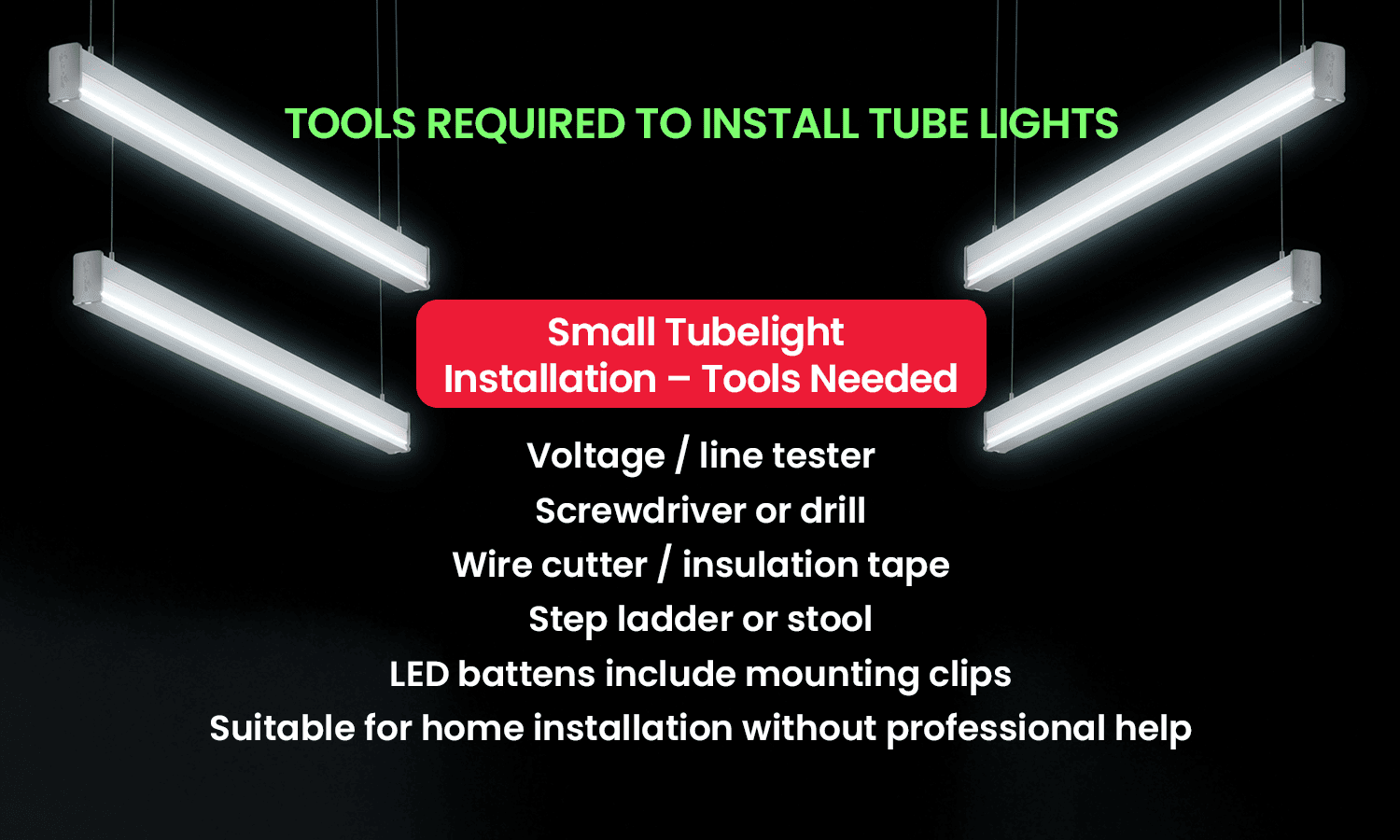
Tools Required to Install Tube Lights
Installing small tubelights does not need advanced equipment, but safety tools are essential.
-
Voltage tester or line tester
-
Screwdriver and drill
-
Wire stripper or cutter
-
Electrical insulation tape or wire nuts
-
Step ladder or sturdy stool
Most modern LED battens come with mounting clips, which makes them suitable for tube lights for home use without professional help.
How to Install Small Tube Lights on a Ceiling
1. Turn Off the Power
Switch off the main power supply from the MCB. Use a voltage tester to confirm there is no current in the wires.
2. Remove Old Fixtures
If replacing an older light, remove the existing fixture and disconnect the wiring. For a new point, ensure the ceiling junction box is accessible.
3. Connect the Wiring
Strip about 1 cm of insulation from the wires. Match the live wire (red or brown) and neutral wire (black or blue) from the ceiling to the tubelight wires. Secure them properly with tape or wire nuts.
4. Install the Tube Light
Fix the mounting clips using screws and wall plugs. Align the light and press it into the clips until it clicks into place.
5. Test the Installation
Restore power and switch on the light. A quality small LED tube light should turn on instantly without flicker.
6. Conduct Final Checks
Ensure the batten is straight, firmly fixed, and no wires are exposed.
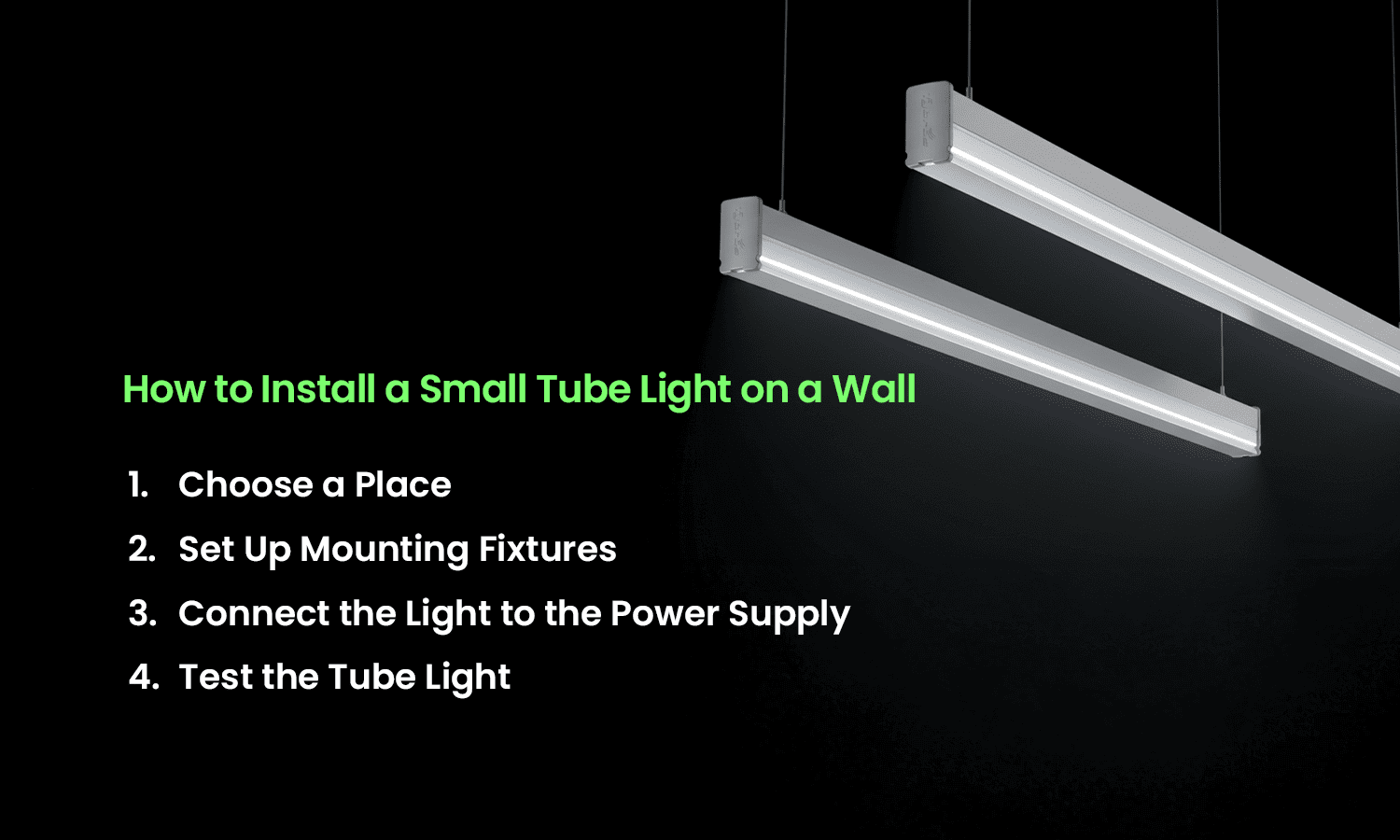
How to Install a Small Tube Light on a Wall
1. Choose a Place
Wall-mounted lights work well above mirrors, under cabinets, or inside wardrobes. These locations are also common for fancy tube lights used as accent lighting.
2. Set Up Mounting Fixtures
Mark the positions, drill holes, insert wall plugs, and fix the clips securely.
3. Connect the Light to the Power Supply
Turn off the power, strip the wires, connect live to live and neutral to neutral, and insulate properly.
4. Test the Tube Light
Switch the power back on and check for steady illumination. Wall-mounted lights are popular in kitchens and bedrooms, including fancy tube lights for bedroom layouts.
Common Uses and Pricing
Small tubelights are designed for focused lighting. Typical applications include wardrobes, under-cabinet kitchen lighting, vanity mirrors, staircases, and storage areas.
In January 2026, small tubelight prices usually range between ₹180 and ₹300 per unit, depending on wattage and brand. Compact models cost less than larger fixtures and are often more affordable than modern LED tube lights used for full-room lighting.
How to Choose the Right Small Tubelight
Understanding the types of tube lights helps make a better choice. Integrated LED battens are the most practical option today. Look for proper insulation, surge protection, and a sturdy body.
A compact LED batten is often preferred over older designs because it avoids glass breakage and humming noise. Many homeowners consider these among the best tube lights for home use in compact spaces.
Conclusion
Installing a small tubelight is a simple task when done step by step. With integrated LED designs, fewer parts, and low power usage, these lights suit modern homes perfectly. They are practical, long-lasting, and easy to maintain.
Brands like Fybros offer compact LED battens that are designed for Indian conditions, making them suitable for wardrobes, kitchens, and utility areas. When installed correctly, a small tubelight adds focused brightness exactly where it is needed, without complexity or excess power use.
FAQs
1. Are Small Tube Lights Repairable?
Modern LED battens are usually not repairable because the driver and LEDs are sealed into one unit. If a light fails, replacement is the standard solution. Most quality products come with a warranty that covers early defects.
2. Can I Directly Replace Fluorescent Tubes With LEDs?
Yes, but integrated LED battens require the removal of the old fixture. Once installed, they are safer and more efficient than traditional fluorescent setups.
3. What Is the Life Span of Small LED Tube Lights?
Most small LED tube lights last between 30,000 and 50,000 hours. With normal home use, this translates to 10–15 years of service.
4. What Is Better, a tube light or LED for Eyes?
LED lights are easier on the eyes than fluorescent tubes. They provide steady light, reduce flicker, and offer better color clarity when installed correctly.