
 Fans
Fans
 Switches & Accessories
 Led Lighting
 Wires & Cables
 Switchgear
Smart Switch vs Regular Switch and How to Choose
Overview
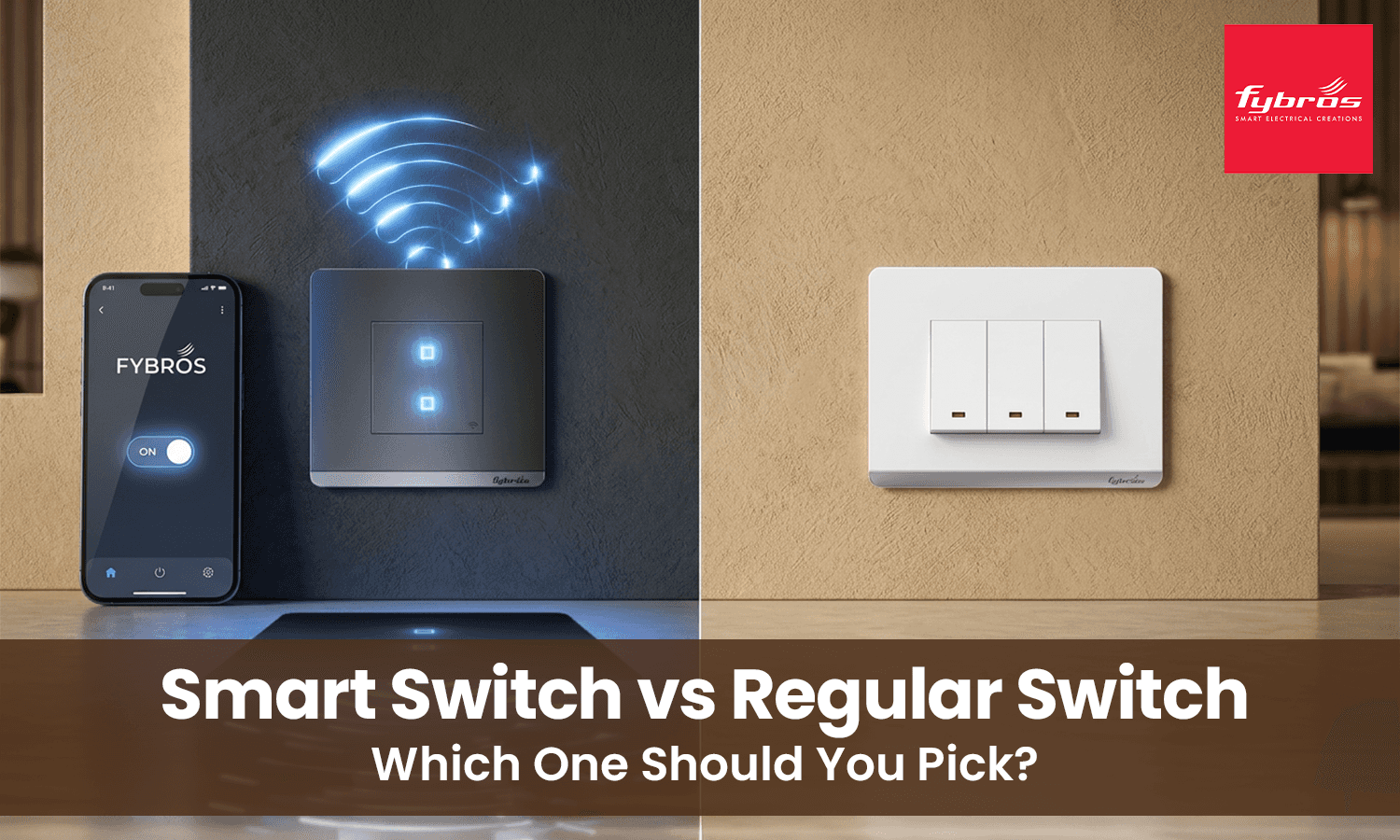
The smart switch vs regular switch choice comes down to control, comfort and cost. A regular switch simply toggles power, while a smart switch adds touch, dimming and sensing. This overview compares operation, installation, maintenance and value so you can decide which suits your home and each room in it.
Introduction
Before you upgrade a room, it helps to weigh the two options clearly. The smart switch vs regular switch question is really about how much control and comfort you want against simplicity and low cost. Both fill Indian homes today, and India’s smart home market heading toward around 15 billion dollars by 2030 shows which way the trend is moving. This resource compares them fairly, using the real Fybros range where useful.
The Two Options Explained
A regular switch simply toggles a circuit on and off with a mechanical key, and it is reliable, cheap and familiar. A smart switch adds a layer of control, such as a touch surface, dimming, timers or sensing. The Fybros F-Touch range is a good example, offering touch panels, a dimmer and a fan regulator. Seen side by side, the difference is about features and feel rather than basic function.
Comparing Control and Comfort
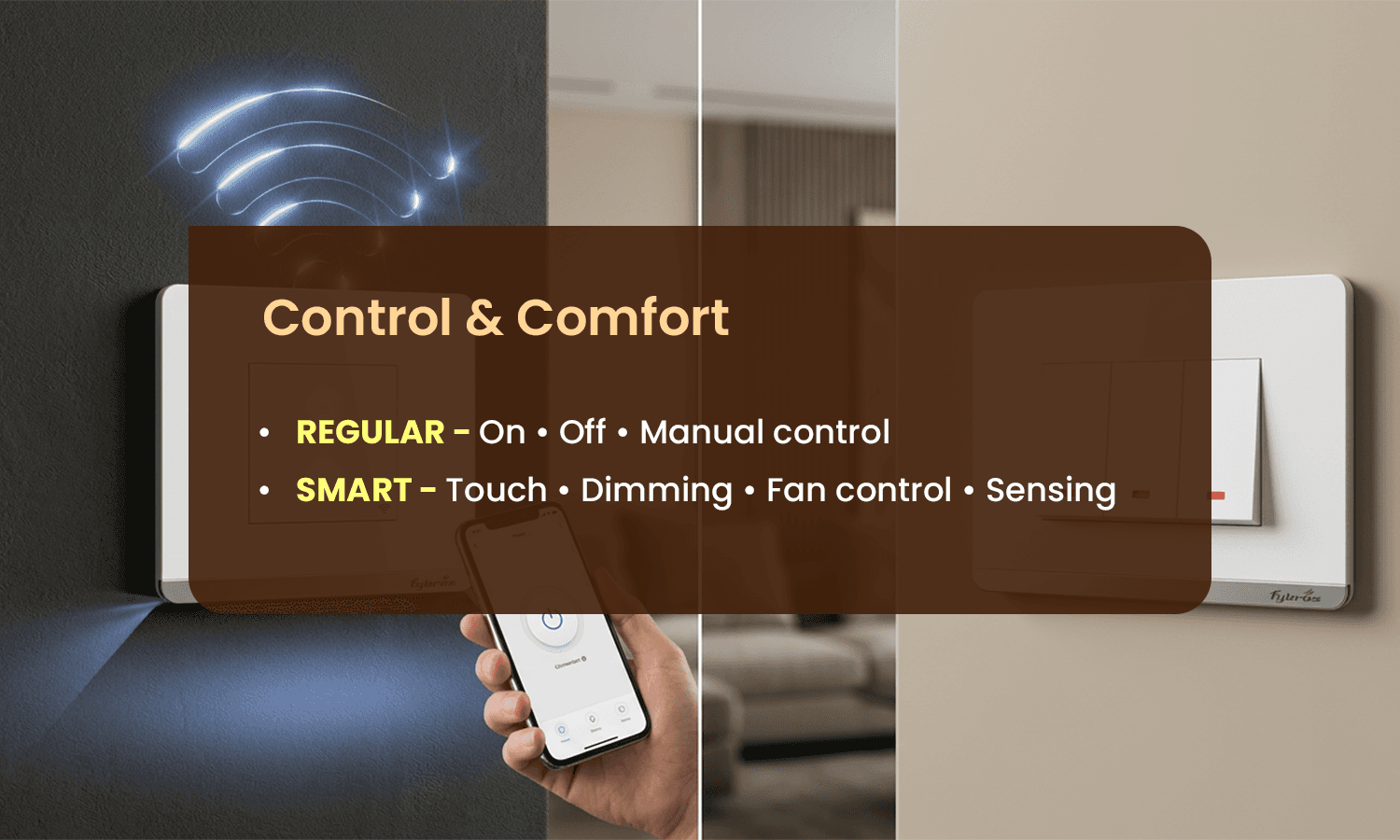
This is where smart switches pull ahead. A touch panel can dim lights, set fan speed and even control curtains, while a normal switch only turns things on or off. Sensors add hands free control that a plain switch cannot match. For daily comfort in living rooms and bedrooms, this difference is easy to feel. That said, a simple utility point rarely needs more than a regular switch, so the right answer depends on the room.
| Factor | Smart switch | Regular switch |
|---|---|---|
| Control | Touch, dimming, sensing and scenes | Simple on and off |
| Comfort | Set mood and speed from one panel | Basic and functional |
| Cost | Higher for the electronics | Low and familiar |
| Best for | Living rooms, bedrooms, entrances | Utility and low use points |
Comparing Cost Install and Maintenance
On price, a normal switch is cheaper at first and simple to wire. Smart switches cost more and need a qualified electrician to match the load to each channel, but they add comfort and a modern feel. On upgrades, a modular board makes moving from a plain switch to smart control easy, which a fixed non modular switch does not allow. Weighing the whole life of a board usually narrows the cost gap.
Which One Suits You
The best choice varies by room and household. For spaces you use and enjoy daily, smart switches for home use bring comfort that repays the extra cost, and the best options among smart switches for home are reliable and easy to use. For simple points, a plain switch is fine. Many families mix the two, adding smart home switches in living areas and keeping standard switching elsewhere for a sensible balance.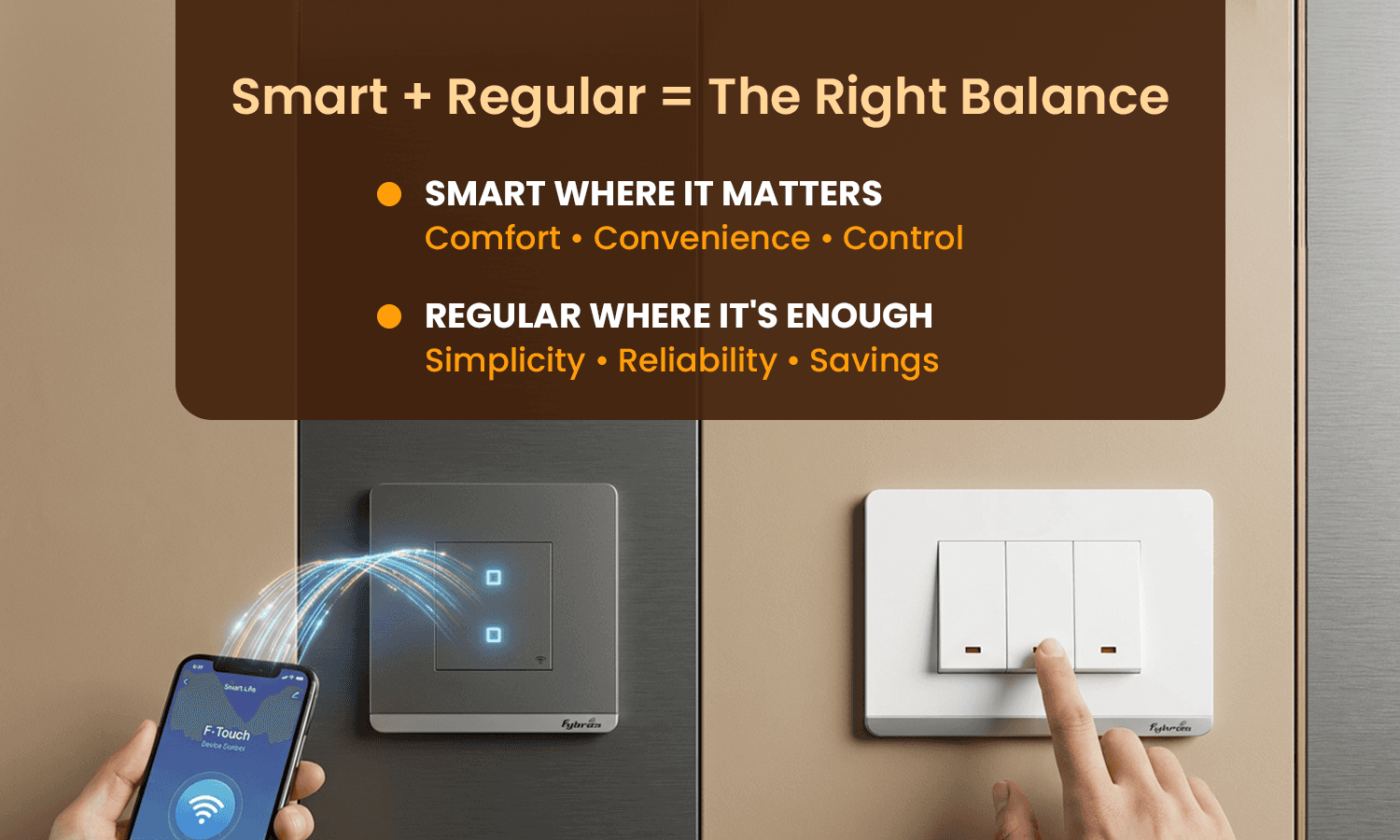
Getting the Balance Right
The smartest homes rarely go fully smart or fully basic. Instead they place comfort where it counts. Fitting smart home switches in living rooms, bedrooms and entrances gives the biggest daily payoff, while stores, balconies and utility points stay fine on plain switches. This balance keeps the budget sensible and the wall easy to use for everyone in the house.
Planning also matters for the future. Choosing a modular board now means adding more smart controls later is simple, since each touch module fits the same frame. A little foresight at the wiring stage saves rework and lets the home grow smarter at its own pace.
Key Takeaways
-
The smart switch vs regular switch choice is control and comfort against simplicity and low cost.
-
A regular switch simply toggles power, while a smart switch adds touch, dimming and sensing.
-
A normal switch is cheaper at first, but smart control adds comfort and a modern feel.
-
A modular board makes upgrading easy, which a fixed non modular switch does not allow.
-
For daily use rooms, smart switches for home repay their cost, while simple points stay fine on plain switches.
FAQs
1. What is the real smart switch vs regular switch difference?
The difference is that a regular switch simply toggles a circuit, while a smart switch adds touch control, dimming, timers or sensing. A regular switch is cheap and familiar, whereas a smart switch brings comfort and a modern feel. The right pick depends on how each room is used.
2. Are smart switches worth it over normal switches?
For rooms you use daily, yes. Smart switches for home use add dimming, fan control and sensors that a normal switch cannot match, which is a real comfort in living rooms and bedrooms. For simple utility points, a plain switch is enough, so many homes mix the two for the best balance of cost and comfort.
3. Can I upgrade from a regular switch to a smart one?
Yes, and it is easiest on a modular board, since a touch module fits the same frame. Moving from a fixed non modular switch is harder and often means more rework. This is why the smart switch vs regular switch decision also depends on how modular and upgrade ready your board is.
Choose Confidently With Fybros
Both switch types have their place, but for the rooms you enjoy most, smart control is hard to beat. Fybros makes the choice easy with a touch range that fits your modular boards and upgrades simply. When you weigh the smart switch vs regular switch decision for daily use spaces, the Fybros F-Touch range gives you comfort and reliability in equal measure.
Deciding how far to go smart? Browse the Fybros F-Touch range and see why the choice often favours smart for daily use. Visit fybros.com or your nearest Fybros dealer to compare.