
A warm light LED gives a soft, golden glow near 3000K that makes a room feel calm and welcoming. It suits bedrooms, living rooms, dining areas and decorative lighting, where comfort matters more than sharp brightness. Choosing warm over cool light is one of the simplest ways to change how a space feels.
Two rooms can have the exact same fittings and feel completely different, and colour is usually the reason. A cold, blue-white light makes a bedroom feel like an office, while a soft, golden glow makes the same room feel restful. That golden glow comes from a warm light LED, and once you notice the difference you cannot unsee it. This page explains what warm light is, where it belongs and how to use it well.
The idea is simple and it costs nothing extra to get right. You just have to pick the correct colour when you buy, rather than grabbing whatever is on the shelf.
Light colour is measured on the Kelvin scale, and lower numbers mean warmer, more golden light. A warm white LED light sits around 3000K, close to the soft glow of an old bulb or a candle. Move up to 4000K and the light turns neutral, and at 6000K it becomes cool and daylight-like. So a warm light LED is simply one tuned to that lower, cosier end of the scale. It is the same efficient technology as any other LED, just set to feel gentle rather than sharp.
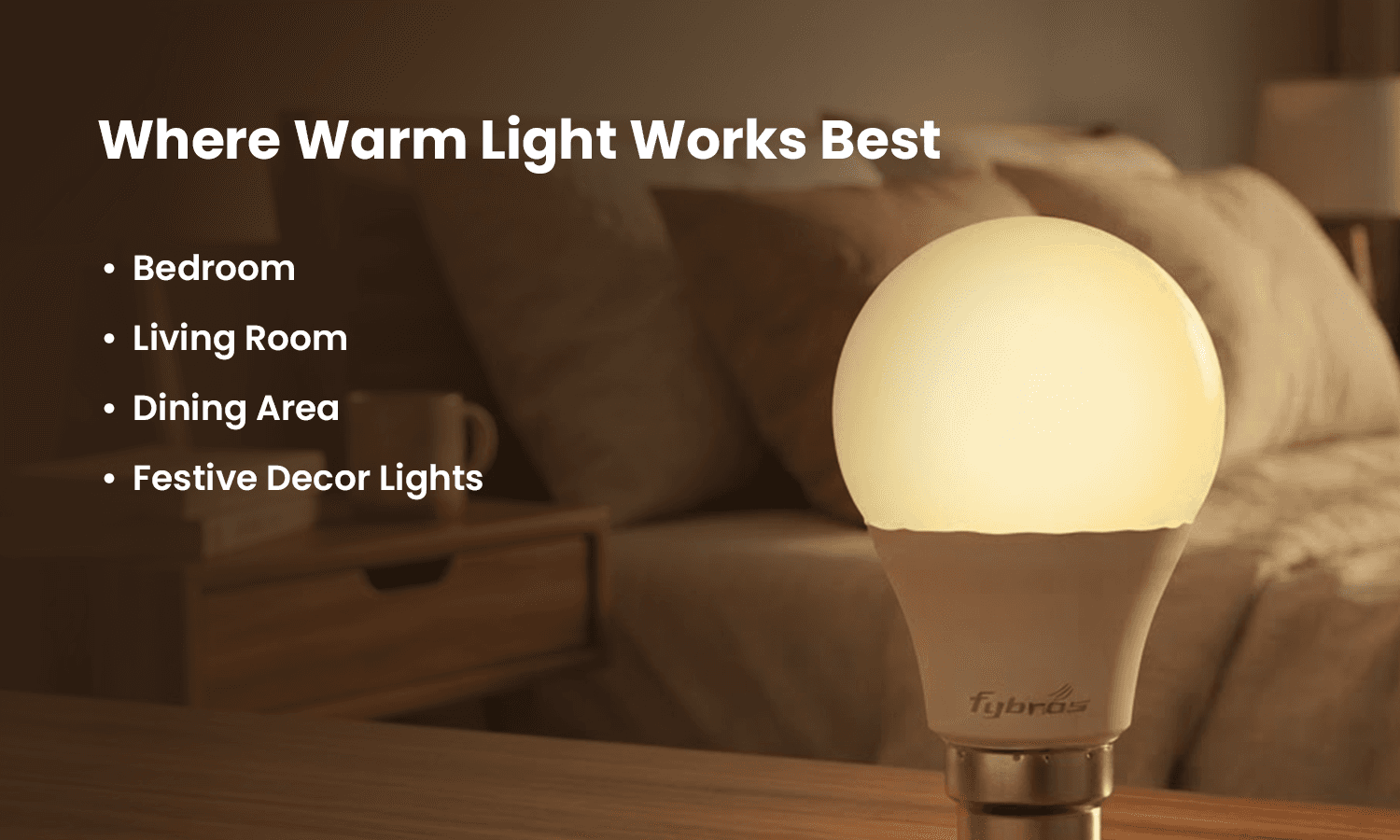
Warm light suits the rooms where you relax. A bedroom is the clearest case, and warm light for bedroom use helps the body wind down at night, since cool blue light can quietly keep you alert. Living rooms and dining areas also feel more welcoming under warm light, which flatters skin, wood and food. A soft warm yellow light for bedroom corners, or a warm light lamp for a bedside read, adds comfort without harshness. As a rule, if a room is for rest or gathering, warm light is the safer choice.
Warm tones are also the heart of good decorative lighting. Hidden cove lighting, picture lights and festive displays nearly always look better warm, because the golden tone feels rich and inviting. A run of warm white LED strip light in cove and strip lighting gives a gentle glow that lifts a room in the evening. For festivals and events, warm white led light decoration wrapped along a wall or a railing feels welcoming in a way cool white never manages. When the goal is mood rather than task, warm light almost always wins.
There is a simple reason warm light suits the evening. Cool, blue-rich light tells the body it is daytime, which can make it harder to wind down before bed. Warm light carries far less of that blue, so it feels calmer as the night goes on. This is why a bedside led warm light is better kept soft and golden rather than bright and white. It is also why many people set warm tones in the bedroom and the living room, saving cooler light for kitchens and workspaces.
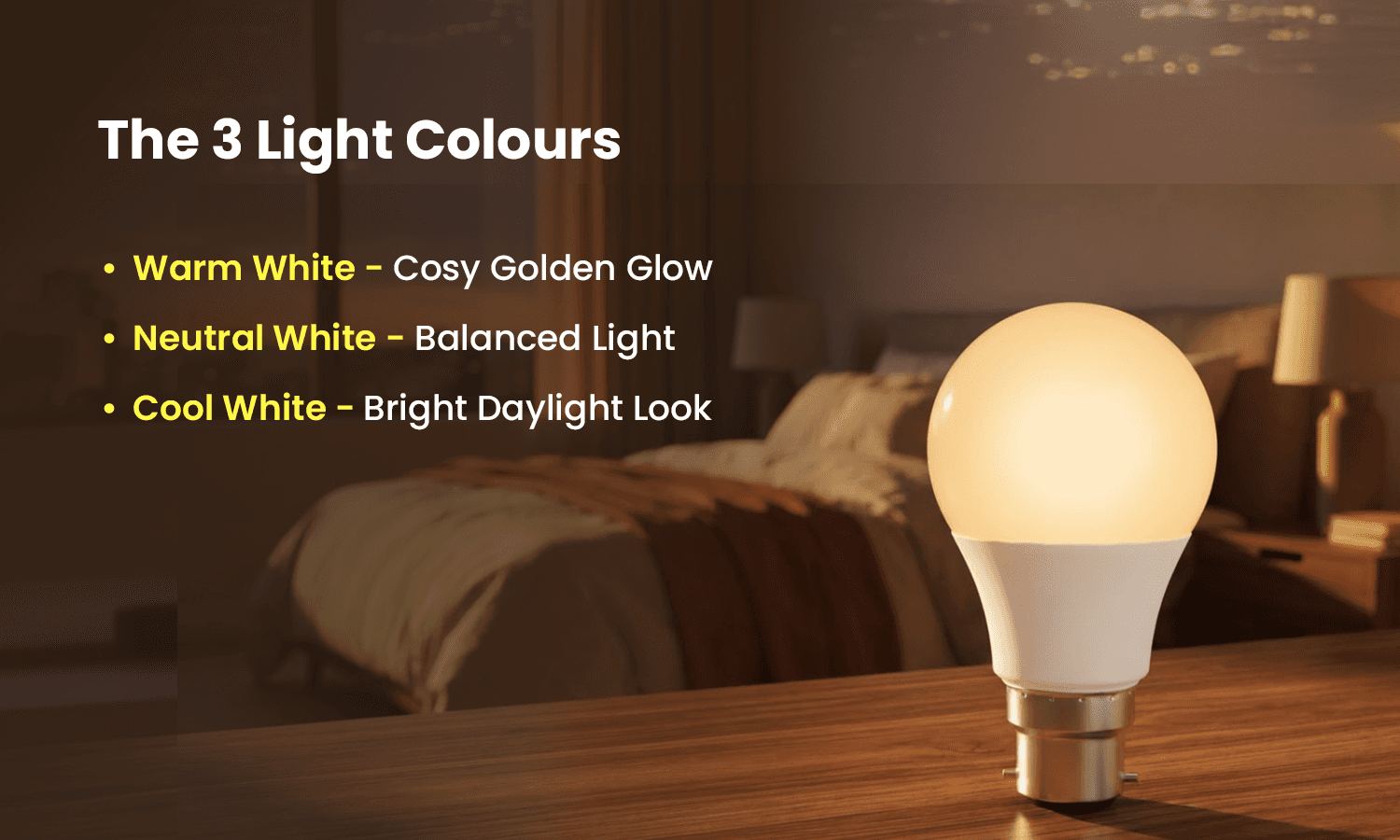
It helps to picture the three tones side by side. A warm light LED near 3000K feels golden and relaxing, a neutral white near 4000K feels clean and balanced, and a cool white near 6000K feels bright and crisp like daylight. None is simply better, they suit different jobs. The mistake most homes make is using one cool tone everywhere, which leaves bedrooms feeling cold. Choosing a warm light LED for the restful rooms and saving cool white for kitchens and study areas is the single easiest way to make a whole home feel right.
The easiest way to plan a home is to split it by activity. Use warm light where you rest and gather, and cooler light where you work and clean. Many Fybros fittings make this simple with a 3-in-1 option, where a small switch moves the same fitting between warm, neutral and cool. That means a single warm white LED light fitting can glow soft in the evening and turn brighter for a task when needed. Fybros offers warm white across its panels, downlights, strips and bulbs, so a whole home can share one cosy tone.
1. What colour is warm light LED?
A warm light LED gives a soft, golden white around 3000K, close to the glow of an old filament bulb. It is gentler and cosier than neutral or cool white, which sit higher on the Kelvin scale. The technology is the same as any LED, just tuned to a warmer, more relaxing tone.
2. Is warm light good for a bedroom?
Yes. Warm light is the better choice for a bedroom because it helps the body relax, while cool blue light can keep you alert. A soft warm light for bedroom use, be it from a panel, a lamp or a strip, makes the room feel restful and helps wind you down before sleep.
3. How much does a warm light LED cost?
A led warm light price is the same as any other LED of the same type, since colour is simply a setting chosen at the factory, not an extra part. A warm white bulb, panel or strip costs no more than its cool white version, so choosing warm is about comfort rather than budget.
A warm light LED gives a soft golden glow near 3000K that makes a room feel calm and welcoming.
Use warm light in bedrooms, living rooms and dining areas, where comfort matters more than sharp brightness.
Warm tones suit decoration, cove lighting and festivals, where mood beats task light.
Warm light carries less blue, so it helps the body wind down in the evening.
A 3-in-1 Fybros fitting lets one light switch between warm, neutral and cool as the day needs.
Want your home to feel warm and welcoming rather than cold and clinical? See the Fybros range in warm white and 3-in-1 options and choose the tone that suits each room. Visit fybros.com or ask your nearest Fybros dealer to plan the mood room by room.

 Fans
Fans
 Switches & Accessories
 Led Lighting
 Wires & Cables
 Switchgear