
 Fans
Fans
 Switches & Accessories
 Led Lighting
 Wires & Cables
 Switchgear
Warm White vs Cool White Light: Understanding the Key Differences

Introduction
When you walk into a lighting or a hardware store or even browse online, you are often faced with a choice: Warm White vs Cool White. While it might seem like a small detail, the color of your light completely changes how a room feels and how you function within it. Choosing between warm light and cool light isn't just about brightness; it is about setting the right mood for your Indian home.
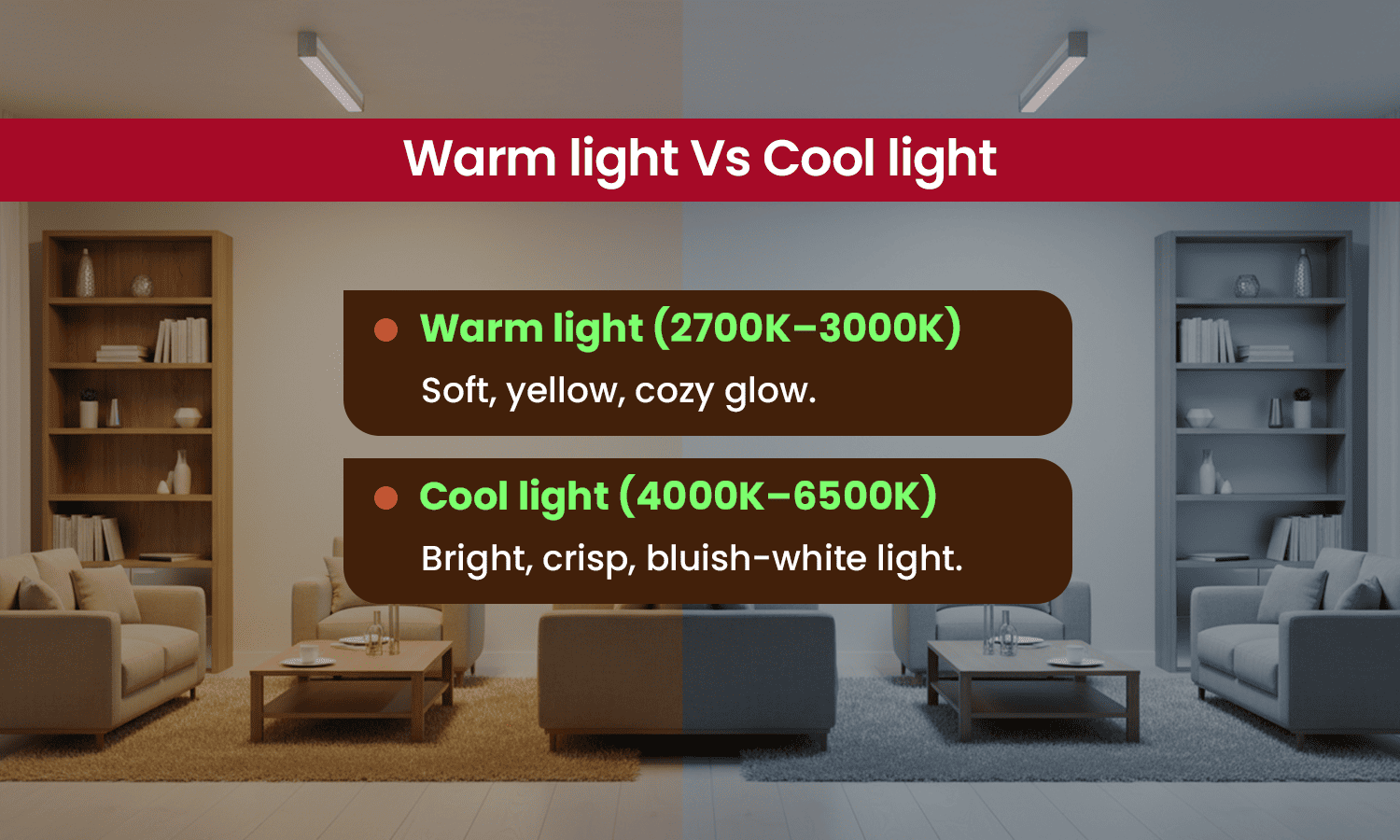
Warm light Vs Cool light
The main difference between these two lies in the "color temperature," which is measured in Kelvins (K).
-
Warm light is lower on the scale (around 2700K–3000K) and has a yellowish, cozy glow.
-
Cool light is higher on the scale (4000K–6500K) and provides a crisp, bluish-white brilliance.
At Fybros, we offer a wide range of both, ensuring you have the best cool white LED bulbs for work and the softest warm white LED lights for rest.
What is warm white light?
Warm white light mimics the soft, golden glow of a sunset or a traditional candle. It is designed to feel welcoming and intimate. If you use warm white LED strip lighting or warm light bulbs, you’ll notice that textures like wood and earthy fabric tones look much richer. It is the go-to choice for creating a "homely" feeling.
What is cool white light?
Cool white light is bright, modern, and energizing. Often referred to as "daylight" at the higher end of the scale, cool white light bulbs produce a clean, clinical look. This light is perfect for seeing fine details and staying alert. Cool white LED bulbs are the standard for modern interiors where a sense of cleanliness and space is preferred.
The difference between warm light and cool light
|
Feature |
Warm White (2700K-3000K) |
Cool White (4000K-6500K) |
|
Visual Tone |
Yellowish, soft, and cozy |
Bluish-white, sharp, and crisp |
|
Mood |
Relaxing, calming, intimate |
Energizing, focused, alert |
|
Decor Fit |
Traditional, rustic, wooden |
Modern, minimal, industrial |
|
Visibility |
Softer, diffused light |
High clarity and contrast |
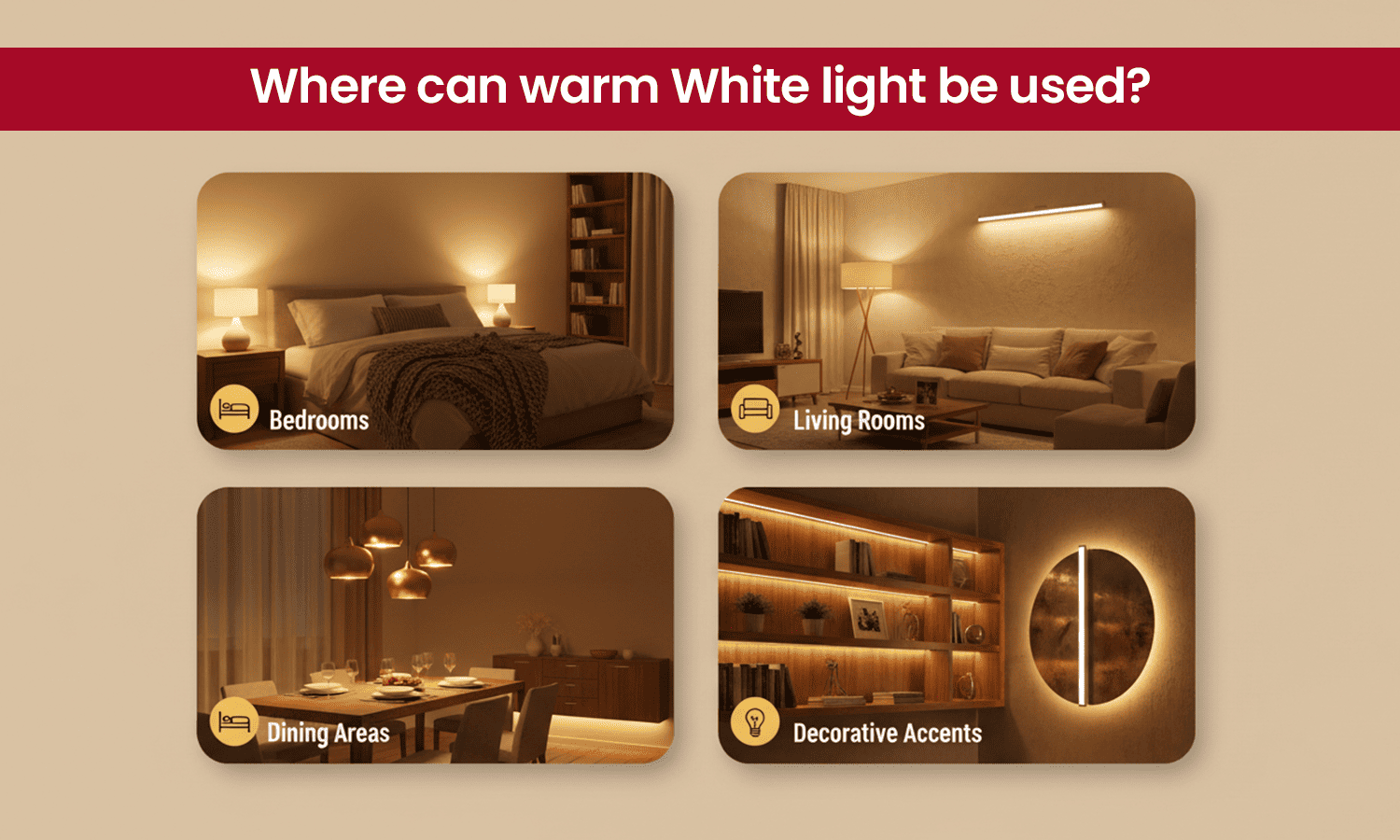
Where can warm White light be used?
Because it promotes relaxation, warm LED strip lights and bulbs are best for:
-
Bedrooms: To help your brain wind down for sleep.
-
Living Rooms: For a cozy atmosphere during family conversations.
-
Dining Areas: To make meals look more appetizing and inviting.
-
Decorative Accents: Using white string lights in warm tones for festivals like Diwali.
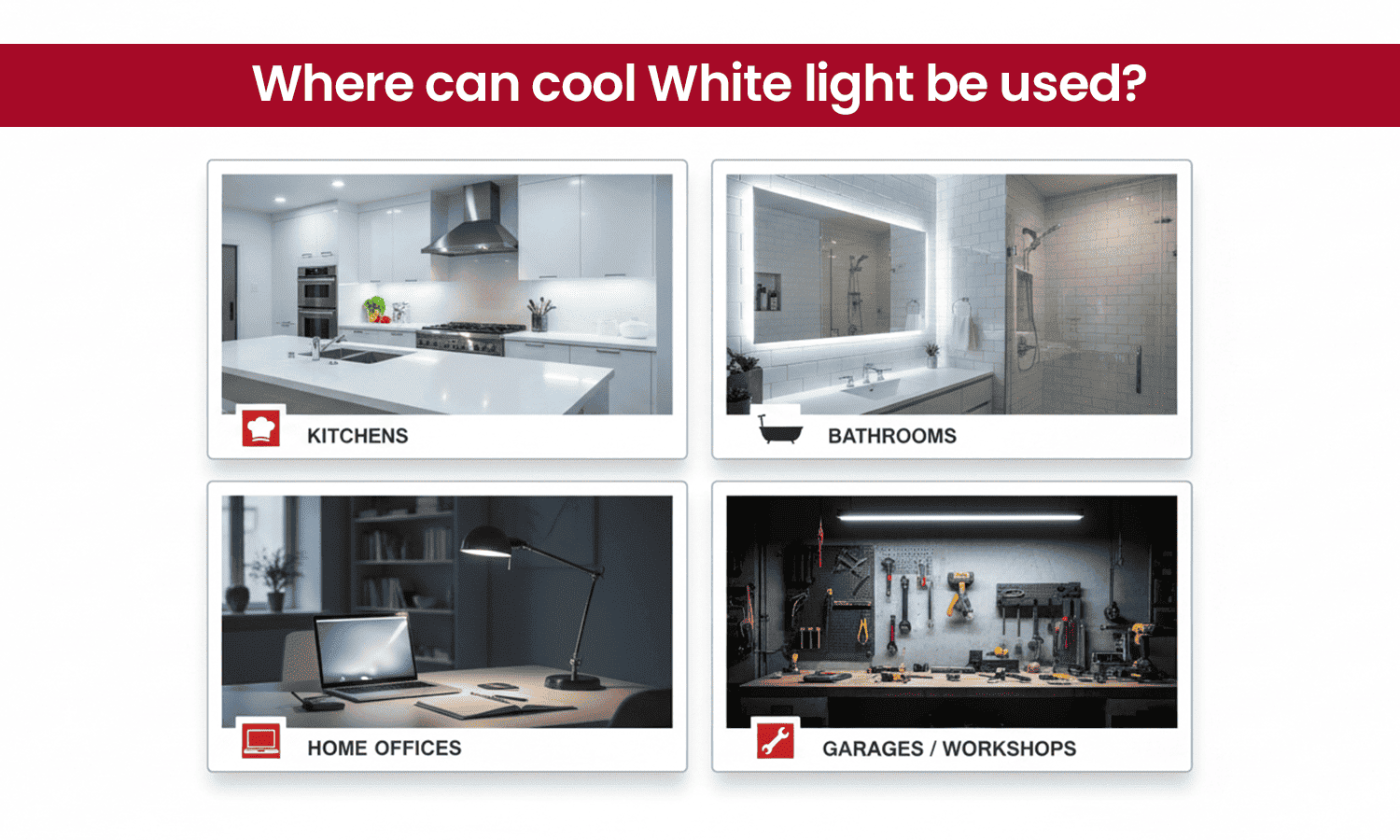
Where can cool White light be used?
Cool white light is all about performance. It should be used in:
-
Kitchens: To see clearly while chopping and cooking.
-
Bathrooms: For accurate reflection during grooming or applying makeup.
-
Home Offices: To maintain focus and reduce drowsiness.
-
Garages/Workshops: Where high visibility is a safety requirement.
Which one should I use?
The answer depends on the room's purpose. For a balanced home, we recommend layering. Use cool white bulbs for your main ceiling lights in functional areas and warm white light bulb options for lamps and accent strips. If you can't decide, Fybros offers 3-in-1 LED battens that let you switch between cool white and warm white with a simple click of your switch!
Conclusion
Understanding the debate of Warm White vs Cool White helps you design a home that works for your lifestyle. Whether you need the high-energy boost of cool white light or the soothing embrace of warm white LED lights, Fybros has the perfect solution. By matching the color temperature to your daily activities, you can improve your productivity and your sleep quality simultaneously.
FAQs
1. Is Warm LED Light Good for Eyes?
Yes, warm light vs cool light studies show that warm tones are gentler on the eyes for evening reading as they reduce glare and harshness.
2. Which Is Better, Warm White or Natural White?
Natural White (4000K) is a middle ground. It is better for general areas like hallways, while Warm White is superior for creating a cozy bedroom vibe.
3. What Are the Disadvantages and Advantages of Warm White Lights?
The advantage is a cozy, relaxing mood; the disadvantage is that it can make a space feel "dimmer" and isn't ideal for detailed tasks like sewing.
4. What Is Considered Cool White?
Any light with a color temperature between 4000K and 6500K is considered cool white, with the higher end feeling like bright midday sun.
5. What Are the Disadvantages and Advantages of Cool White?
The advantage is high clarity and focus; the disadvantage is that it can feel "cold" or "clinical" if used in a bedroom at night.
6. Is Cool White Good for the Eyes?
It is excellent for tasks that require focus, like studying, as it reduces eye strain by providing high contrast and sharp visibility.