
 Fans
Fans
 Switches & Accessories
 Led Lighting
 Wires & Cables
 Switchgear
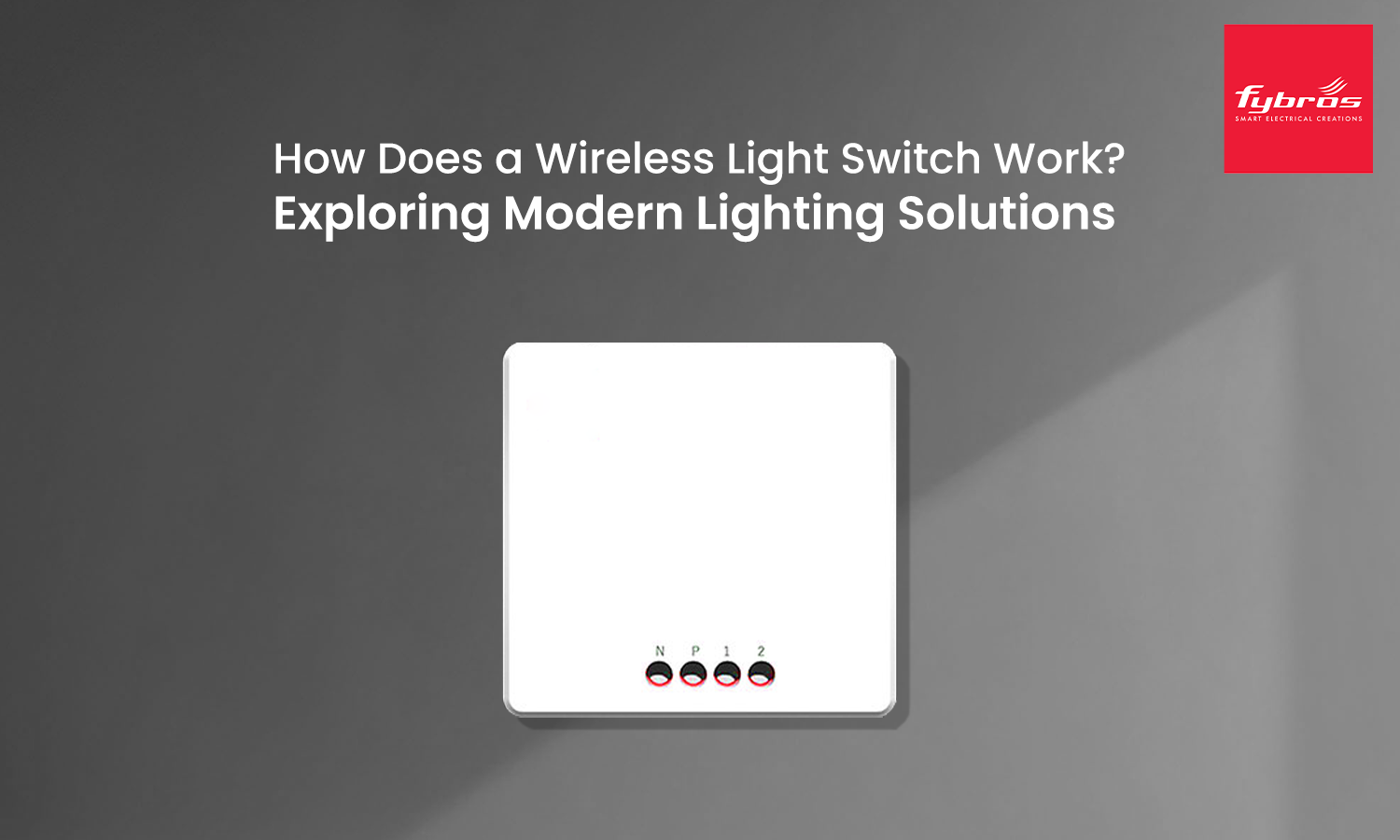
How Does a Wireless Light Switch Work? Exploring Modern Lighting Solutions
Introduction
Lighting plays a big role in how comfortable your home feels, and technology has made it easier to control it in smarter ways. One of the simplest upgrades is the wireless light switch, a device that lets you control lights without relying on traditional wiring. Whether you live in a new apartment or an older home, wireless switching makes lighting more flexible and convenient.
With options like the Fybros Retrofit Smart Switch, wireless control is now accessible, safe, and perfect for modern Indian homes.
What Is a Wireless Light Switch?
A wireless light switch is a switch that controls a light without a direct wired connection between the switch and the load. Instead of sending signals through physical wiring, it uses radio frequency, Bluetooth, or Wi-Fi to turn lights on or off.
Think of it as a remote-control system for your lighting. You can place the switch anywhere—on a wall, near your bed, or even hold it like a small controller. Some wireless systems also support automation and app control, similar to what you get with a wifi light switch, but without needing traditional wiring.
This makes a wireless switch for light especially useful when rewiring is not feasible or when you want simple control in hard-to-reach areas.
How Does a Wireless Light Switch Work?
A wireless light switch works by sending a signal from the switch to a receiver installed with the light fixture. Once the receiver gets the signal, it performs the action—turning the light on, off, or adjusting brightness if dimming is supported.
Here’s the basic process:
-
You press the wireless switch.
-
The switch sends a radio, Bluetooth, or Wi-Fi signal.
-
The receiver module connected to your light responds instantly.
-
Your light reacts exactly as commanded.
This setup removes the need for load wire connections to the switch itself. The system can work with simple bulbs or with advanced dimmable lighting. A wireless light switch kit usually includes both the switch and the receiver module.
Advanced models like the Fybros Retrofit Switch also support wifi smart switch features, allowing app-based control alongside wireless switching.
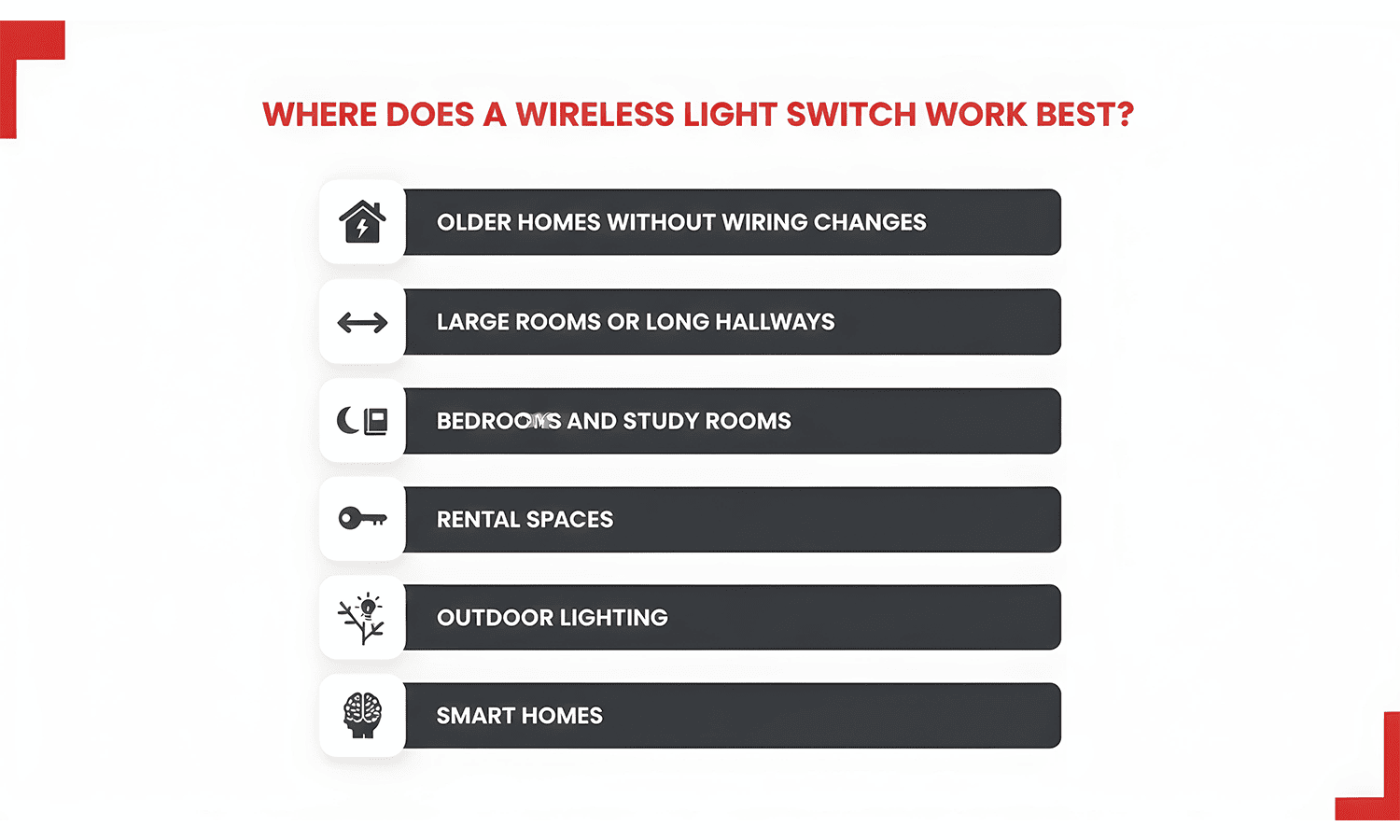
Where Does a Wireless Light Switch Work Best?
Wireless switches are extremely flexible and can be used across different spaces and conditions. Here are some ideal use-cases:
Older Homes Without Wiring Changes
If you want to avoid breaking walls, drilling, or rewiring, a wireless setup is ideal. This is especially useful in homes with limited space around the switchboard.
Large Rooms or Long Hallways
A remote control switch helps control lights from anywhere in the space, giving you better convenience.
Bedrooms and Study Rooms
You can place the switch beside your bed for easier night-time control.
Rental Spaces
Wireless switches keep landlords happy because you don’t need to modify existing wiring.
Outdoor Lighting
Wireless setups help control porch, balcony, and garden lights without extra wiring. Many people prefer wireless lights for wall in such cases.
Smart Homes
With Wi-Fi-enabled receivers, your wireless switch can be paired with app and voice control, just like a wifi electrical switch.
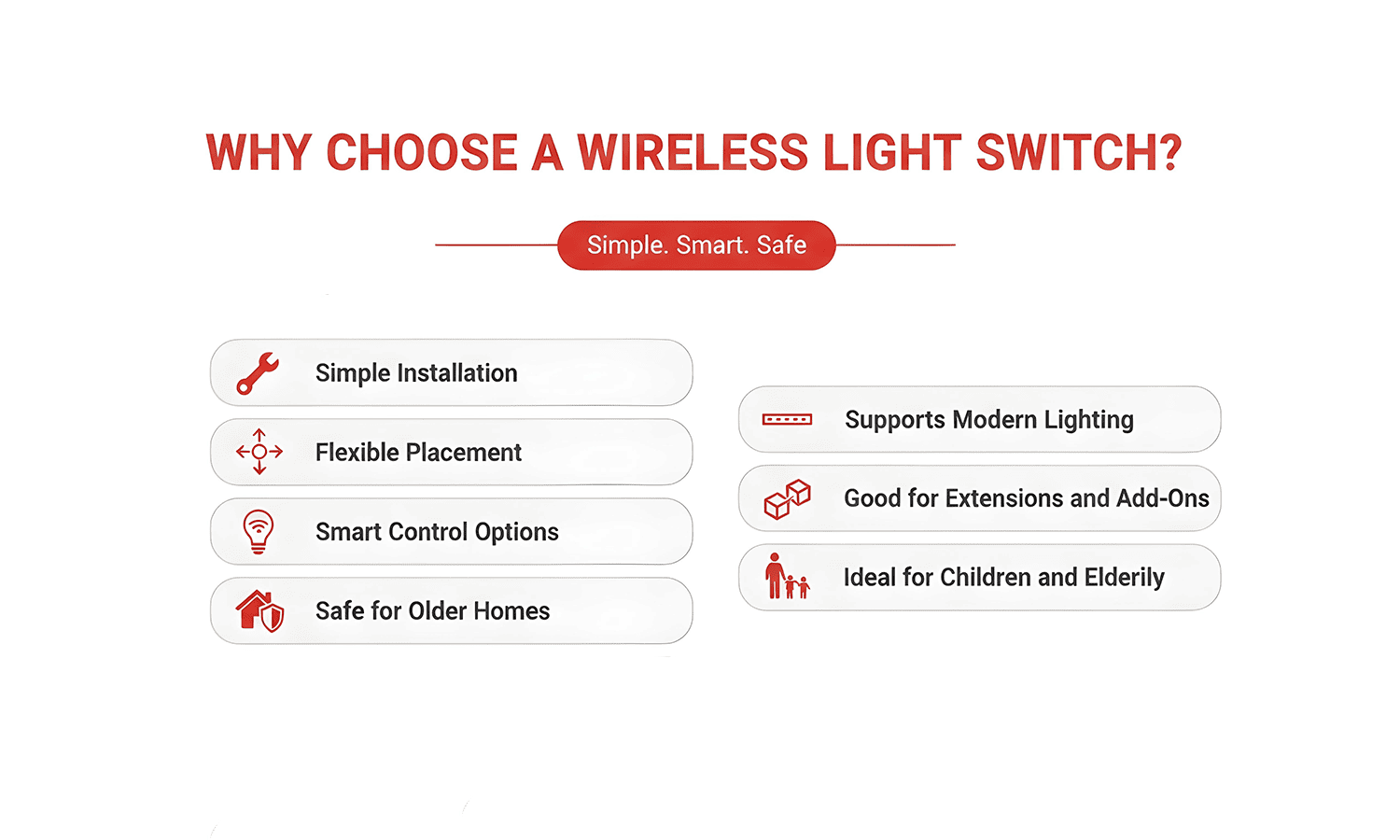
Why Choose a Wireless Light Switch?
A wireless light switch offers far more than just convenience. It fits today’s lifestyle needs by adding flexibility, safety, and modern control. Here are the key advantages:
1. Simple Installation
Wireless switches avoid complicated rewiring because the switch and receiver communicate remotely.
2. Flexible Placement
You can mount the switch anywhere on the wall or place it near areas of frequent use.
3. Smart Control Options
When paired with Wi-Fi receivers, you can enjoy features similar to a wifi controlled switch, such as app control, scheduling, and voice commands.
4. Safe for Older Homes
Wireless systems reduce the need to touch old or fragile wiring. This is useful in older construction setups.
5. Supports Modern Lighting
Many wireless systems can work with LED dimming when matched with a compatible receiver, similar to a smart LED dimmer switch.
6. Good for Extensions and Add-Ons
If you want a switch at a new location—like near a staircase, at the bed, or at a second entry point—wireless solutions make it easy.
7. Ideal for Children and Elderly
Remote access through a remote control electric switch ensures easier operation for those who may struggle with standard wall switches.
Conclusion
Wireless light switches bring flexibility and simplicity into your home. They offer the freedom to place switches anywhere, automate lighting, or create smart control setups without touching the existing wiring.
For Indian homes, solutions like the Fybros Retrofit Smart Switch help bridge the gap between traditional wiring and modern wireless technology. Whether you're upgrading a room or planning a smart home, wireless lighting control is a practical, easy, and future-ready solution.
Key Takeaways
-
A wireless light switch allows lighting control without physical wiring between switch and load.
-
It works using signals sent to a receiver connected to the light.
-
Wireless switches are great for older homes, rentals, and modern setups.
-
They offer flexibility, safety, and easy installation.
-
With smart receivers, they work like a fully modern smart switch system.
FAQs
1. Can I Install a Wireless Light Switch Myself?
Basic models are easy to set up, but it’s safer to let a technician handle the receiver installation so your wireless light switch works correctly.
2. Can I Use a Wireless Light Switch Without Rewiring My Home?
Yes. Wireless switches are designed for zero-rewiring setups, making them perfect for rented homes or older spaces.
3. Does a Wireless Light Switch Need Wi-Fi?
Not always. Some models work on radio frequency, while others work like a wifi light switch when paired with a compatible module.
4. Do Wireless Light Switches Need Batteries?
Many wireless switches use small batteries, while some advanced versions use kinetic energy and do not require replacements.