
 Fans
Fans
 Switches & Accessories
 Led Lighting
 Wires & Cables
 Switchgear
Best Standing Fan – Features & Benefits
Introduction
Buying the best standing fan sounds easy until you actually compare models. One looks good but feels weak. Another has strong air but makes too much noise. And sometimes the fan just does not fit your room.
This guide keeps it simple. You’ll learn what to check before you buy, what features matter in real life, and how to choose a fan that feels comfortable for daily use.
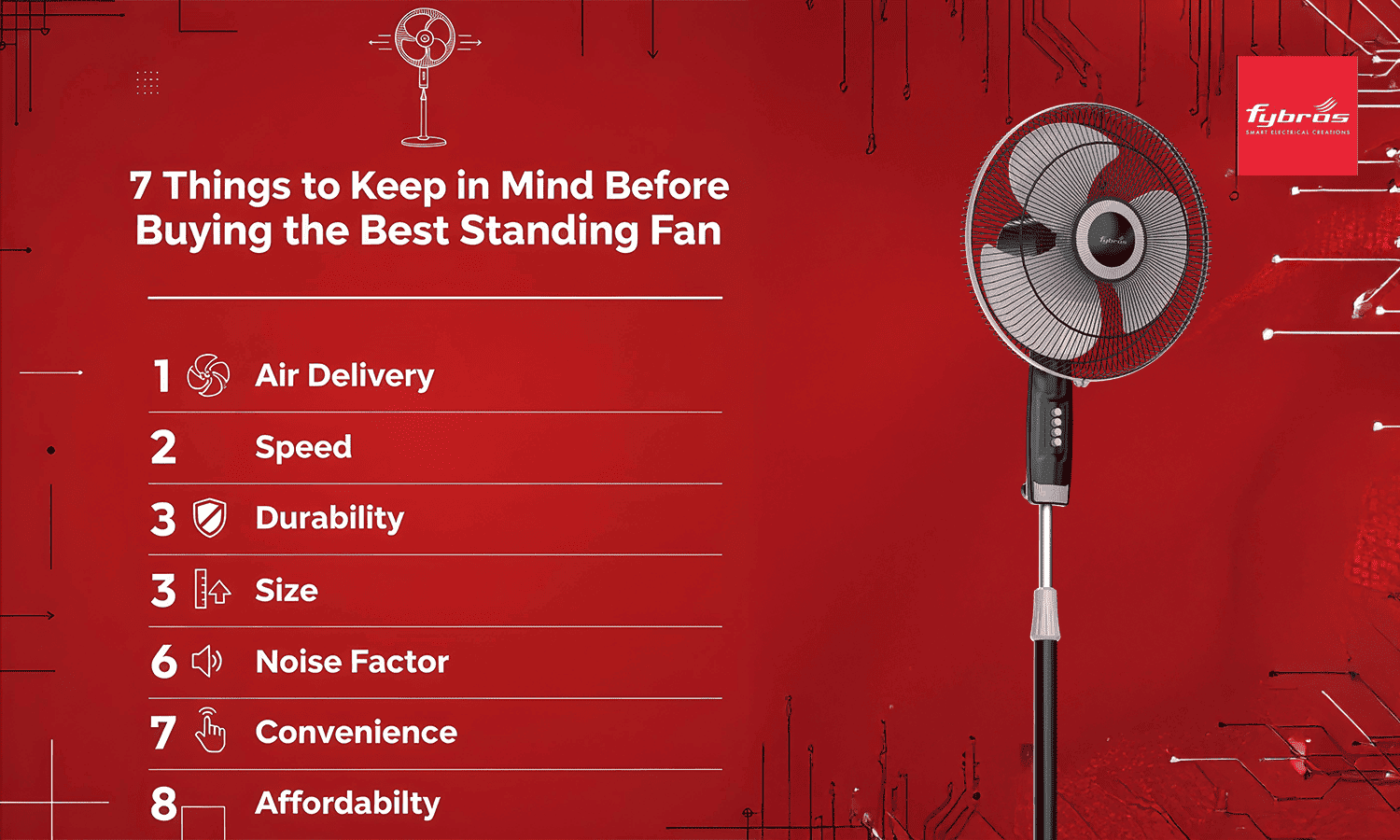
7 Things to Keep in Mind Before Buying the Best Standing Fan
1) Air delivery
Air delivery is the main job of any standing fan. If airflow is weak, everything else becomes pointless. A fan standing in a corner should still push air to where you sit, not only right in front of the blades.
A quick tip: larger sweep and good blade design usually help. If your room is big, you may need a wider airflow fan instead of a compact one.
2) Speed
Speed gives you control. Some days you want gentle airflow. On hot afternoons, you want strong air movement. If you’re looking for a high-speed standing fan, check that it stays stable even at top speed.
Also, watch for smooth speed changes. A fan that jumps speed suddenly can feel irritating, especially at night.
3) Durability
A standing fan is often used for long hours, so build quality matters. Look for a stable base, strong grills, and a motor that is built for daily running.
If you plan to keep it for years, do not judge only by looks. Good durability usually shows in the way the fan feels when you adjust the height or tilt. No rattling and no wobble.
4) Size
Size is not only about room size. It is also about where you will place it. A big standing fan can be great for a hall, but it can feel awkward in a compact bedroom.
If you have limited space and still want a standing option, people sometimes search for a standing table fan because it fits smaller corners while giving a similar feel. It’s basically a fan meant for table height or compact placement, not a full, tall pedestal setup.
5) Noise factor
Noise matters more than people expect. In the store, fans run for a few seconds. At home, you may run the fan for hours.
If the fan is for your bedroom, choose a model that stays calm-sounding at low and medium speeds. For work calls and study, noise also becomes a daily issue. It’s not about silent operation, it’s about not being distracting.
6) Convenience
Convenience is the “daily comfort” part.
Here’s what helps in real life:
-
Easy height adjustment
-
Smooth tilt control
-
Simple speed buttons
-
Oscillation that does not jerk
If you want a standing fan for the living room, oscillation becomes useful because airflow reaches more than one seating spot.
7) Affordability
Price matters, but it should match what you get. Compare the standing fan price across similar sizes and features. A very low price can look attractive, but if the fan starts wobbling or getting noisy within months, it becomes a bad deal.
Some buyers compare standing table fan price because smaller models may be cheaper, but the real question is whether that size will suit your room.
Features and Benefits You Actually Feel at Home
The best part about the best standing fan is not just airflow. It’s the mix of comfort and flexibility.
A few benefits people notice quickly:
-
You can move it between rooms when needed
-
You can aim airflow at sitting level
-
You can adjust speed based on weather and time of day
-
It works well for both day use and night use
If you work from home, a standing fan for office use helps during long sitting hours without changing your room setup.
For families, a standing fan for home use often becomes the “extra fan” that solves problems when guests come, or when one room feels warmer than the rest.
How to Choose the Right Standing Fan for Your Space
If you want a quick way to decide, think like this:
-
For small bedrooms: choose a compact standing fan with calm noise at low speed.
-
For living rooms: choose stronger airflow and oscillation.
-
For work areas: choose steady airflow without harsh noise.
If you are searching online and see the phrase best standing fan in India, don’t take it as a promise. Use it as a starting point, then check airflow, build, and warranty.
When you’re ready to Buy a standing fan, always check room size, placement area, and whether you need height adjustment daily.
A note on Fybros standing fan options
If you’re considering Fybros, the pedestal fan models you shared earlier include options like Vayu, Gush, Thunder, F-Spin, and Magnum. These cover different needs like normal-speed comfort, higher-speed airflow, and wider sweep for larger spaces. If you tell me which room this fan is for, I can suggest the closest match from those models without guessing.
Conclusion
Choosing the best standing fan is about picking what fits your daily life, not what looks best in a picture. Focus on air delivery, speed control, stability, noise comfort, and the right size for your space.
Once you match those basics, the right fan feels simple and dependable, especially during hot days and warm nights.
Key Takeaways
-
The best standing fan should match your room size and seating distance.
-
Strong airflow matters more than extra features.
-
Noise comfort is important for bedrooms and work areas.
-
Compare standing fan price only after matching size and airflow needs.
-
Pick a fan you can adjust and move easily.
FAQs
1. How Does a Standing Fan Work?
A standing fan uses an electric motor to rotate blades that push air forward. The moving air helps your body feel cooler by improving airflow around you. Many models also oscillate to spread airflow across the room.
2. How Long Can a Stand Fan Last?
A fan can last for years if the motor is reliable and the fan is maintained well. Regular cleaning and keeping it on a stable surface helps reduce noise and wear. Using the right speed instead of running max speed all the time also helps.
3. How to Know a Good Standing Fan?
A good fan feels stable at higher speeds and does not wobble. It should have smooth controls, solid build quality, and airflow that reaches your seating area. Warranty support is also a useful sign of long-term value.
4. Can Standing Fans Overheat?
They usually don’t if used correctly, but overheating can happen with poor ventilation around the motor, blocked grills, or dust buildup. Keep the fan clean and avoid covering the motor area. If the fan smells hot or sounds strained, switch it off and check it.
5. How Many Watts Is a Standing Fan?
Wattage depends on model size and motor type. Many standing fans fall in a moderate watt range suitable for long daily use. Always check the product label so you know what you’re running, especially if you use it for many hours.