
 Fans
Fans
 Switches & Accessories
 Led Lighting
 Wires & Cables
 Switchgear
Ceiling Tube Light Ideas That Look Good in Every Room
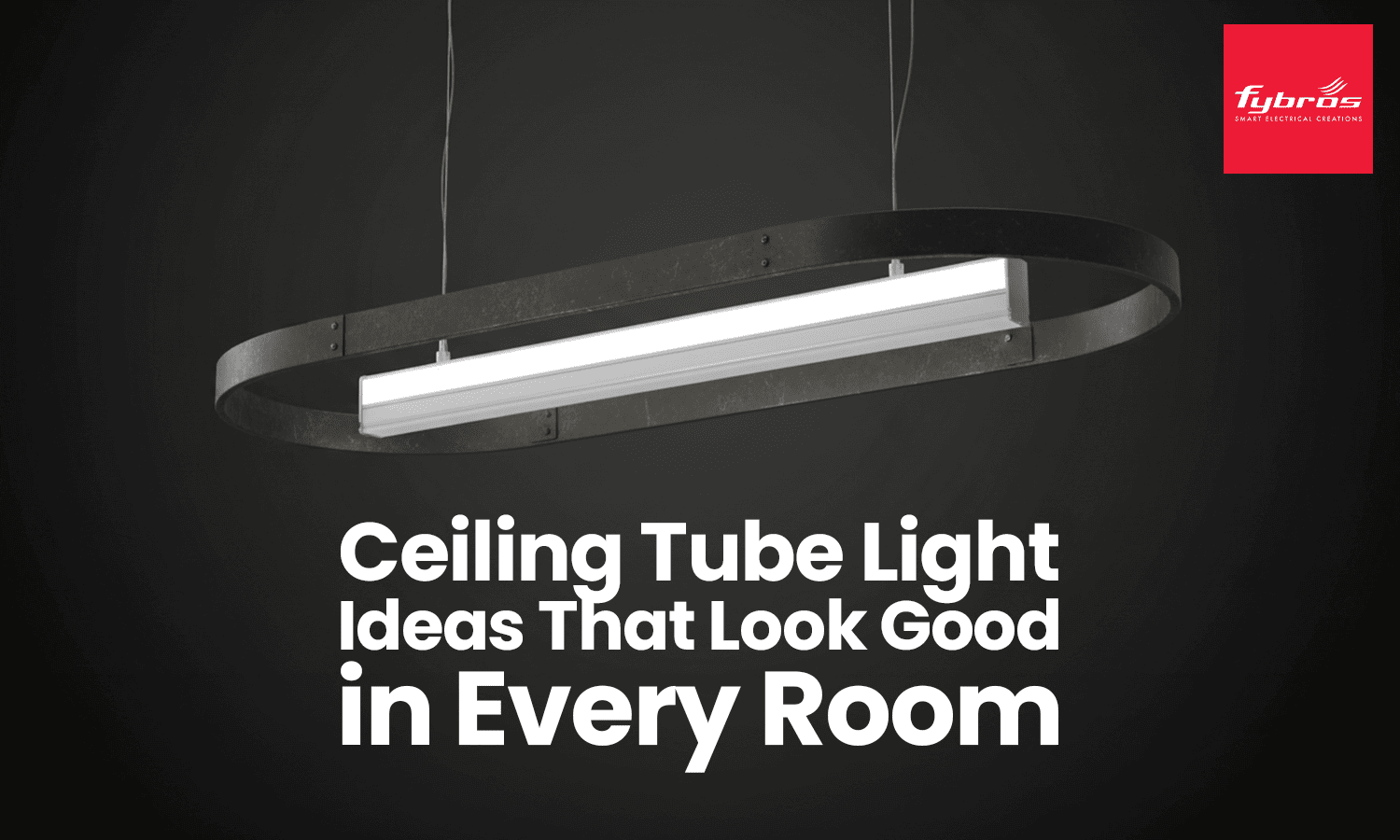
A ceiling tube light is still the default lighting choice in many Indian homes. It works, so it stays. What often goes unnoticed is how that single decision quietly affects the way a room feels throughout the day. Rooms end up brighter than needed in the evening or oddly dull during calm moments, even though the light itself is new. That usually comes down to placement, tone, and how the ceiling light is expected to do everything on its own.
Modern LED designs give more control than before. Used thoughtfully, ceiling lighting can feel settled and intentional rather than loud or purely functional.
Living Room Lighting That Isn’t Overkill
A living room rarely does just one job. It moves from daytime activity to slower evenings without warning. When the main source is a tube light in the ceiling, the shift is obvious. What feels acceptable during the day starts to feel sharp later on.
Using LED tube lights for the ceiling as a quiet base works better when the light is softened by indirect placement. Light that spreads gently across the ceiling reduces glare and lets the room breathe. The goal here is not drama, just balance, so the room feels comfortable at different times without constant adjustment.
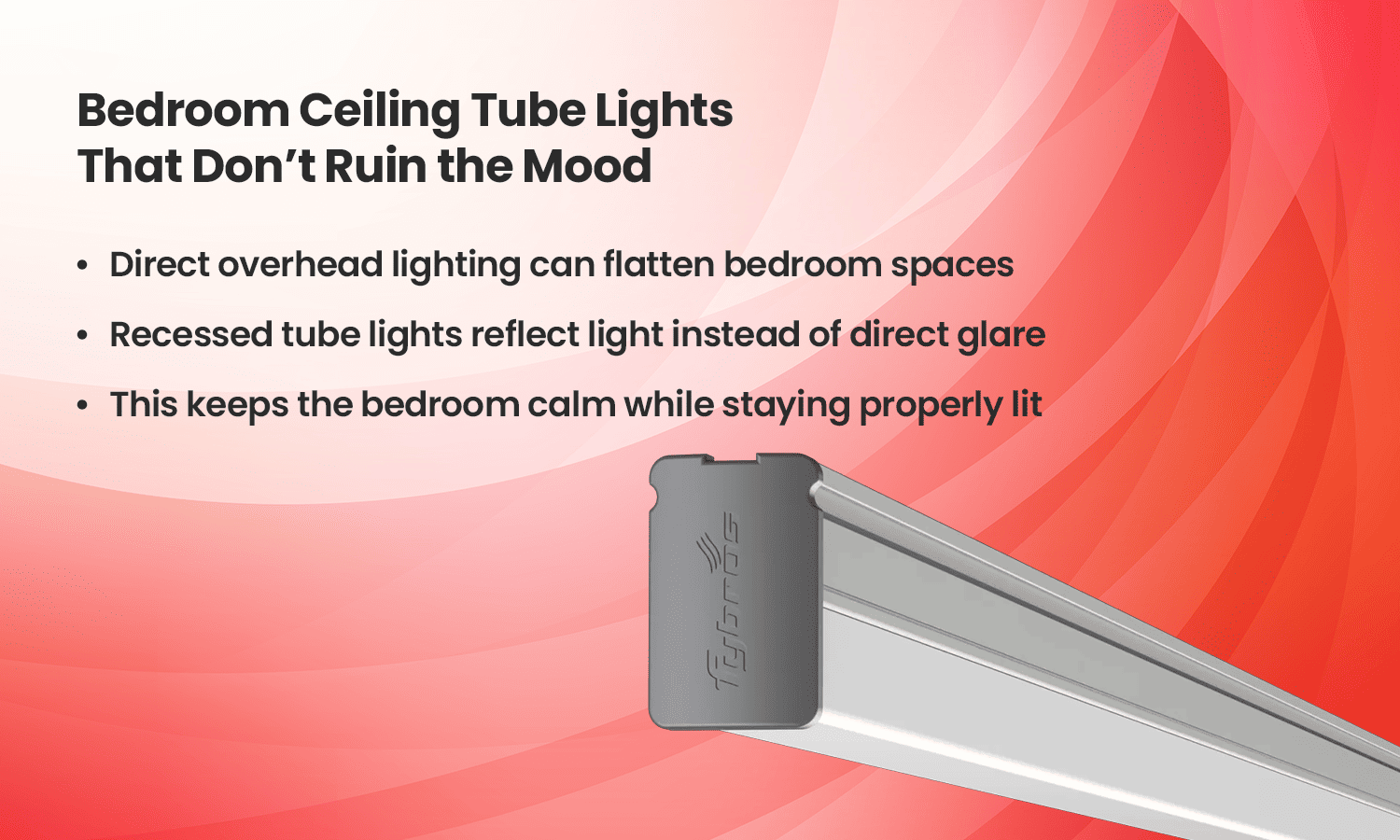
Bedroom Ceiling Tube Lights That Don’t Ruin the Mood
Bedrooms tend to expose lighting mistakes quickly. Direct overhead light has a way of flattening the space, especially at night.
A false ceiling tube light placed inside a shallow recess changes that completely. The light reflects instead of falling straight down, which keeps the room calm without making it dim. This approach, often called a tube light false ceiling setup, is one of the simplest ways to keep a bedroom relaxed while still properly lit.
Kitchen Lights That Actually Help You Cook
Kitchens are less forgiving than other rooms. The moment lighting is wrong, it shows up on the counter and in the shadows you work around.
Kitchen ceiling tube lights are most effective when they provide even brightness across the room and are supported by focused light closer to work areas. A clean ceiling spread helps movement, while additional lighting near cabinets removes shadows from preparation zones. Clear, neutral tones help food colours stay accurate and reduce eye strain during long cooking sessions.
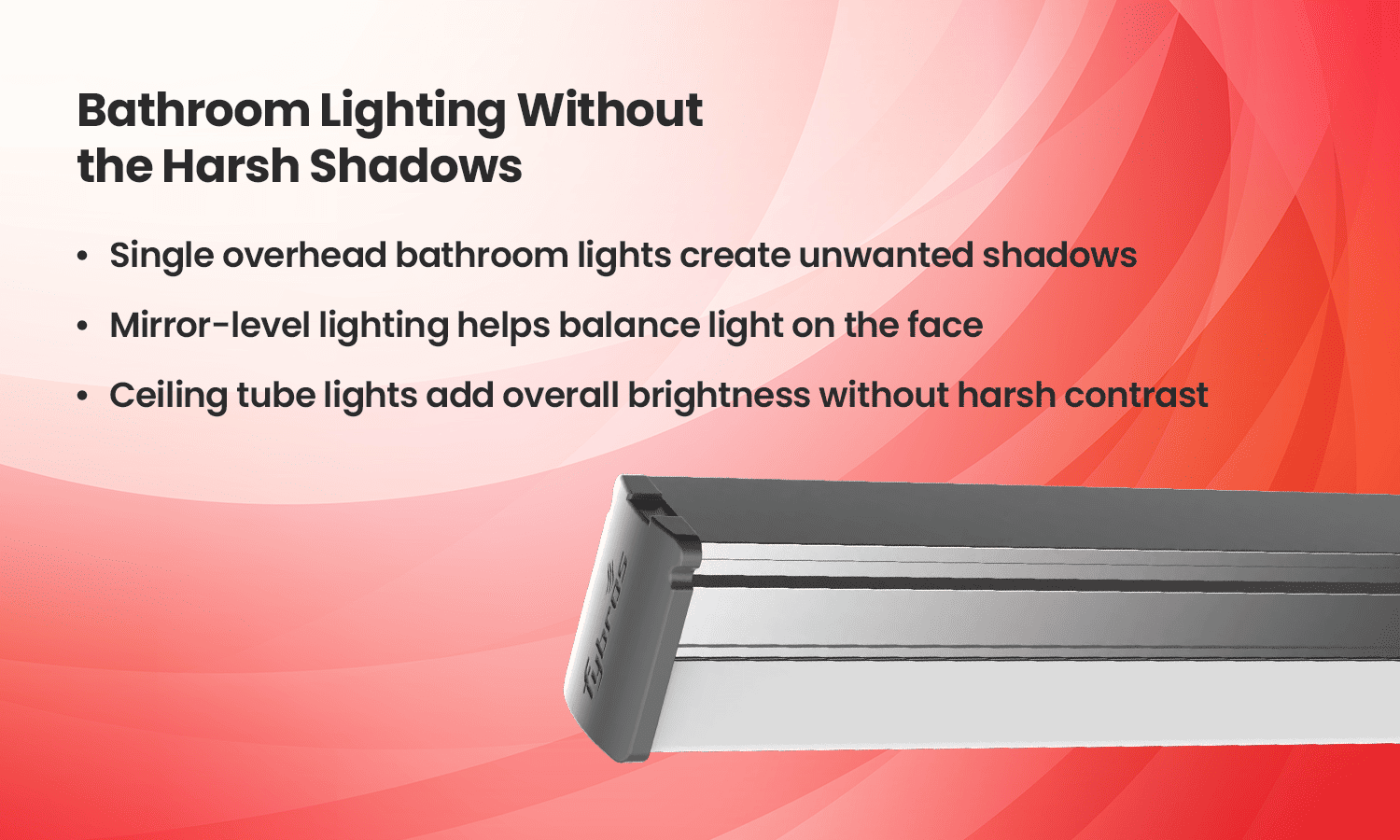
Bathroom Lighting Without the Harsh Shadows
Bathrooms often rely on a single overhead fixture, and the result is familiar. Shadows appear exactly where they should not.
A ceiling-mounted tube light works best when it supports, rather than replaces, lighting near the mirror. Slim lights placed closer to face level balance the light across the room. The ceiling light then adds general brightness without creating sharp contrasts.
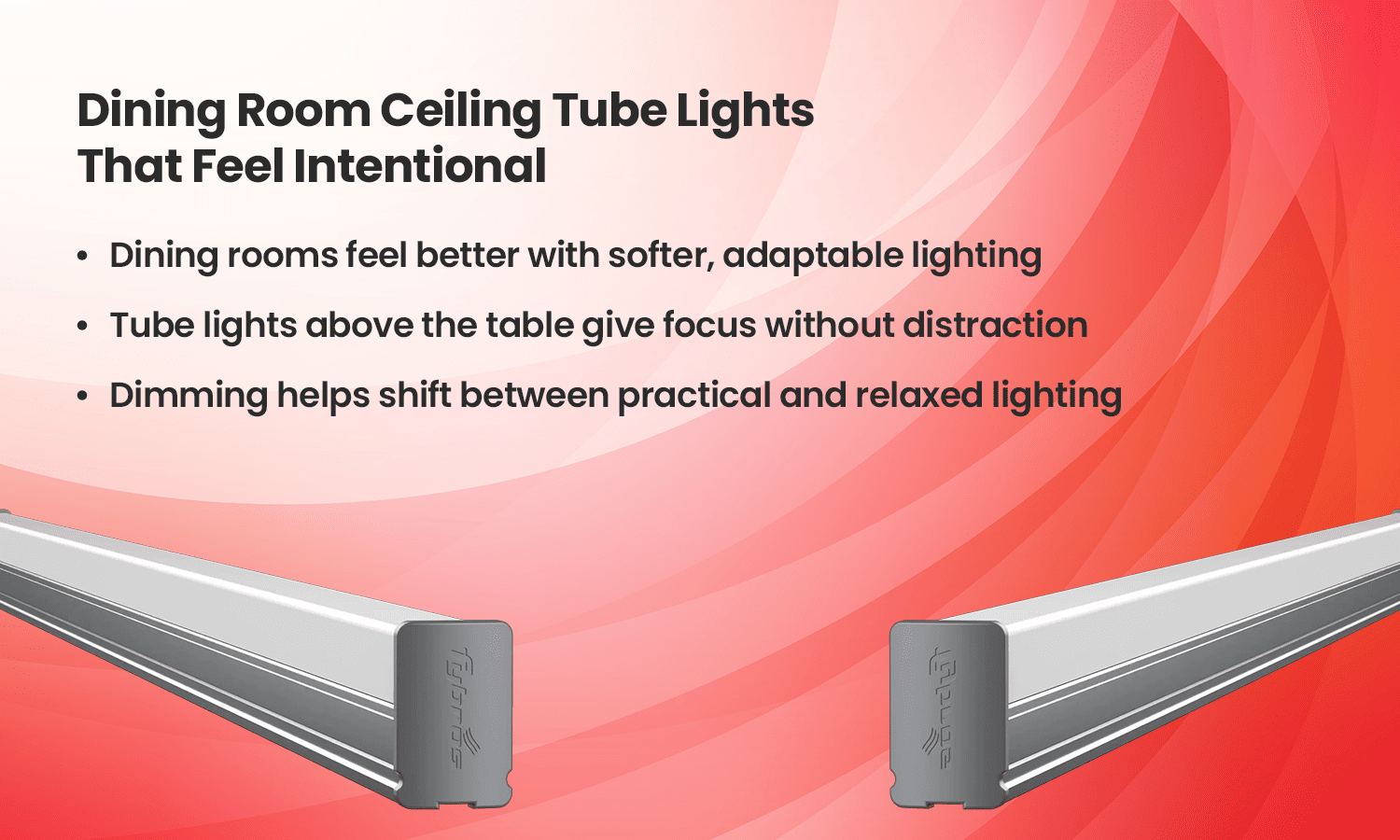
Dining Room Ceiling Tube Lights That Feel Intentional
Dining spaces benefit from lighting that adapts quietly. Bright light has its place, but softer light is what makes the room feel settled during meals.
Linear LED tube ceiling lights work well when they sit comfortably above the table, giving focus without pulling attention upward. In homes with ceiling detailing, concealed lighting around the edges creates a gentle background glow. Dimming control matters here because the same ceiling light should feel practical at one moment and restrained at another.
Ceiling Tube Light Styles That Work Everywhere
Some styles settle easily into different rooms without calling attention to themselves.
Surface-mounted options work well where ceiling height is limited. Concealed installations suit rooms that need softer edges. Vertical placements add height in narrow spaces. In compact areas, a round tube light for ceiling layouts can break straight lines while keeping light even. The common thread is restraint. The light does its job without becoming the room’s main feature.
Ceiling Tube Lights Cost Breakdown
Ceiling lighting cost is best understood by looking at the full picture rather than the label alone.
|
Lighting Type |
Typical Upfront Cost |
|
Integrated LED batten |
₹180–₹350 |
|
Traditional fluorescent system |
₹300–₹450 |
LED options usually cost more at first, but they use less power and last far longer. Over time, the reduction in electricity use and fewer replacements balance out the initial spend. For most homes, that balance is reached sooner than expected.
Choosing Ceiling Tube Lights From Fybros
Consistency matters when ceiling lighting runs across multiple rooms. Fybros focuses on integrated LED battens designed for regular Indian usage rather than decorative statements.
Their Casa T5 and LINC ranges cover common ceiling needs across bedrooms, kitchens, dining areas, and larger halls. With built-in protection and durable construction, these lights are designed to stay reliable while keeping the ceiling visually clean.
Conclusion
Ceiling lighting does not need to draw attention to itself to work well. When placement, light tone, and room use are considered together, a ceiling tube light settles into the background and lets the space feel natural.
From kitchens and bathrooms to bedrooms and dining rooms, thoughtful choices make a noticeable difference. With practical LED options available today, ceiling lighting can stay simple, balanced, and dependable across the home.
Key Takeaways
-
A ceiling tube light shapes how a room feels over time
-
Indirect placement reduces glare and visual fatigue
-
Kitchens and bathrooms need clarity more than softness
-
Bedrooms and dining spaces benefit from restrained light
-
LED options recover their cost through long-term use
FAQs
1. Which Light Is Best for a Ceiling?
Flush-mounted LED options are usually the best fit for ceilings because they distribute light evenly and keep the ceiling line clean.
2. What Are the Three Types of Ceiling Lights?
Ceiling lights generally fall into surface-mounted, recessed, and suspended types, each suited to different ceiling heights and room needs.
3. What Is the Average Lifespan of a Ceiling Light?
Modern LED ceiling lights typically last many years under regular home use, far longer than older fluorescent options.
4. What Are the Disadvantages and Advantages of LED Ceiling Lights?
LED ceiling lights use less electricity and need fewer replacements. The main drawback is a higher upfront price, which is usually offset over time.