
 Fans
Fans
 Switches & Accessories
 Led Lighting
 Wires & Cables
 Switchgear
The Changeover Switch and How It Keeps Backup Power Safe
Overview
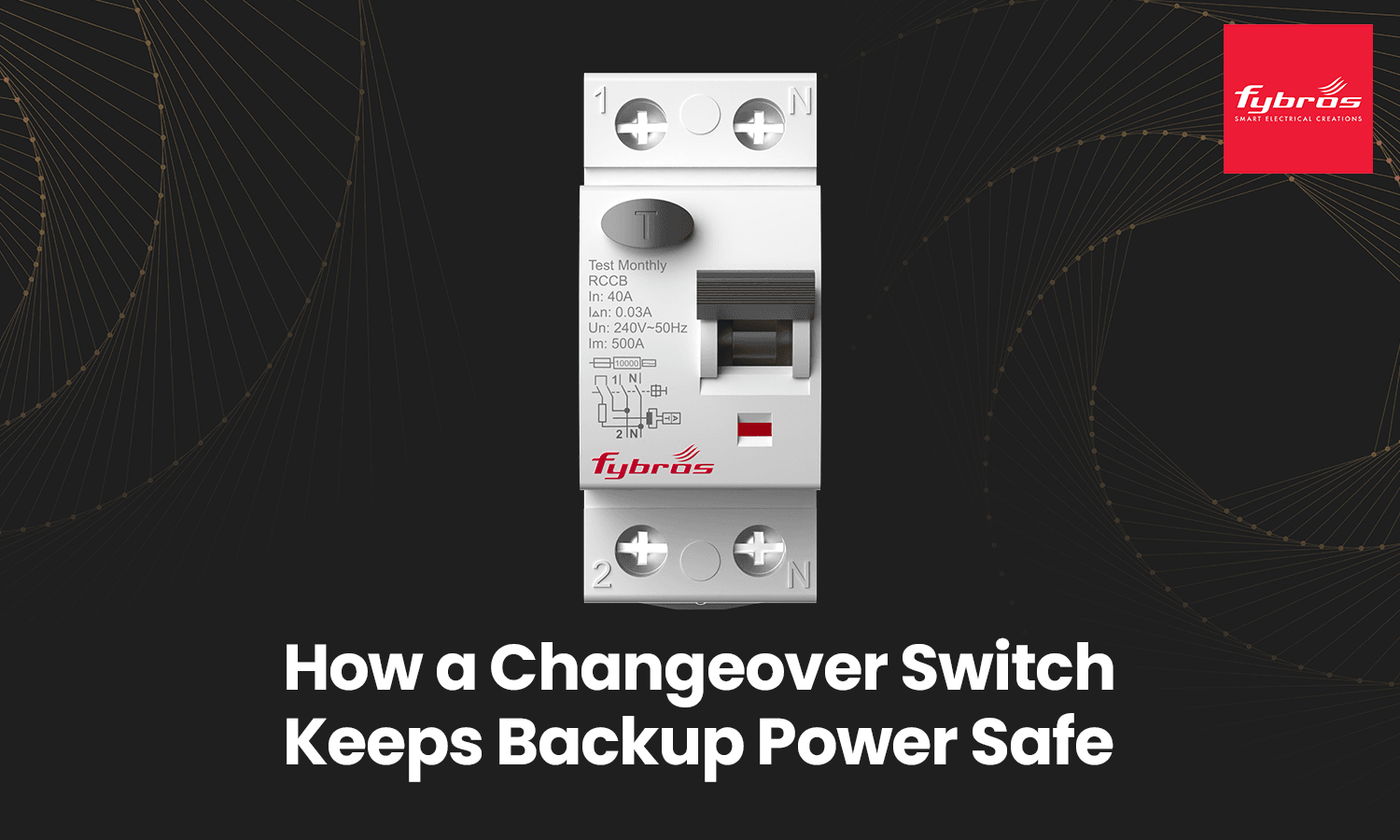
A changeover switch safely swaps a home or building between two power sources, such as the mains supply and a generator or inverter. It makes sure only one source feeds the wiring at a time, which protects the circuit and anyone working on the line. Choosing one depends on the phase and the current rating.
Anyone who runs a generator or an inverter needs a safe way to switch between it and the mains. Doing it with loose wires or a normal switch is dangerous, because two live sources must never feed the same wiring at once. A changeover unit solves this cleanly. It moves the whole supply from one source to the other in a single, safe action. This page explains how it works, the types available and how to size one.
The idea is simple. One switch, two inputs, and only one of them connected to the house at any moment.
What a Changeover Switch Does
A changeover switch takes two power inputs, usually the mains and a backup like a generator, and connects just one of them to the building at a time. When the mains fails, you move the switch to the generator, and the house runs on backup. When the mains returns, you move it back. The key safety point is that it physically stops both sources from being live on the wiring together, which is why a proper generator changeover switch matters rather than an improvised connection.
Manual and Automatic Types
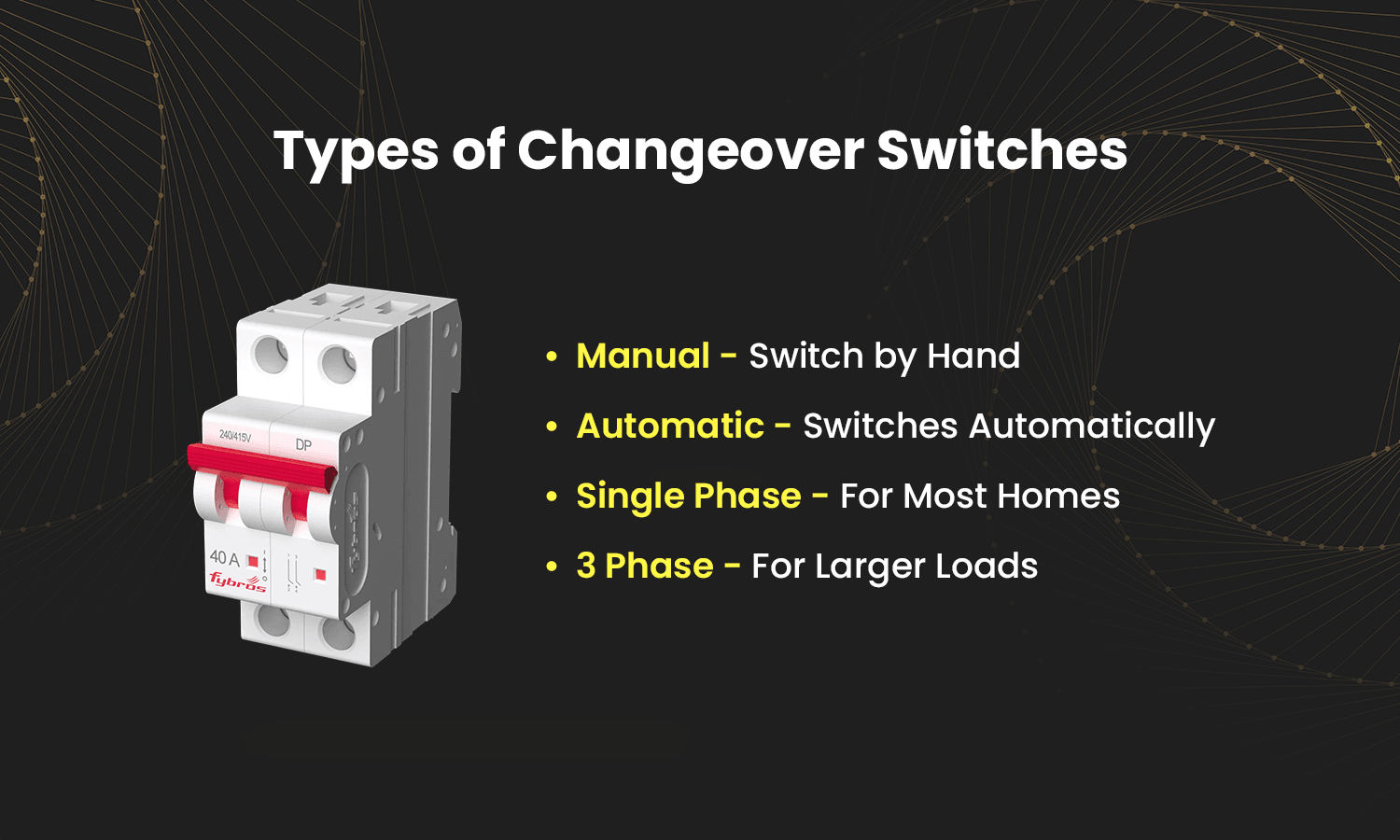
There are two broad kinds. A manual changeover switch is moved by hand when the power changes, which is simple, reliable and common in homes and small shops. An auto changeover switch senses the mains failing and switches to backup on its own, then switches back when the mains returns, which suits places that cannot wait for someone to flip it. Manual units are cheaper and need no electronics, while automatic ones add convenience for offices, clinics and larger setups.
Single Phase and Three Phase
The right unit depends on your supply. Most homes run on a single phase, so a single phase changeover switch is the usual choice for a house with an inverter or a small generator. Larger homes, shops and industrial units often run on three phase, where a 3 phase changeover switch handles all three lines together. Matching the switch to your supply is essential, since a single-phase unit cannot safely handle a three-phase load.
Choosing the Current Rating
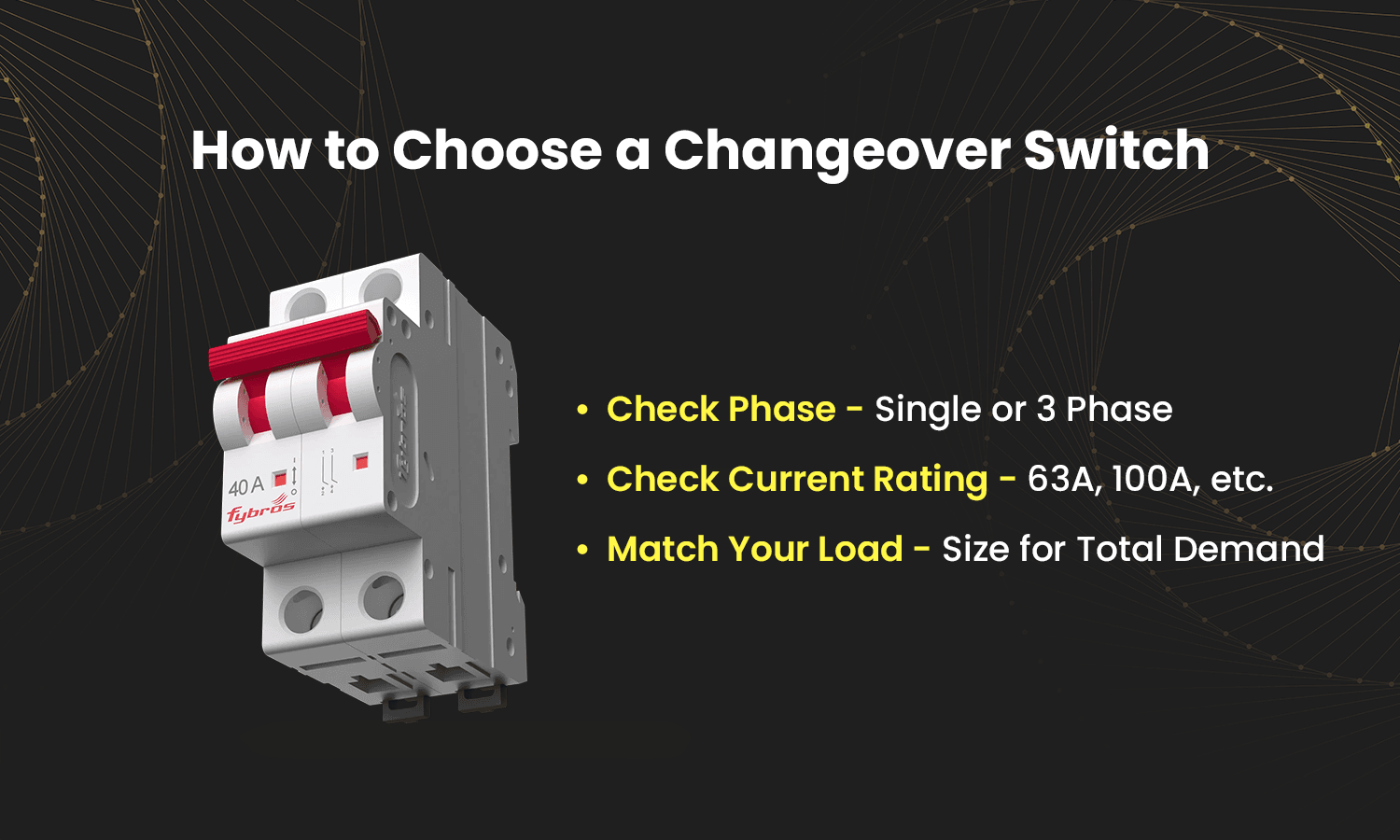
These switches are rated by the current they can carry, and you pick one to match your total load. Common ratings step up through the range, and a 63 amp changeover switch suits many homes and small establishments, while larger loads move up from there. For a bigger building the 100 amp changeover switch price reflects the heavier contacts needed to carry more current. An electrician can size the rating from your connected load, which is the safe way to choose.
A Word on MCB-Type Units
Some changeover units are built around miniature circuit breakers, giving switching and protection in one. An mcb changeover switch lets you move between sources while also protecting the circuit, and an mcb type changeover switch is a tidy option for a modern distribution board. These combine the changeover action with the trip protection of an MCB, which many electricians prefer for a clean, safe board.
Fitting and Using It Safely
A changeover is not a do-it-yourself job. It sits in the main board or a dedicated enclosure, wired between the two sources and the house, and it must be installed by a qualified electrician. Once fitted, using it is simple. On a power cut you start the generator or switch on the inverter, then move the changeover to the backup position, and the house runs. When the mains returns you move it back and stop the generator. The one rule to remember is never to bridge the two sources, which is exactly what the unit is built to prevent. Pairing it with proper isolating a circuit for safe work and with a motor starter switch for any pump keeps the whole board safe.
For safety, the changeover should always be rated for your full load and wired with the right protection. A clean install means backup power that is convenient and never risky.
Where Fybros Fits In
Fybros, a trusted electrical name since 1968, makes modular switches, MCBs and switchgear accessories for homes and buildings. For a changeover switch specifically, it is best to check the current Fybros range or ask a dealer for the exact rating and type you need, since backup-power switching should always be matched to your supply and load. Pairing the right changeover unit with quality MCBs keeps a backup setup both convenient and safe.
FAQs
1. What is a changeover switch used for?
A changeover switch is used to move a home or building safely between two power sources, such as the mains and a generator or inverter. It makes sure only one source feeds the wiring at a time, which protects the circuit and stops two live supplies from meeting, so backup power stays safe and simple.
2. What is the difference between manual and automatic changeover?
A manual changeover switch is moved by hand when the power changes, which is simple and reliable for homes. An automatic unit senses the mains failing and switches to backup on its own, then back when it returns. Manual is cheaper, while automatic adds convenience for places that need power restored without waiting.
3. What rating of changeover switch do I need?
It depends on your total load. A 63 amp changeover switch suits many homes and small shops, while larger buildings need a higher rating. The safest way is to have an electrician size it from your connected load, so the switch comfortably carries the full current without overheating.
KEY TAKEAWAYS
-
A changeover switch safely swaps a building between the mains and a backup like a generator or inverter.
-
It keeps only one source connected at a time, which is the key safety benefit.
-
Choose manual for simplicity or automatic for hands-free switching.
-
Match the phase and current rating to your supply and load, ideally with an electrician.
-
Fybros makes modular switches, MCBs and switchgear, so check the current range or a dealer for a changeover unit.
Setting up a generator or inverter backup? Talk to a Fybros dealer about the right switchgear for a safe changeover, matched to your supply and load. Visit fybros.com or call your nearest Fybros dealer to plan it safely.