
 Fans
Fans
 Switches & Accessories
 Led Lighting
 Wires & Cables
 Switchgear
How to Choose a Motor Switch for a Pump or Machine
Overview
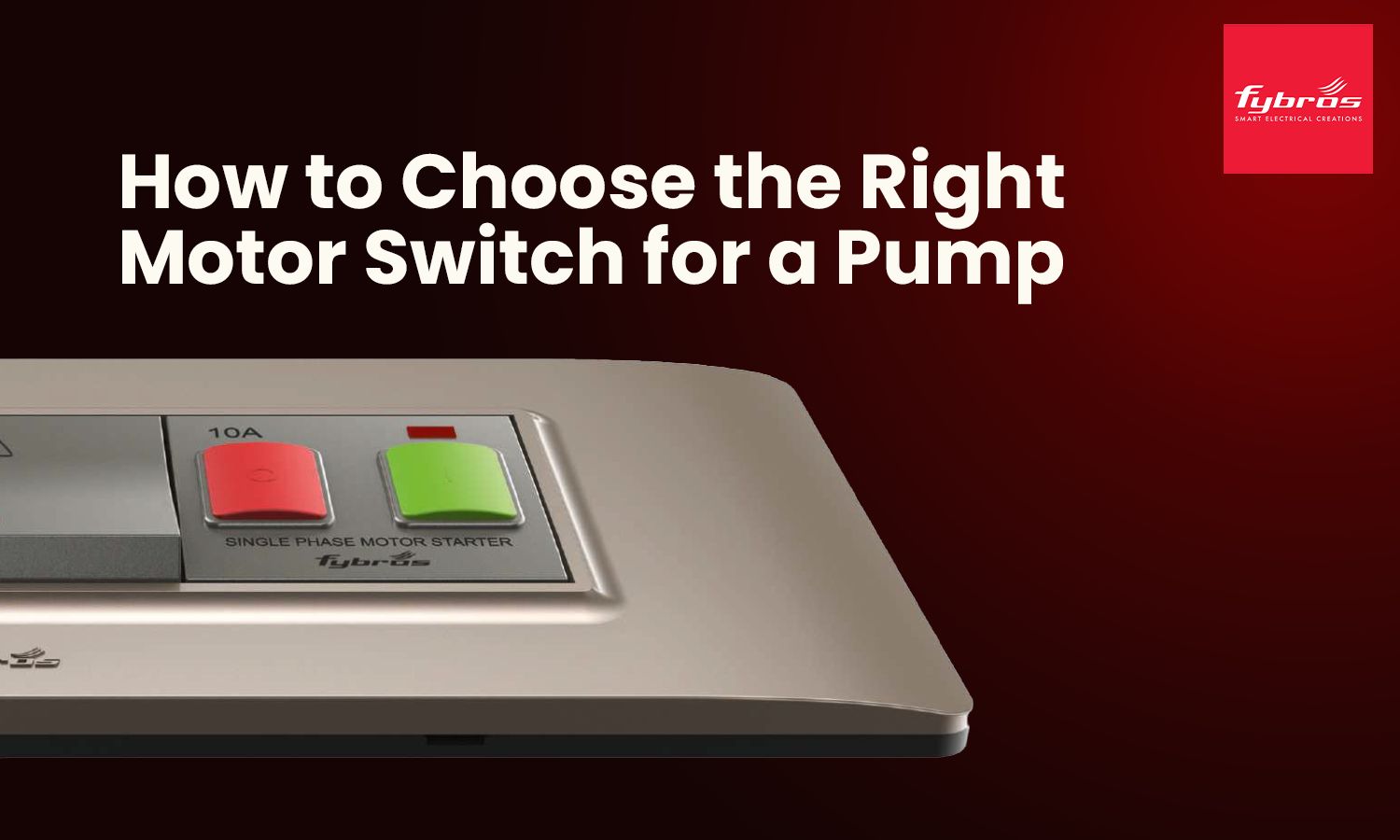
A motor switch, often called a motor starter switch, safely turns a water pump or small motor on and off. It handles the higher current a motor draws at start-up and protects both the wiring and the motor. Choosing one is mainly about the current rating that matches your motor.
A water pump or a small machine pulls a big surge of current the instant it starts, far more than a light or a fan. A normal switch is not built for that surge, which is why a motor needs its own motor switch. It handles the heavy start-up load, turns the motor on and off cleanly, and protects the wiring behind it. This page explains what a motor starter switch does and how to pick the right one.
The main thing to get right is the current rating, so the switch comfortably handles your motor without overheating.
What a Motor Switch Does
A motor switch is built to make and break the heavier current a motor draws. When you flick a motor switch on off, it connects the full load to the motor and cuts it cleanly when you stop, without the arcing or pitting that would damage a normal switch. This is why a pump, a mixer or a small workshop machine should run through a proper motor starter switch rather than an ordinary switch that is not rated for the surge.
Why a Normal Switch Is Not Enough
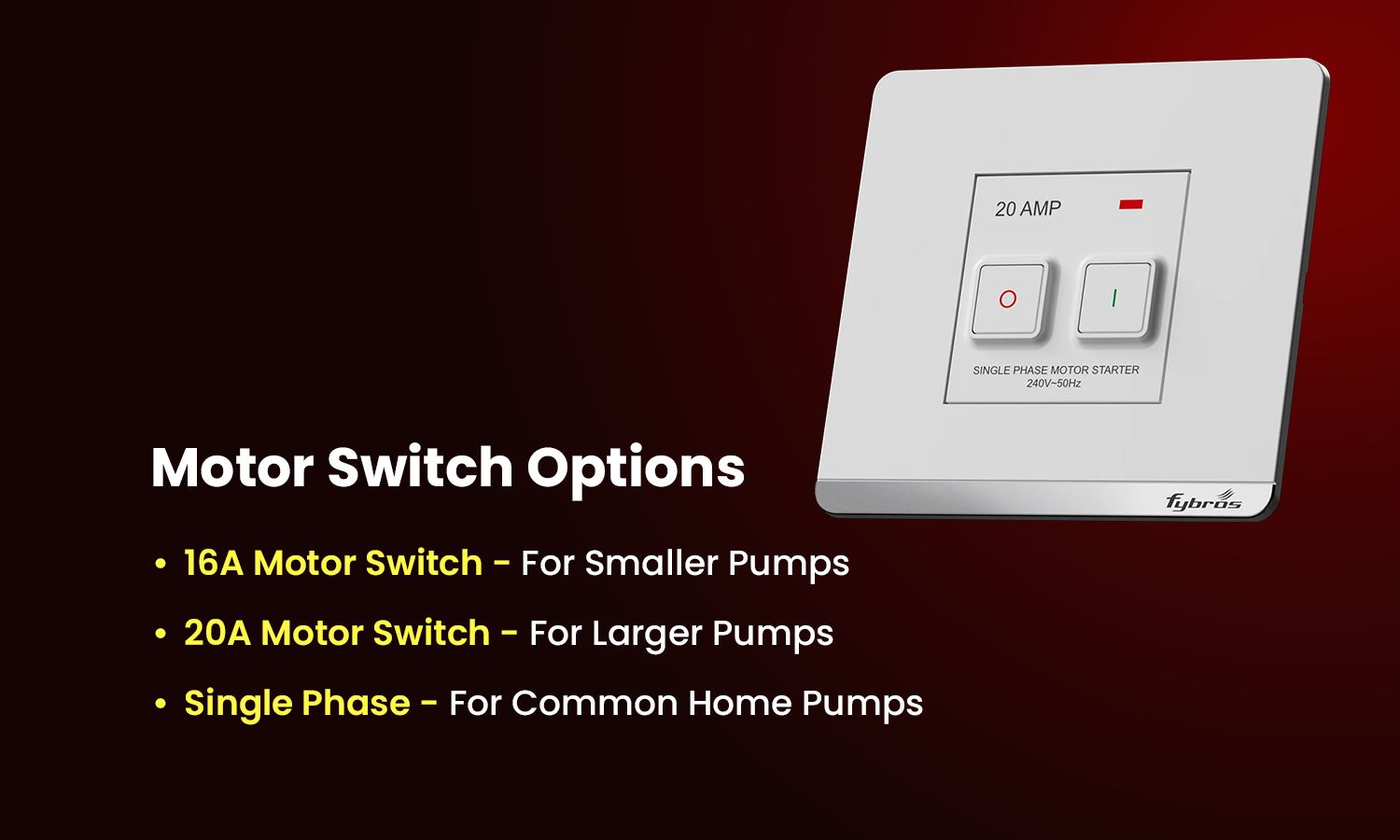
A motor can draw several times its running current for a moment as it starts. An ordinary switch contact is not made for that repeated surge, so it burns, sticks or fails over time. A starter switch for motor duty uses heavier contacts rated for the load, so it survives thousands of starts. Using the right switch is a safety matter as much as a reliability one, since an overloaded switch can overheat, which is exactly what a motor-rated switch is built to avoid.
Current Rating and Choosing the Right One
The rating is the number that matters. Common home and farm pumps are well served by a 16A or a 20A switch, so a 16 amp motor starter switch suits many smaller pumps while a 20A version handles larger ones. Match the rating to your motor, and when in doubt, an electrician can size it from the motor plate. A single phase motor starter switch covers the usual home and small-farm pumps that run on a normal single-phase supply.
Modular and Board Fitting
Modern motor switches come in a modular form that fits a standard plate, so a modular motor starter switch can sit on the same board as your other switches near the pump point. A dedicated motor switch board near the pump keeps the control in one clear place, which is safer and easier to reach. The heavier switch is the same size as a normal module, so it drops into the plate cleanly while carrying the higher rating inside. Lighter controls like a step-type fan regulator stay on the main indoor board, while the motor switch sits on its own point near the pump.
Wiring, Care and Safety
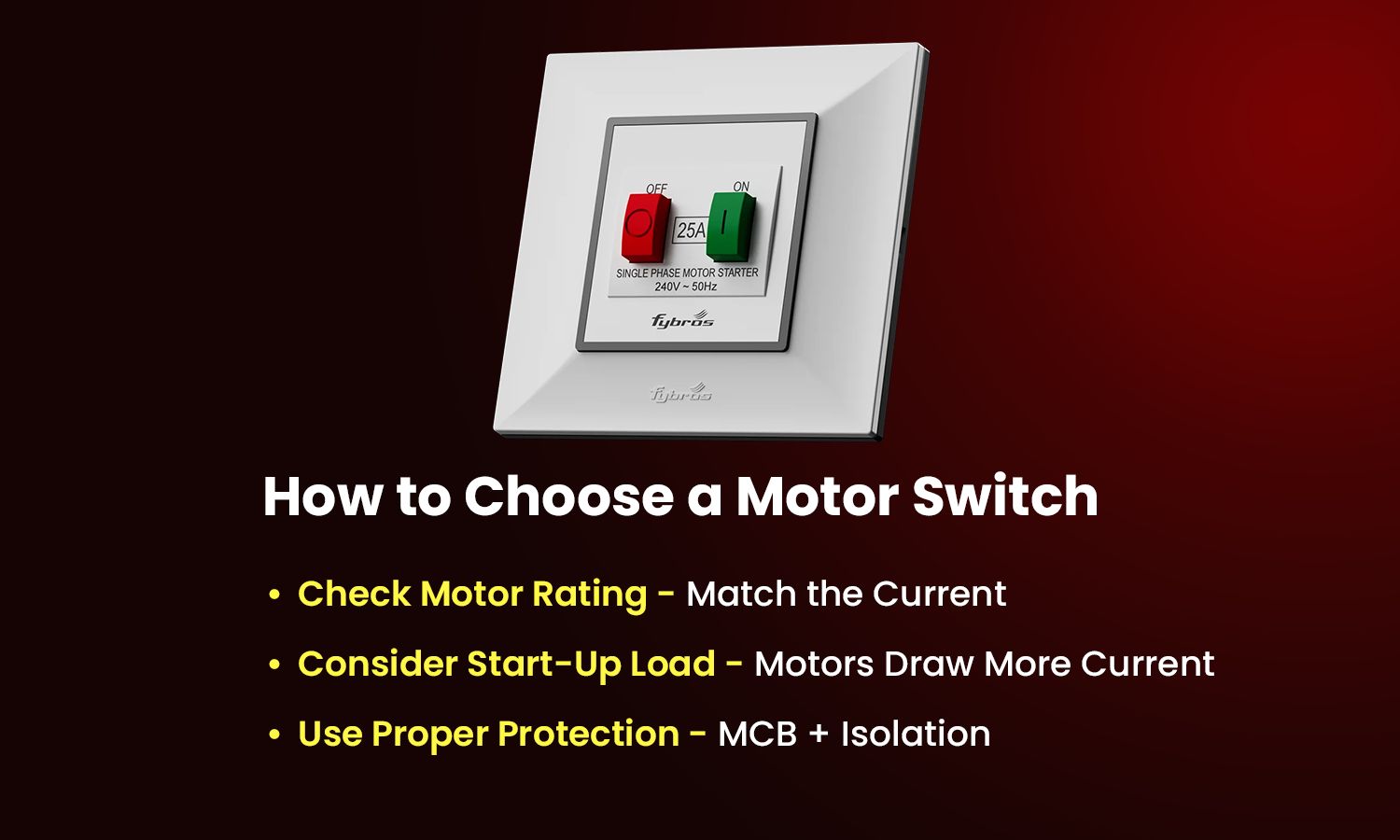
A motor point deserves a little care in the wiring. Run it on a cable sized for the motor, keep the switch within easy reach of the pump, and make sure the circuit has its own protection upstream. Good practice pairs the switch with isolation and safe switching so the line can be made fully dead for service, and with an MCB for automatic protection against overload. A motor that trips or struggles to start may point to a supply problem or a tired motor, not just the switch, so it is worth checking the whole point rather than only the button.
Left alone in a clean, dry spot, a well-rated motor switch needs almost no attention. The main thing is to choose the right rating at the start and to let an electrician wire the point, since a pump is a heavier load than anything else on a normal home board.
Where Fybros Fits In
Fybros Modular, trusted since 1968, makes motor starter switches in its FOUR-X range, offered in 16A and 20A ratings for common home and farm pumps. Because they are modular, a Fybros motor switch fits the same plate as the brand switches and sockets, so a pump point looks as clean as any other switchboard. Matching the rating to your motor, and letting an electrician confirm it, gives safe, reliable starting for years.
FAQs
What is a motor starter switch?
A motor switch, or motor starter switch, is a heavy-duty switch made to turn a motor such as a water pump on and off. It handles the large surge of current a motor draws at start-up, which a normal switch cannot manage safely, and protects both the wiring and the motor from that repeated load.
What rating of motor switch do I need?
Match the rating to your motor. A 16 amp motor starter switch suits many smaller home and farm pumps, while a 20A version handles larger ones. If you are unsure, an electrician can read the correct rating from the motor plate, so the switch comfortably handles the start-up surge without overheating.
Can I use a normal switch for a pump?
It is not safe to. A pump pulls a heavy surge at start-up that an ordinary switch is not built for, so it will burn or stick over time. A proper starter switch for motor duty uses heavier contacts rated for that load, which is why a pump should always run through a motor-rated switch.
Key Takeaways
-
A motor switch is a heavy-duty switch made to start and stop a pump or small motor safely.
-
A motor draws a big surge at start-up that a normal switch cannot handle without burning.
-
Match the rating to your motor, with 16A for many smaller pumps and 20A for larger ones.
-
Modular motor switches fit the same plate as your other switches near the pump point.
-
Fybros makes 16A and 20A motor starter switches in its FOUR-X modular range.
Wiring a pump or a small machine? See the Fybros FOUR-X motor starter switches in 16A and 20A and pick the rating that matches your motor. Visit fybros.com or ask your nearest Fybros dealer, and let an electrician confirm the size.