
 Fans
Fans
 Switches & Accessories
 Led Lighting
 Wires & Cables
 Switchgear
Choosing a Fan Regulator Switch That Runs Smoothly
Overview
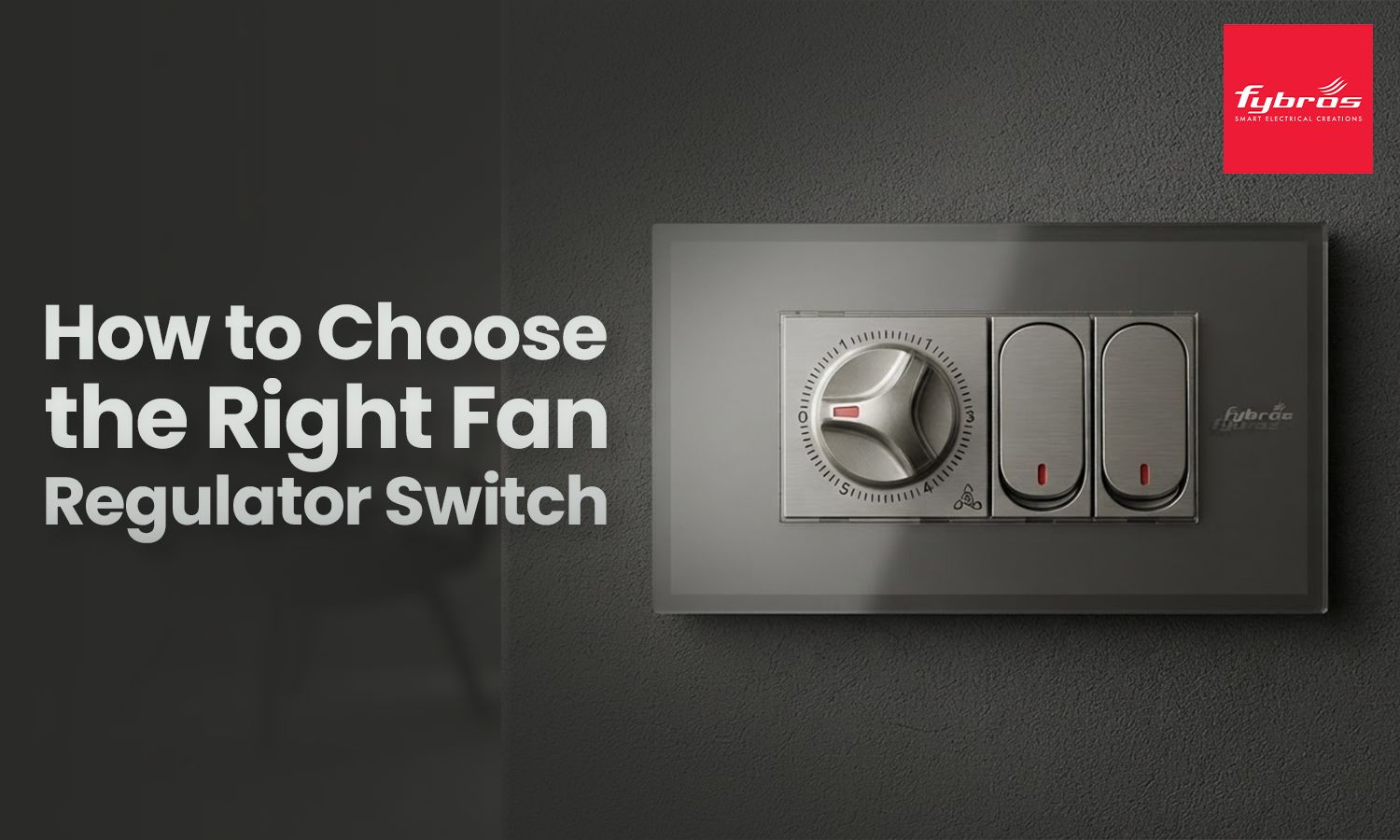
A fan regulator switch controls the speed of a ceiling fan from the switchboard. Modern ones are compact step-type or electronic regulators that fit into a modular plate, replacing the old bulky dial. Choosing one is about the type, the number of speed steps and how it matches your switchboard.
A ceiling fan does most of the cooling in an Indian home, and the small dial beside the switch decides how well it does it. A good fan regulator switch gives smooth, steady control from a gentle breeze to full speed, while a poor one buzzes, heats up or jumps between speeds. This page explains the types, how they differ and how to pick one that fits your switchboard and your fan.
The old round regulator that stuck out of the wall is mostly gone now, replaced by slim modular units that sit flush with the rest of your switches.
What a Fan Regulator Does
A fan regulator switch simply varies the power reaching the fan motor, which changes its speed. Turn it down for a soft breeze at night and up for strong airflow on a hot afternoon. Because it sits right on the switchboard, a good switch regulator puts fan control at your fingertips without a separate remote. The key qualities are smooth stepping between speeds and cool, quiet running, since a regulator that heats or hums is doing its job poorly.
Step Regulators and Electronic Regulators
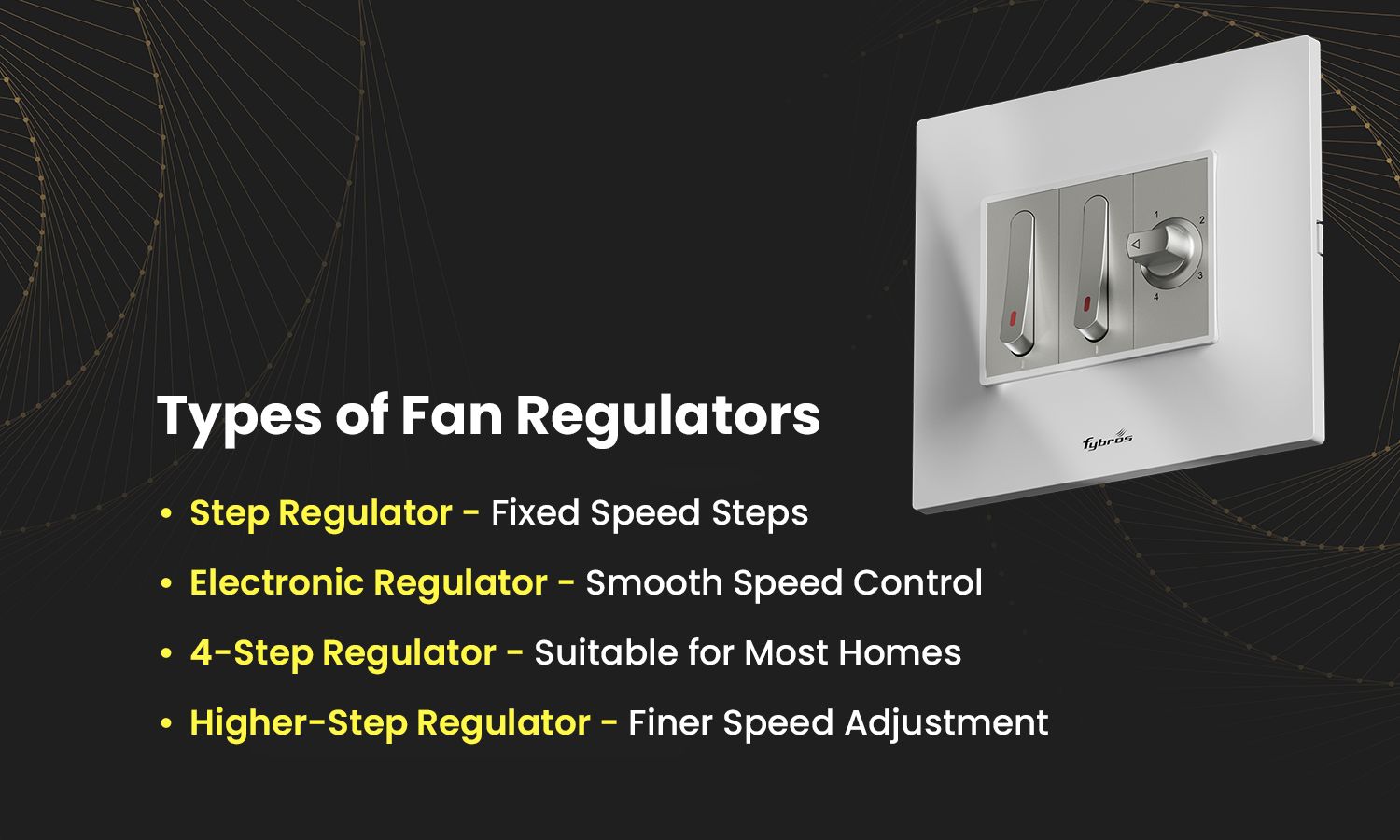
There are two main kinds. A step-type regulator moves the fan through a set number of fixed speeds, commonly a switch type fan regulator with four or more steps, giving clean, click-to-click control. An electronic fan regulator uses solid-state control for smooth adjustment and runs cool, which is why it has largely replaced the old resistive dial that wasted power as heat. Both fit a modular plate, so the choice is about how you like to set the speed, in clear steps or a smoother sweep.
Fan Regulator Types and Steps
Most modern regulators are sold by their number of steps. A four-step unit suits most homes, giving low, medium, high and full, while a five or more step version offers finer control. Knowing the common fan regulator types helps you match the feel you want, since more steps mean a gentler change between speeds. A ceiling fan regulator switch should also match the current rating of your fan, though a normal home ceiling fan is well within the range of any standard regulator.
Fitting It on the Switchboard
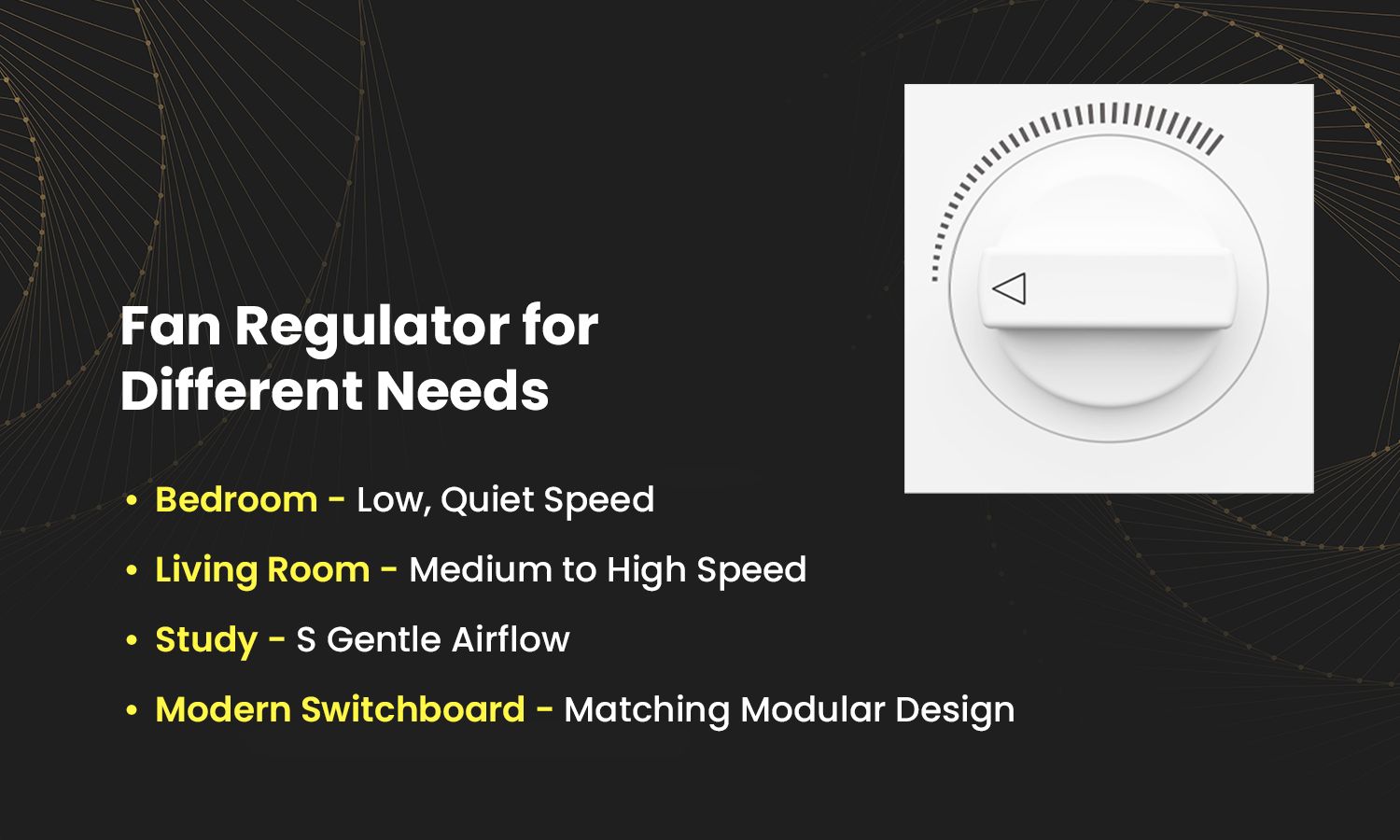
A modern regulator is designed to sit in the same modular plate as your switches and sockets. A switch board with a fan regulator looks clean because the regulator is the same size and finish as the switches beside it. The fan switch regulator connection is straightforward for an electrician, wired in line with the fan point, and a modular unit clips into the plate like any other module. This is why most new homes now keep the fan control right on the main switchboard rather than on a separate box.
Common Problems and Fixes
A few complaints come up again and again with fan speed control. A regulator that hums or buzzes is usually an old resistive type, and moving to an electronic one fixes it. A fan that will not run slowly at the lowest setting may have a mismatched or worn regulator, so a fresh fan regulator switch of the right type restores the low breeze. Heat is another sign, since a regulator that grows warm is wasting power, which a modern step or electronic unit avoids. If the speed jumps sharply between settings, a unit with more steps gives a gentler change.
It is also worth pairing the control with the rest of the board. A tidy modular set can hold the fan control, a modular bell push switch and the light switches together, and a heavier point like a motor starter switch for a pump can sit on its own board nearby. Keeping like with like makes the whole switchboard easier to use.
Where Fybros Fits In
Fybros Modular, trusted since 1968, makes fan regulators across its switch ranges, including neat step-type units that fit its modular plates. Because the regulator matches the switches and sockets around it, a fan regulator with switch board stays tidy and consistent rather than looking like an add-on. The step design gives clear, positive speed control, and the modular fit means it drops straight into a Fybros plate alongside the rest of your switches.
FAQs
1. What is a fan regulator switch?
A fan regulator switch is a control on the switchboard that sets the speed of a ceiling fan. It varies the power to the fan motor, so you can run a soft breeze or full airflow. Modern ones are slim modular units that fit the same plate as your light switches rather than the old round dial.
2. Is a step regulator better than an old dial?
For most homes, yes. A modern step or electronic fan regulator runs cool and gives clean, steady speed control, while the old resistive dial wasted power as heat and often buzzed. A step-type unit also fits a modular plate neatly, so it looks better and works better than the bulky old regulator.
3. How much does a fan regulator cost?
The regulator switch price depends on the type and the number of steps. A basic step regulator is very affordable, while an electronic or higher-step unit costs a little more for its smoother control. Since it fits the same plate as your switches, there is no extra fitting cost beyond normal wiring.
Key Takeaways
-
A fan regulator switch sets ceiling fan speed from the switchboard and should run cool and smooth.
-
Step-type and electronic regulators have replaced the bulky old dial that wasted power as heat.
-
A four-step unit suits most homes, with more steps giving finer control.
-
Modular regulators fit the same plate as your switches for a clean switchboard.
-
Fybros makes step-type fan regulators that match its modular switch ranges.
Tired of a buzzing old dial or wiring a new switchboard? See the Fybros range of modular fan regulators and pick a neat, smooth control that matches your switches. Visit fybros.com or ask your nearest Fybros dealer for the right fit.