
 Fans
Fans
 Switches & Accessories
 Led Lighting
 Wires & Cables
 Switchgear
Understanding Industrial Switchgear for Indian Plants
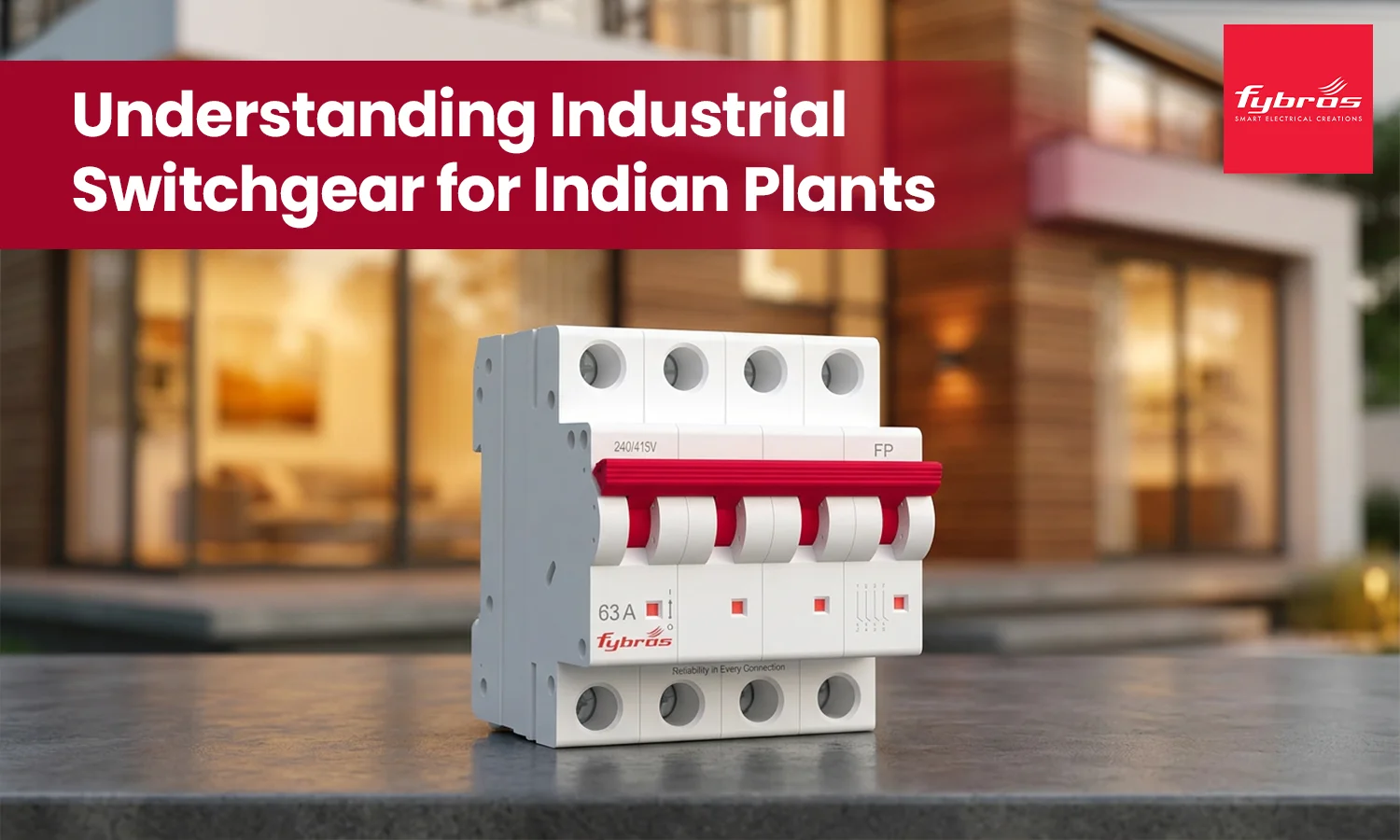
Industrial switchgear must do much more than residential electrical systems.
It must start large motors without nuisance tripping, clear high fault currents safely, and continue operating in harsh industrial environments filled with heat, dust, vibration, and humidity.
Selecting the right industrial switchgear is one of the most important engineering decisions for any factory or process plant.
What Makes Industrial Switchgear Different
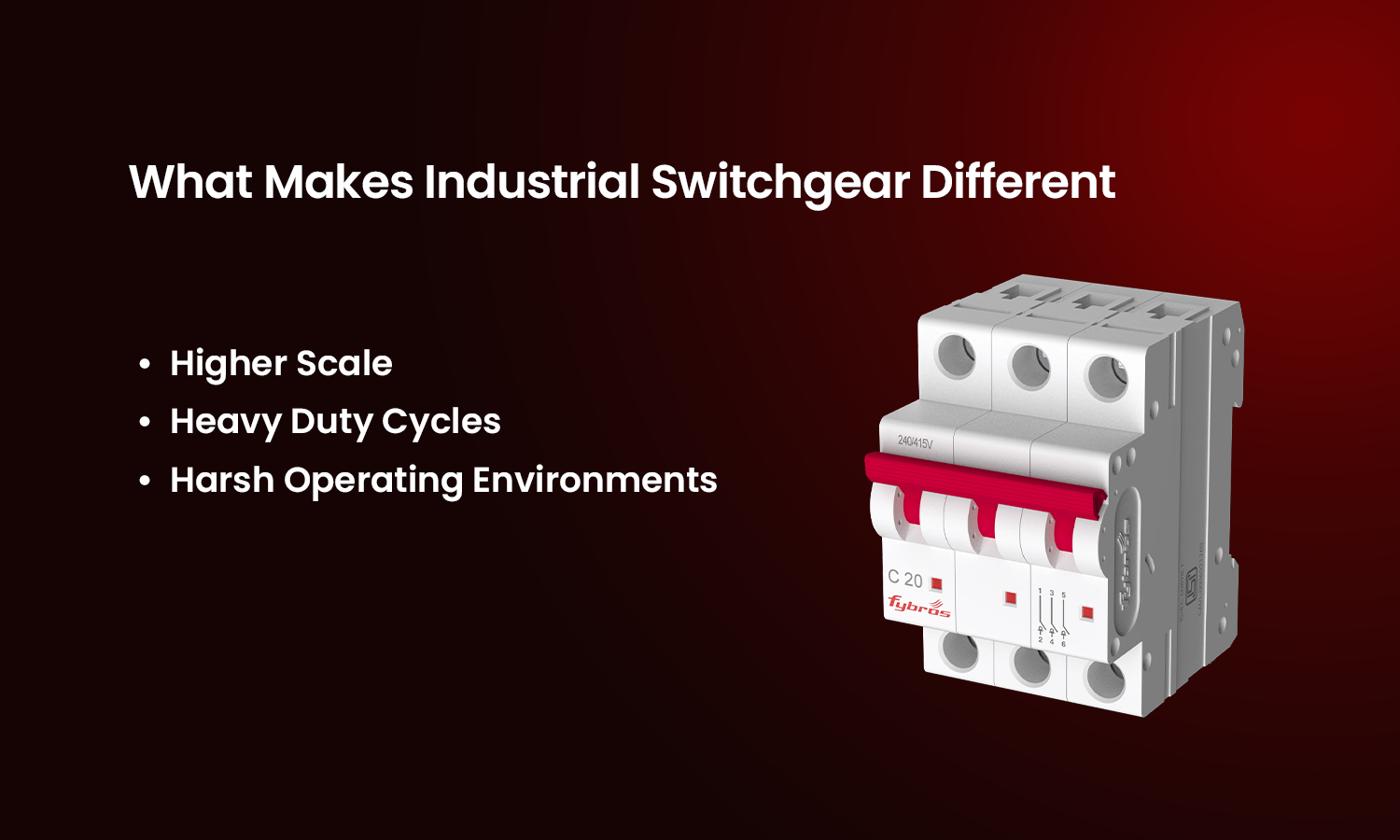
Three factors separate industrial switchgear from residential and commercial electrical systems.
Higher Scale
Industrial installations operate at higher currents and higher fault levels. The impact of an incorrect operation or protection failure is also much larger.
Heavy Duty Cycles
Industrial systems switch loads repeatedly throughout the day.
Motor starters, contactors, and relays may operate hundreds of times every week for years.
Harsh Operating Environments
Industrial sites are often dusty, humid, corrosive, and exposed to extreme temperatures.
Reliable switchgear must continue operating safely under all of these conditions. This is where industrial electrical switchgear solutions are specifically designed to perform.
The Role of Industrial Switchgear in Modern Facilities
Industrial facilities require reliable protection, switching, and power distribution systems to support day-to-day operations. Unlike residential installations, industrial environments often operate larger machinery, production equipment, and critical electrical loads that demand continuous power availability.
A typical industrial electrical system relies on multiple layers of protection and distribution. Once power reaches the low-voltage stage, switchgear products help distribute electricity safely while protecting equipment from short circuits, overloads, and overcurrent conditions.
Devices such as MCBs, RCCBs, Isolators, Changeover Switches, Distribution Boards, and Busbar Chambers help create a safer and more reliable electrical infrastructure. These components work together to support efficient operations while reducing the risk of downtime and equipment damage.
Protection Requirements in Industrial Installations
Industrial facilities depend on effective protection systems to keep electrical equipment operating safely and reliably.
Common electrical risks include short circuits, overloads, overcurrent conditions, and earth leakage faults. If left unprotected, these issues can damage equipment, interrupt production, and increase maintenance costs.
Protection devices such as MCBs, MCCBs, and RCCBs help detect abnormal conditions and isolate affected circuits before faults spread across the installation.
The goal of every protection system is simple. Protect equipment, maintain operational continuity, and improve overall electrical safety.
Ingress Protection and Form Separation
Most industrial switchgear panels require IP54 or higher ingress protection.
Outdoor and washdown applications commonly require IP65 protection.
Form separation is equally important.
Form 4 separation provides full compartmentalization between feeders.
This improves safety, limits fault spread, and allows maintenance on one section while other feeders remain energized.

Short Circuit and Coordination Studies
Every industrial installation should undergo a short circuit study before the switchgear is specified.
This study calculates available fault current at each point in the electrical network and verifies that every protective device has adequate breaking capacity.
A protection coordination study is then performed to ensure only the breaker nearest to a fault operates.
Without proper coordination, a single motor fault could shut down an entire plant.
Understanding what switchgear in electrical systems is becomes particularly important when planning protection and coordination studies for industrial facilities.
Standards for Industrial Switchgear in India
Industrial switchgear panels in India generally follow IS IEC 61439 standards.
Individual switchgear components, including MCCBs, ACBs, contactors, and overload relays, follow various IEC 60947 standards.
Compliance with these standards should always be verified using type test certificates issued by accredited laboratories.
When evaluating switchgear manufacturers, standards compliance remains one of the most important selection criteria.
Where Fybros Fits in Industrial Switchgear
Fybros manufactures low-voltage switchgear products widely used in industrial distribution systems.
The ARMOR Series MCBs are commonly installed in industrial lighting and small power circuits.
Fybros RCCBs, isolators, and changeover switches are also widely used in industrial applications.
Panel builders often integrate Fybros switchgear products with higher-rated MCCBs, relays, and contactors to create complete industrial switchgear panel systems.
A reliable industrial switchgear supplier plays an important role in ensuring long-term performance and product availability.
How Fybros Supports Industrial Switchgear Applications
Industrial facilities require dependable protection, switching, and distribution solutions to ensure safe and uninterrupted operations.
Fybros offers a comprehensive Low Voltage Switchgear portfolio designed for residential, commercial, and industrial applications.
Protection Solutions
Fybros protection devices help safeguard electrical systems against short circuits, overloads, overcurrent conditions, and earth leakage faults.
These solutions include:
-
MCBs
-
RCCBs
-
MCCBs
Switching Solutions
Safe switching plays an important role in industrial operations.
The Fybros switching range includes:
-
Mini Changeover Switches
-
Changeover Switches
These products help support safe isolation and reliable power source switching.
Distribution Solutions
Fybros also offers Distribution Boards and Busbar Chambers that help organize and distribute power safely throughout industrial facilities.
By combining protection, switching, and distribution solutions, Fybros supports safer and more reliable industrial electrical systems.
Maintaining Industrial Switchgear
Routine maintenance is essential for every industrial installation.
Most facilities perform annual maintenance that includes thermographic surveys, breaker operation checks, contact resistance measurements, and relay testing.
Industrial environments are extremely demanding.
Poorly maintained industrial switchgear eventually fails, and the resulting production losses often cost much more than preventive maintenance.
Designing for Indian Industrial Conditions
Industrial sites across India present extremely challenging operating environments.
Foundries may expose switchgear panels to temperatures above 45 degrees Celsius.
Chemical plants expose enclosures to corrosive vapors.
Textile mills release fine lint particles that enter panel compartments.
Cement factories generate alkaline dust that settles on electrical equipment.
Each of these conditions requires careful design decisions.
Higher IP ratings, such as IP54 and IP55, are widely used for dusty and washdown environments.
Stainless steel enclosures are often selected for coastal and chemical applications.
Forced ventilation and filtered cooling systems are used where temperatures remain consistently high.
Anti-condensation heaters are installed inside panels exposed to humidity.
Selecting the correct enclosure design and protection settings determines whether a switchgear panel lasts for decades or requires expensive refurbishment within a few years.
Knowledge of the components of LT switchgear becomes valuable when specifying systems for such demanding environments.
This growing awareness among Indian industrial buyers is one reason why trusted switchgear manufacturers in India increasingly develop products designed specifically for harsh industrial duty.
Final Thoughts on Industrial Switchgear
Industrial switchgear is one of the most important investments in any plant.
It powers motors, protects cables, isolates faults, and keeps maintenance personnel safe.
Correct specifications and disciplined maintenance form the foundation of reliable industrial operation.
For engineers new to the field, understanding the switchgear definition and what switchgear is helps build a stronger foundation for selecting the right equipment.
FAQs
1. What is Industrial Switchgear?
Industrial Switchgear refers to electrical equipment used to control, protect, and isolate power systems in factories, processing plants, warehouses, and industrial facilities. It is designed to handle higher fault levels, larger loads, and more demanding operating environments than residential electrical systems.
2. What is the role of an industrial switchgear panel?
An industrial switchgear panel distributes power, protects equipment from faults, and allows safe operation and maintenance of electrical systems. These panels typically contain circuit breakers, contactors, relays, meters, and other protection devices required for industrial applications.
3. Why are short-circuit and coordination studies important for industrial switchgear?
Short-circuit and coordination studies help ensure that every protective device in an industrial electrical switchgear system has the correct breaking capacity and operates in the proper sequence. This prevents a fault in one area from shutting down an entire facility.
4. What should buyers look for when selecting an industrial switchgear supplier?
A reliable industrial switchgear supplier should offer standards-compliant products, valid type test certificates, technical support, product availability, after-sales service, and experience with industrial installations. Working with trusted switchgear manufacturers helps improve long-term reliability and safety.
5. How can industrial switchgear be protected from harsh Indian operating conditions?
Industrial sites often require higher IP-rated enclosures, corrosion-resistant materials, proper ventilation, anti-condensation heaters, and regular maintenance programs. Understanding the components of LT switchgear and selecting the right protection features can significantly improve equipment life and performance in challenging environments.