
 Fans
Fans
 Switches & Accessories
 Led Lighting
 Wires & Cables
 Switchgear
Understanding Switchgear Protection in Modern Electrical Systems
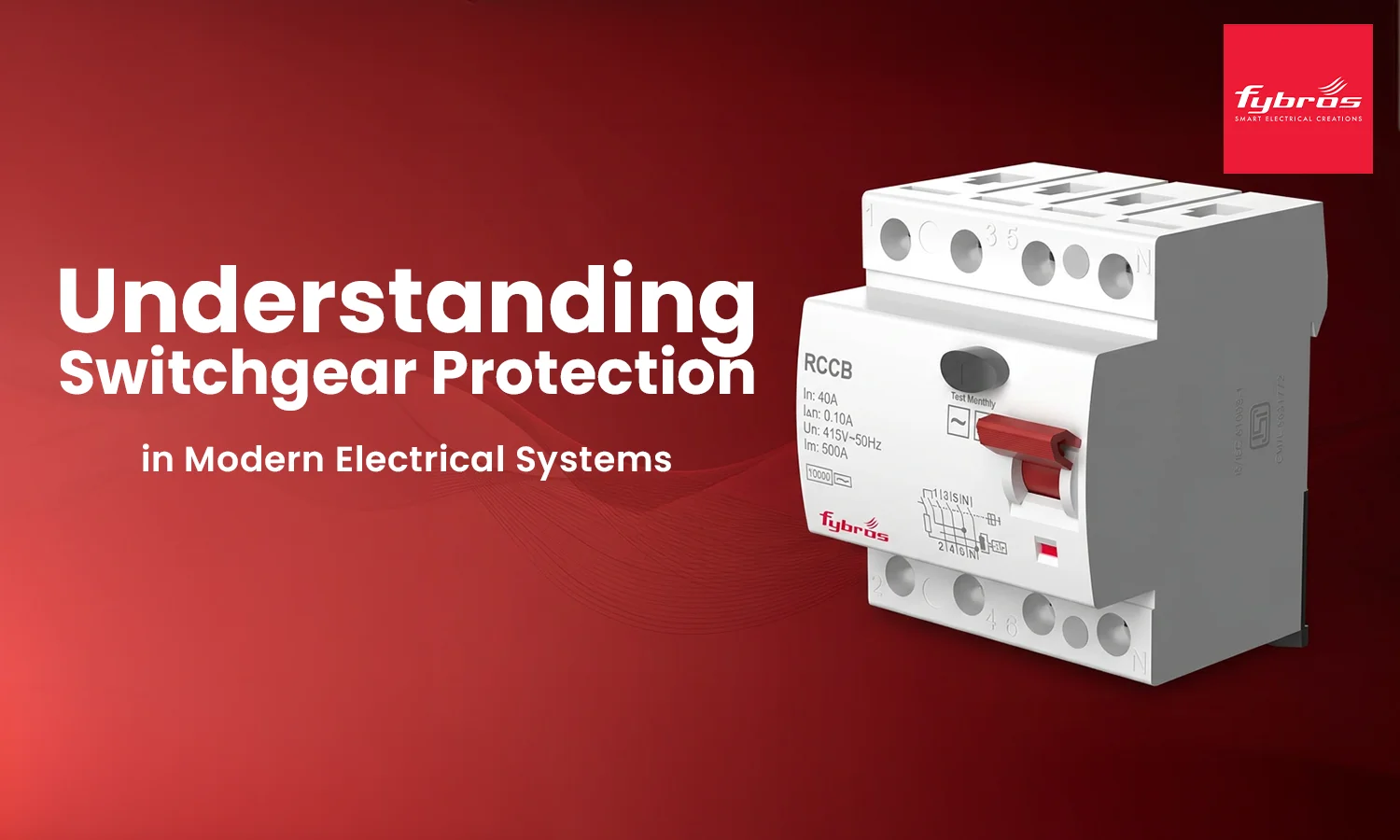
Switching a circuit on or off is simple.
Knowing exactly when to disconnect the circuit during a fault and doing it within milliseconds is the real challenge.
That is the purpose of modern switchgear protection systems.
What Switchgear Protection Means
Switchgear protection refers to the combination of sensing devices, protection logic, and operating mechanisms that detect abnormal electrical conditions and disconnect the affected part of the network before damage spreads.
The protection function exists partly inside individual switchgear devices, such as MCBs and MCCBs and partly inside dedicated protection relays connected through current transformers and voltage transformers.
This close relationship between switchgear and protection ensures safe operation across electrical networks.
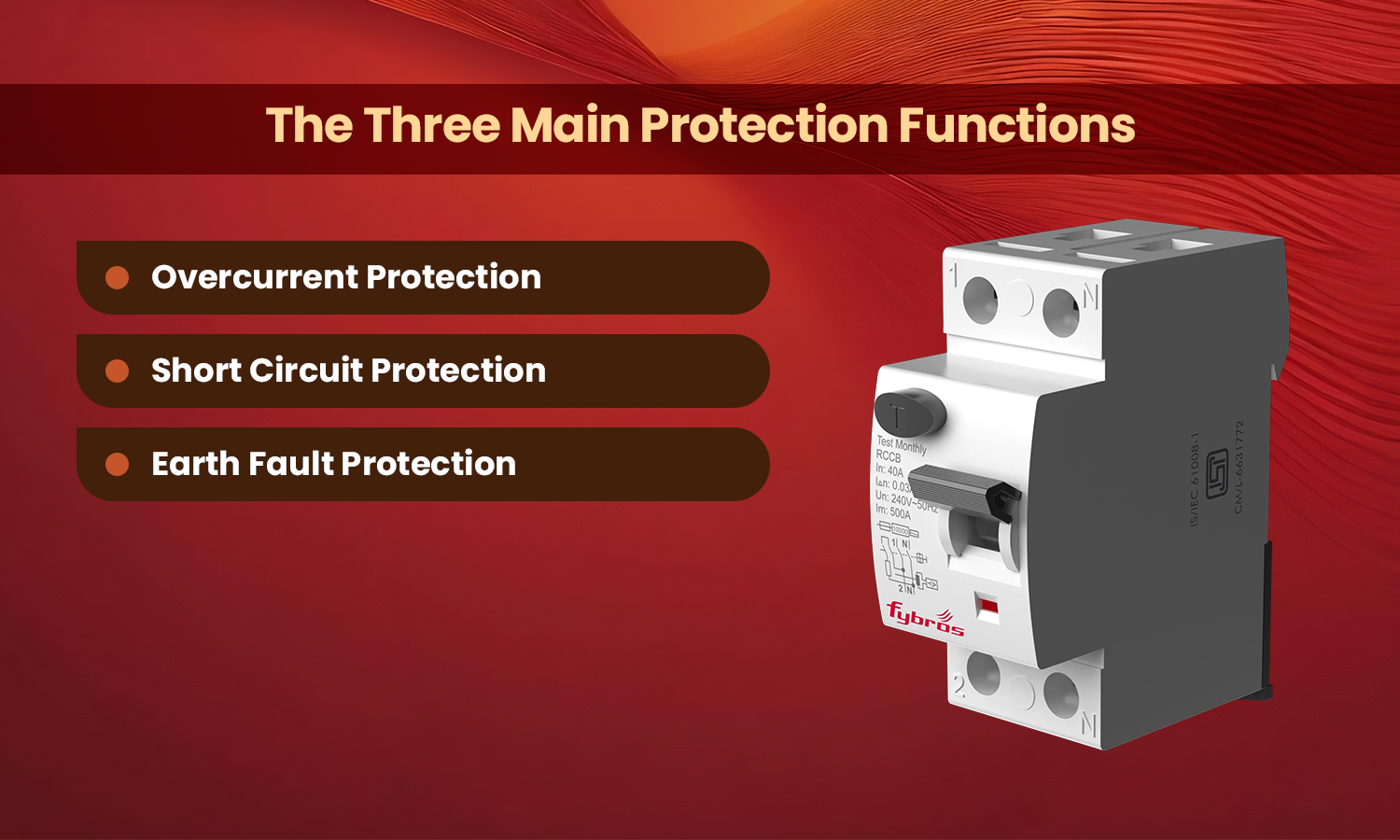
The Three Main Protection Functions
Overcurrent Protection
Overcurrent protection disconnects the circuit when the current remains above the rated value for an extended period.
This protection prevents conductors and cables from overheating during sustained overload conditions.
Short Circuit Protection
Short circuit protection reacts instantly when fault current rises sharply above normal operating levels.
This function is handled by the magnetic trip section of an MCB, the instantaneous protection of an MCCB, or dedicated short circuit relays used in larger switchgear panel installations.
Earth Fault Protection
Earth fault protection disconnects the circuit when leakage current flows to ground.
This usually occurs because of insulation failure, damaged appliances, or accidental contact with live conductors.
In residential low-voltage switchgear systems, RCCBs rated at 30 mA are the standard protection devices used for earth leakage protection.
These devices form an important part of the overall protection of the switchgear strategy.
How Protection Devices Work Together
In every switchgear installation, protection is arranged in layers.
The incoming breaker usually operates with higher pickup settings and longer time delays.
Outgoing feeder breakers operate faster, while final subcircuit devices such as MCBs respond the fastest.
This arrangement is known as discrimination or selectivity.
The goal is to ensure that only the protective device nearest to the fault disconnects while the rest of the installation continues operating.
Proper coordination between protection and switchgear devices minimizes downtime and improves reliability.
Understanding Time Current Curves and Coordination
Every switchgear protection device operates according to a time-current curve.
This curve shows how quickly the device trips at different fault current levels.
Protection devices are designed to operate at different fault levels so that only the affected circuit disconnects while the rest of the installation continues operating.
If the curves overlap incorrectly, multiple breakers may trip at the same time and shut down large parts of the installation.
Coordination studies are essential for every industrial switchgear system.
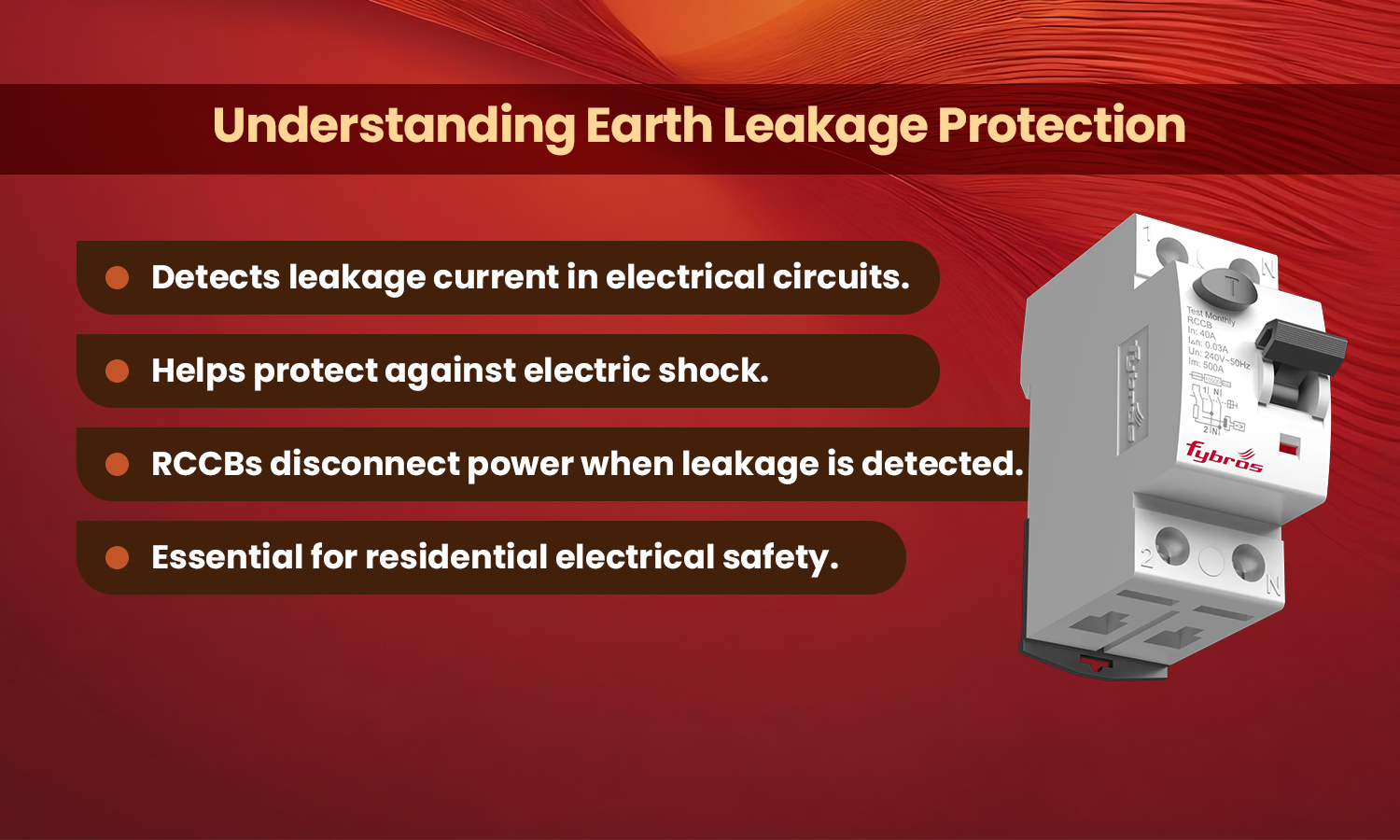
Understanding Earth Leakage Protection
Earth leakage protection is one of the most important safety features in any electrical installation.
An RCCB compares the current leaving through the phase conductor with the current returning through the neutral.
If the two values do not match, the system detects leakage current flowing to ground.
This leakage may pass through damaged insulation, wet surfaces, appliances, or even the human body.
A 30 mA RCCB typically disconnects the circuit within 40 milliseconds, which is fast enough to prevent serious electric shock in most situations.
This is why 30 mA RCCBs are considered mandatory in modern residential switchgear systems.
Protection in Residential, Commercial, and Industrial Installations
Electrical installations across homes, commercial buildings, and industrial facilities face a variety of risks, including short circuits, overloads, overcurrent conditions, and earth leakage faults.
Effective protection systems help isolate faults quickly before they damage equipment, disrupt operations, or create safety hazards.
In residential applications, MCBs and RCCBs provide essential protection against overloads, short circuits, and leakage currents. Commercial buildings often require additional protection devices to support larger electrical loads and critical equipment.
Industrial facilities may use a combination of MCBs, MCCBs, RCCBs, and other protection devices to safeguard machinery, distribution systems, and power circuits.
The objective remains the same across every installation. Detect faults early, isolate the affected circuit, and maintain the safety and reliability of the electrical system.
Why Switchgear Protection Fails
Most switchgear protection failures occur because of poor engineering or poor maintenance rather than faulty technology.
Common causes include incorrect protection settings, missing coordination studies, inadequate maintenance, undersized breakers, insufficient breaking capacity, and counterfeit components.
All of these problems can be prevented through proper system design, regular testing, and the use of reliable switchgear products.
How Fybros Designs Reliable Protection Systems
Fybros switchgear products, including MCBs, RCCBs, isolators, and changeover switches, are designed according to IS IEC 60898, IS IEC 61008, and IS IEC 60947 standards.
Each device is tested for breaking capacity, sensitivity, and operating characteristics.
When Fybros switchgear is used in Indian residential and commercial installations, the protection devices are engineered to handle the actual operating conditions and fault levels commonly found in Indian power networks.
This focus on quality reflects the growing standards seen across the switchgear market.
How Fybros Supports Switchgear Protection
Effective switchgear protection starts with selecting the right devices for the application. Whether it is a home, commercial building, office, retail outlet, or industrial facility, every electrical installation requires reliable protection against short circuits, overloads, overcurrent conditions, and earth leakage faults.
Fybros offers a comprehensive Low Voltage Switchgear portfolio designed to support safe and dependable electrical distribution.
Protection Solutions
Fybros protection devices help detect faults and isolate affected circuits before they cause equipment damage or safety hazards.
These solutions include:
-
MCBs for short circuit and overload protection
-
RCCBs for earth leakage and electric shock protection
-
MCCBs for higher current applications
-
AFDDs for detecting arc faults that may lead to electrical fires
Switching Solutions
Safe switching is equally important for maintaining electrical reliability.
The Fybros switching range includes:
-
Mini Changeover Switches
-
Changeover Switches
-
Automatic Transfer Switches (ATS)
These products help manage power supply transitions and support safe switching between utility power and backup power sources.
Distribution Solutions
Reliable protection depends on proper power distribution.
Fybros offers Distribution Boards and Busbar Chambers designed to support organized power distribution while improving safety, accessibility, and maintenance efficiency.
By combining protection, switching, and distribution solutions, Fybros helps create safer electrical installations across residential, commercial, and industrial applications.
Final Thoughts on Switchgear Protection
Switchgear protection is the difference between a safe electrical installation and a dangerous one.
When protection systems work correctly, faults are isolated instantly before major damage occurs.
When protection systems fail, the results can include equipment damage, fire hazards, and major operational downtime.
Careful specification, proper coordination, and regular maintenance are essential for every electrical installation.
For professionals entering the industry, understanding what switchgear is, is essential for making informed engineering decisions.
Important Certifications and Type Test Reports
Before selecting any switchgear protection device, buyers should request proper certification documents from the manufacturer.
The first requirement is a valid BIS license confirming compliance with Indian standards and legal ISI marking.
The second requirement is a type test report issued by recognized laboratories such as CPRI, ERDA, KEMA, ASTA, or CESI.
The third requirement is a routine test certificate covering the exact batch supplied for the project.
Routine testing verifies dielectric strength, continuity, and mechanical operation before the product leaves the factory.
Trusted switchgear manufacturers in India, including Fybros, maintain complete documentation for their ARMOR product ranges.
Manufacturers unable to provide proper test documentation should always be avoided, regardless of pricing.
FAQs
1. What is Switchgear Protection?
Switchgear Protection refers to the systems and devices used to detect electrical faults and disconnect affected circuits before damage occurs. It combines breakers, relays, sensors, and protection logic to ensure safe operation of electrical installations.
2. Why are switchgear and protection systems important?
Switchgear and protection systems help prevent equipment damage, electrical fires, and safety hazards caused by overloads, short circuits, and earth faults. They also improve reliability by ensuring only the affected section of a network is isolated during a fault.
3. What are the main types of protection used in switchgear?
The primary protection functions in protection and switchgear systems include overcurrent protection, short-circuit protection, earth fault protection, undervoltage protection, and differential protection. These functions work together to safeguard electrical equipment and personnel.
4. How does switchgear protection differ in industrial installations?
Industrial switchgear systems require more advanced protection because they support motors, transformers, generators, and critical machinery. Additional protection functions may include phase loss protection, locked rotor protection, differential protection, and busbar protection.
5. What causes switchgear protection systems to fail?
Most switchgear protection failures occur due to incorrect protection settings, poor maintenance, inadequate coordination studies, undersized breakers, insufficient breaking capacity, or the use of low-quality components. Proper design, testing, and certification help prevent these issues.