Choosing the right LED light for home use means thinking room by room, not fitting by fitting. Bright, even light suits kitchens and living rooms, softer warm light suits bedrooms, and hidden strips add mood. Layering ceiling, accent and wall light gives each space the comfort and the function it needs.
Most homes are lit by habit. One bright fitting goes in the middle of each room, the switch goes on, and that is that. It works, but it rarely feels good. The trick to a warm, comfortable home is to stop thinking about single bulbs and start thinking about rooms. The right LED light for home use is really a small plan, a mix of bright light where you work and soft light where you rest.
This page walks through a home room by room. It does not go deep into how each fitting is built, because the basics of LED lighting are covered on the main guide. The aim here is simpler, to help you decide what kind of light each space needs, and then reach for the right format.
The living room does the most jobs of any space. You read here, watch television, host guests and relax at night, so one flat light will always feel wrong for something. The answer is layers. Start with a base of even ceiling light from panels or downlights, then add a spotlight or two to lift a painting or a feature wall. A hidden strip in the false-ceiling cove finishes it with a soft glow. This layered approach is what makes a living room feel finished rather than just bright.
Bedrooms are about rest, so the light should be gentle. This is where warm light for bedrooms earns its place, sitting near 3000K so it feels soft and golden rather than sharp. A pair of small downlights or a single panel gives the base, and a bedside lamp handles reading without lighting the whole room. Keeping the bedroom on the warmer side helps the body wind down, which cool white light can quietly work against.
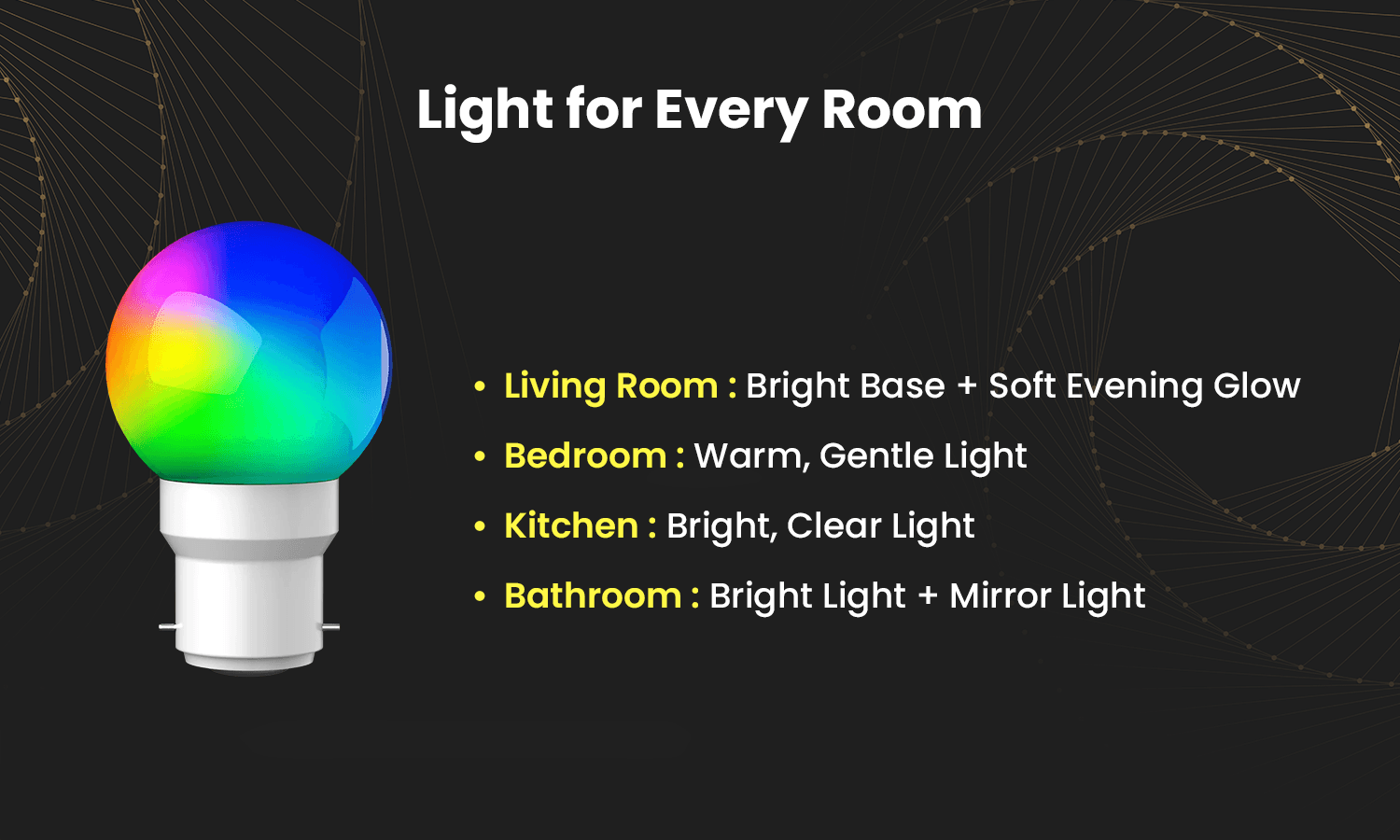
Kitchens and bathrooms flip the rule. Here you want to see clearly, so brighter, cooler light is the safer choice. Over a kitchen counter, aim for crisp light near 4000K to 6000K so cutting and cleaning feel easy. A LED light for bathroom use should be moisture-rated and paired with a good mirror light for grooming. Because a LED light for bathroom areas faces steam and splashes, the seal matters as much as the brightness. These are working rooms, so function comes first and mood second, though a warmer tone still suits a relaxing bath. Getting the light right in wet areas is mostly about safety.
Walls are the most underused surface in a home. A little light here adds depth that ceiling fittings alone cannot. Wall LED lights for home interiors can graze a textured wall, frame a mirror or mark a passage at night. On the softer side, decorative LED lights for home settings include hidden strips, cove lighting and picture lights that add character without glare. Good LED lights for home decoration are less about brightness and more about where the light falls. The best decorative LED lights for home corners stay hidden, so you notice the glow and not the fitting.
Strip lighting deserves a special mention, because it is the most common way to add mood. A flexible strip sticks onto a clean, dry surface with its own adhesive backing, then connects to a small driver rather than straight to the mains. People often ask how to place strips, and the easy answer is to hide the strip itself and let only its glow show, inside a cove, under a cabinet edge or behind a headboard. Fybros makes strip lights and matching power supplies, so LED light strips for home decor can be run cleanly and safely. Strips are also a favourite for LED lights for home decoration at festival time, when a warm glow lifts a whole room. For anything permanent, an electrician should make the final connection.
The ceiling is where most of a home light comes from, so it sets the mood of every room. Flat panels give the widest, softest spread, recessed downlights give neat pools of light, and surface fittings suit ceilings that cannot be cut. For a covered porch or a roof edge, a weatherproof LED light for roof and eave areas keeps entrances safe and welcoming. Matching the ceiling format to the room is the biggest single choice in any home lighting plan.
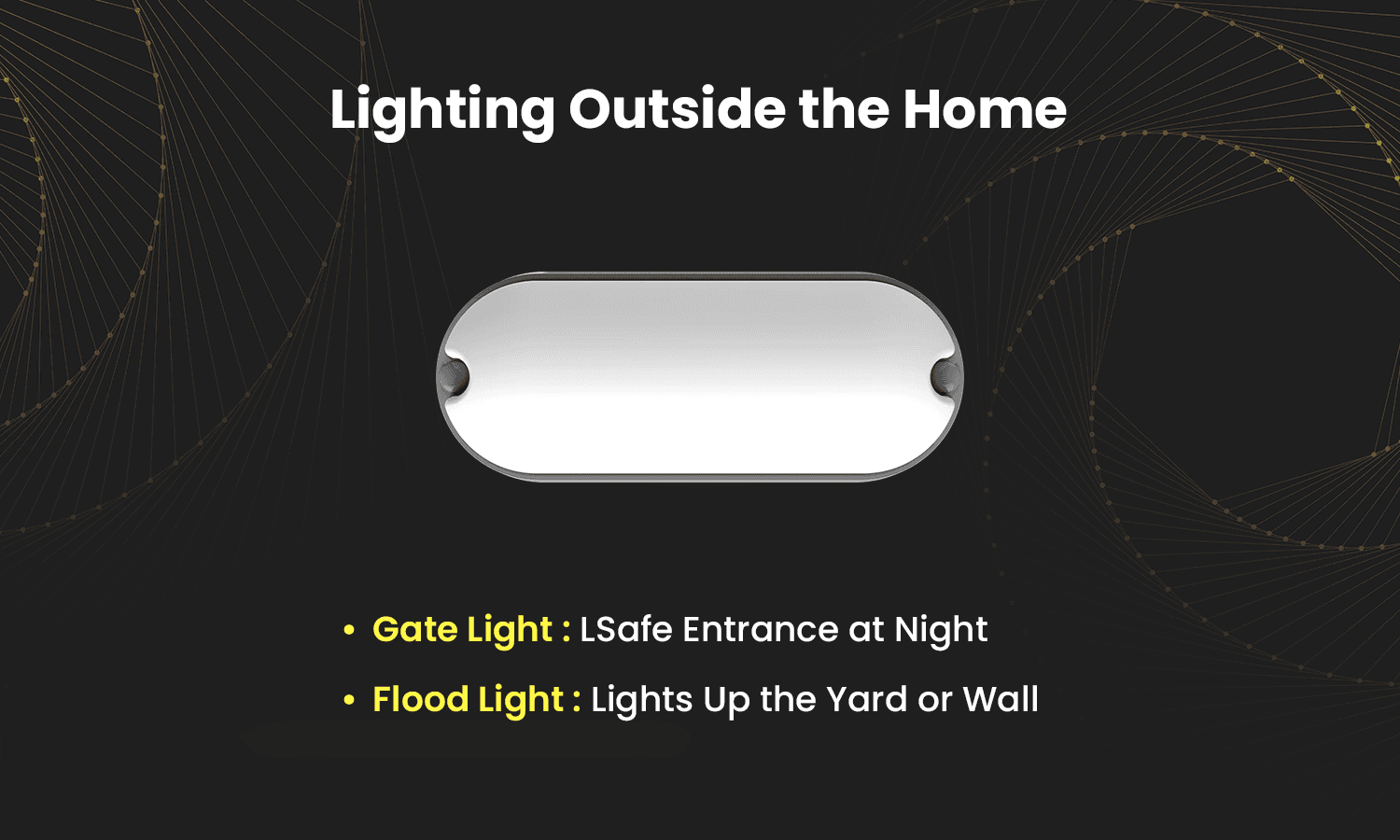
Lighting should not stop at the door. A good outdoor LED light keeps paths, gates and gardens safe and lifts the look of a home after dark. Wall and gate fittings light entrances, while flood lights outside wash a driveway, boundary or facade. For a garden feature or a signboard, a focused beam works better than a wide one, and this outdoor layer completes the picture. Every outdoor fitting should be sealed and rated for weather, because rain and dust are the quickest way to end a light early.
Two simple rules pull a whole home together. Match colour to the activity, warm white for rest and cool white for work, and think in layers rather than one big fitting per room. Wattage follows the room size, so a small bedroom is happy with a 15W to 22W panel while a living room usually wants several fittings working together. Budget naturally varies, and knowing what lighting a home costs across panels, downlights, strips and outdoor fittings helps you spread the spend sensibly. A sensible lighting budget puts the money where the light is seen most.
Lighting a full home is easier when one brand covers every room. Fybros makes panels, downlights, spotlights, surface lights, strip and decorative lights, wall lights, mirror lights, outdoor and gate fittings and bulbs, all in warm, neutral and cool tones. That range means the lights in your living room, bedroom, kitchen and garden can share one steady quality, with no odd mix of colours or finishes from fitting to fitting. For quick reading spots, simple bulbs and lamps round out the plan.
1. What is the best LED light for a bedroom?
For a bedroom, a warm white panel or a pair of soft downlights near 3000K works best, with a bedside lamp for reading. The aim in a bedroom is calm rather than brightness, so warmer tones and lower, layered light beat a single harsh fitting in the centre.
2. How do I attach LED strip lights to a wall?
Most strips have an adhesive back, so you clean the surface, peel and press the strip firmly along a straight line. Keep the strip hidden in a cove or under a ledge, then connect it to its driver. For a neat, lasting finish, let an electrician handle the final wiring rather than joining it to a plug yourself.
3. How many lights does a home need?
There is no fixed number, because it depends on room sizes and how you use them. A useful guide is to plan two or three light layers per main room, one for base light, one for tasks and one for mood. Building the LED light for home plan this way avoids both dark corners and harsh over-lighting.
Plan an LED light for home use room by room, and layer base, task and accent light instead of one central fitting.
Use warm white for bedrooms and living areas, and brighter cool white for kitchens and bathrooms.
Add depth with wall LED lights for home and hidden strips, and keep the strip itself out of sight for a clean look.
Pick a sealed, weather-rated outdoor LED light for gates, paths and gardens so it lasts through the seasons.
A full-range brand like Fybros lets every room share one steady quality of light.
Planning the lighting for a new home or a refresh? See the full Fybros range and match the right LED light for home use to each room, from bright ceilings to soft corners and safe outdoor areas. Visit fybros.com or talk to your nearest Fybros dealer to build the plan room by room.

 Fans
Fans
 Switches & Accessories
 Led Lighting
 Wires & Cables
 Switchgear